The Top 5 Small Cars Perfect for Urban Driving
Navigating tight city streets and squeezing into tiny parking spots requires a special kind of car. If you’re searching for the perfect compact vehicle, you've landed in the right place.
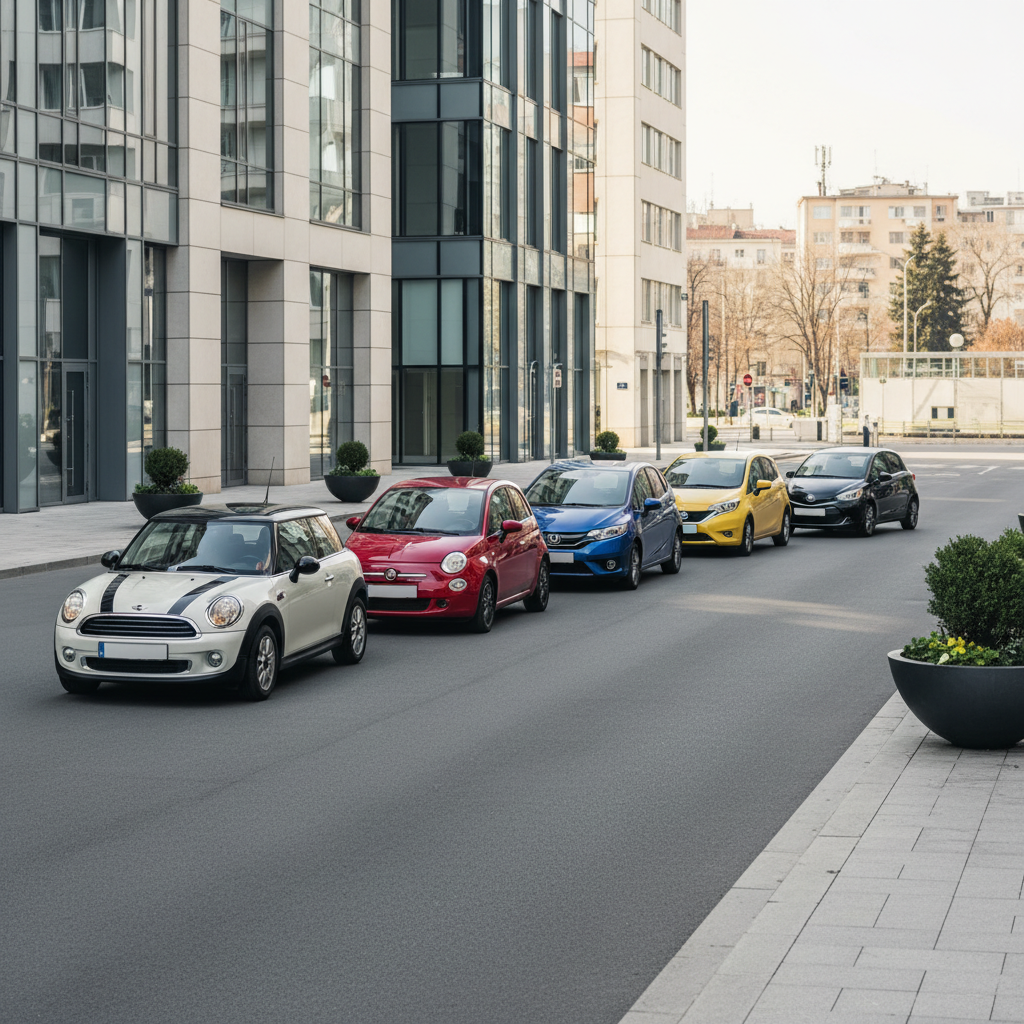
Top Small Cars for Navigating the Urban Jungle
City driving presents a unique set of challenges: tight parking spaces, congested streets, stop-and-go traffic, and the constant need for maneuverability. The right small car can turn these daily frustrations into a seamless experience. The best city cars are not just small; they are efficient, easy to park, reliable, and surprisingly practical. Here are some of the top contenders that consistently excel in an urban environment.
1. Honda Fit (also known as Honda Jazz in some markets)
The Honda Fit has long been hailed as a king of urban practicality, and for good reason. Its genius lies in its interior packaging. Despite its small exterior footprint, the Fit offers an astonishing amount of cabin and cargo space, largely thanks to its "Magic Seat" system. This innovative feature allows the rear seats to fold completely flat or flip up, creating multiple configurations to accommodate everything from grocery bags to tall items like a potted plant. This versatility is invaluable for city dwellers who might need to make an impromptu trip to a home improvement store.
Beyond its clever interior, the Fit is a joy to drive in the city. Its responsive steering and tight turning radius make navigating narrow alleys and executing U-turns a breeze. The car feels nimble and light on its feet, allowing drivers to confidently dart through traffic. Furthermore, Honda's reputation for reliability and fuel efficiency means lower running costs—a significant advantage when dealing with city fuel prices and the desire to avoid frequent trips to the mechanic. It perfectly blends practicality with a fun-to-drive nature.
2. Mini Cooper (Hardtop 2 Door)
For those who want to inject a dose of fun and style into their city commute, the Mini Cooper is an iconic choice. Its "go-kart-like" handling is legendary, providing an engaging and responsive driving experience that can make even the most mundane trip feel exciting. The car's diminutive size is a massive asset in the city, allowing it to slip into parking spots that owners of larger vehicles can only dream of. The quick steering and firm suspension make it feel incredibly agile when navigating crowded streets.
While its primary appeal is its driving dynamics and timeless design, the Mini Cooper also offers a premium interior that feels a step above many of its competitors. The high-quality materials, unique toggle switches, and large central display create a distinctive and enjoyable cabin atmosphere. While it may not have the cavernous cargo space of a Honda Fit, its focus on performance and personality makes it a top pick for urbanites who prioritize driving pleasure and making a statement.
3. Hyundai Kona
The Hyundai Kona proves that a great city car doesn't have to be a traditional hatchback. As a subcompact SUV, it offers a higher driving position, which many drivers appreciate for its improved visibility in dense traffic. This elevated perch can make you feel more confident and aware of your surroundings. Despite its SUV classification, the Kona maintains a city-friendly footprint, making it nearly as easy to park and maneuver as its smaller counterparts.
Where the Kona truly shines is in its blend of style, technology, and value. It boasts a bold, modern design that stands out from the crowd. Inside, it's packed with user-friendly tech, including standard touchscreen infotainment systems with Apple CarPlay and Android Auto. Hyundai also offers the Kona with various powertrains, including an efficient gasoline engine and a fully electric version (the Kona Electric), which is an outstanding choice for city driving with its instant acceleration and zero tailpipe emissions. Combined with Hyundai's excellent warranty, the Kona is a smart, versatile, and stylish urban companion.
4. Chevrolet Bolt EV
As cities move towards a greener future, electric vehicles (EVs) are becoming the ultimate urban warriors, and the Chevrolet Bolt EV is a prime example. Its all-electric powertrain is perfectly suited for the stop-and-go nature of city traffic. The instant torque provides brisk acceleration from a standstill, allowing for quick merges and confident maneuvers. The experience is also remarkably quiet and smooth, reducing driver fatigue during long commutes. The Bolt EV's regenerative braking system, which can be enhanced with a "One-Pedal Driving" mode, captures energy during deceleration and can bring the car to a complete stop without you ever touching the brake pedal, simplifying the driving process significantly.
Beyond the driving experience, the Bolt EV makes economic sense for a city driver. Eliminating the need for gasoline and oil changes drastically reduces running costs. With a competitive driving range on a full charge, most urban commuters will only need to plug in once or twice a week. Its cleverly designed interior provides ample passenger space, thanks to the flat floor enabled by the under-mounted battery pack, making it feel much larger inside than its compact exterior suggests.
5. Toyota Yaris Hybrid
When it comes to efficiency and reliability, Toyota is a name that immediately comes to mind. The Toyota Yaris, particularly in its hybrid form, is a masterclass in urban fuel economy. The hybrid system seamlessly switches between electric and gasoline power, delivering exceptional miles-per-gallon figures that are especially noticeable in slow-moving city traffic where the electric motor does most of the work. This translates to significant savings at the pump and fewer emissions, making it an eco-conscious and budget-friendly choice.
The Yaris is designed from the ground up to be an effortless city car. Its compact dimensions and excellent turning circle make parking and navigating tight spaces incredibly simple. The ride is comfortable, soaking up urban road imperfections well, and the cabin is quiet for a car of its class. Toyota also equips the Yaris with a generous suite of standard safety features, including pre-collision systems and lane departure alerts, which provide an extra layer of security in the unpredictable urban environment.
Why Compact Cars Excel in Urban Environments
The appeal of small cars in the city isn't just a matter of preference; it's rooted in practical advantages that directly address the core challenges of urban driving. The most obvious benefit is maneuverability. A shorter wheelbase and narrower body allow compact cars to navigate congested lanes, tight corners, and cramped parking garages with an ease that larger vehicles simply cannot match. This agility reduces stress and saves time, whether you're squeezing through a narrow street or claiming the last spot in a crowded lot.
Parking is arguably the biggest headache for city drivers. Small cars are a natural solution, fitting into tight parallel spots and compact spaces that SUVs and sedans must pass by. This dramatically expands your parking options and can be the difference between finding a spot near your destination or circling the block for half an hour. Furthermore, fuel efficiency is a major factor. The constant acceleration and deceleration of city traffic are brutal on a car's fuel economy. Smaller, lighter vehicles with smaller engines inherently consume less fuel, and hybrid or electric models take these savings to another level, leading to significantly lower running costs over the life of the vehicle.
Common Questions About City Cars
Are Electric Cars (EVs) a Good Choice for City Driving?
Yes, electric cars are exceptionally well-suited for city driving. Their powertrains are most efficient in stop-and-go conditions, where regenerative braking can recapture a significant amount of energy to extend range. Unlike gasoline engines that are least efficient at low speeds, electric motors excel in this environment. The instant torque makes for zippy, responsive acceleration, perfect for getting ahead of traffic from a red light. The quiet and smooth operation also contributes to a more relaxing and less fatiguing driving experience in a noisy urban setting.
The main considerations for an urban EV owner are charging and initial cost. For those with access to home or workplace charging, an EV is incredibly convenient—you can simply plug it in overnight and wake up to a "full tank" every day. For apartment dwellers, reliance on public charging infrastructure is a bigger factor, though the density of charging stations is rapidly increasing in most cities. While the purchase price can be higher, lower running costs (no gas, minimal maintenance) and potential government incentives can help offset the initial investment over time.
What's the Difference Between a Subcompact and a Compact Car?
The terms "subcompact" and "compact" are often used interchangeably, but they refer to distinct vehicle size classifications, primarily defined by the Environmental Protection Agency (EPA) based on interior volume (passenger and cargo space combined). Subcompact cars are the smaller of the two categories. They typically have an interior volume of less than 100 cubic feet. Examples include the Honda Fit, Toyota Yaris, and Chevrolet Sonic. They are the quintessential city cars, prioritizing ease of parking and maximum fuel efficiency.
Compact cars are one size class larger, with an interior volume generally between 100 and 109 cubic feet. This category includes some of the best-selling cars in the world, like the Honda Civic, Toyota Corolla, and Hyundai Elantra. While still very manageable for city driving, they offer a bit more passenger room, particularly for rear-seat occupants, and slightly more cargo space. The choice between the two often comes down to prioritizing absolute nimbleness (subcompact) versus a bit more interior space and comfort for occasional highway trips (compact).
Should I Prioritize Safety Features for a City Car?
Absolutely. While all car safety is important, certain advanced driver-assistance systems (ADAS) are particularly valuable in the chaotic city environment. The sheer density of vehicles, pedestrians, and cyclists creates a complex and unpredictable setting. Features like Automatic Emergency Braking (AEB) with Pedestrian Detection can be lifesavers, automatically applying the brakes to prevent or mitigate a frontal collision when the driver is distracted.
Similarly, Blind-Spot Monitoring is incredibly useful for changing lanes on multi-lane city streets, alerting you to vehicles you might not see in your mirrors. Rear Cross-Traffic Alert is another game-changer, warning you of approaching cars when backing out of a parking spot with obstructed views—a common scenario in crowded parking lots and garages. Prioritizing a car equipped with these modern safety technologies can provide crucial peace of mind and an added layer of protection for navigating the urban jungle.
Final Thoughts on Choosing a City Car
The best small car for city driving is one that aligns with your specific needs and priorities. Whether you value the unparalleled practicality of a Honda Fit, the thrilling performance of a Mini Cooper, the modern versatility of a Hyundai Kona, or the futuristic efficiency of a Chevrolet Bolt EV, there is a perfect vehicle to conquer the concrete jungle. By focusing on maneuverability, parking ease, efficiency, and practical safety features, you can find a car that makes urban transportation simpler, more affordable, and even enjoyable.
For further research on vehicle specifications and safety ratings, you can visit these reputable sources: