The Ultimate Guide to Choosing the Best DIY Spray Foam Insulation for 2025
Finding the best DIY spray foam insulation for your 2025 project is easier than you think. To help you choose the right kit, we've compared the top options based on the factors that matter most: coverage area, R-value, and overall ease of application.
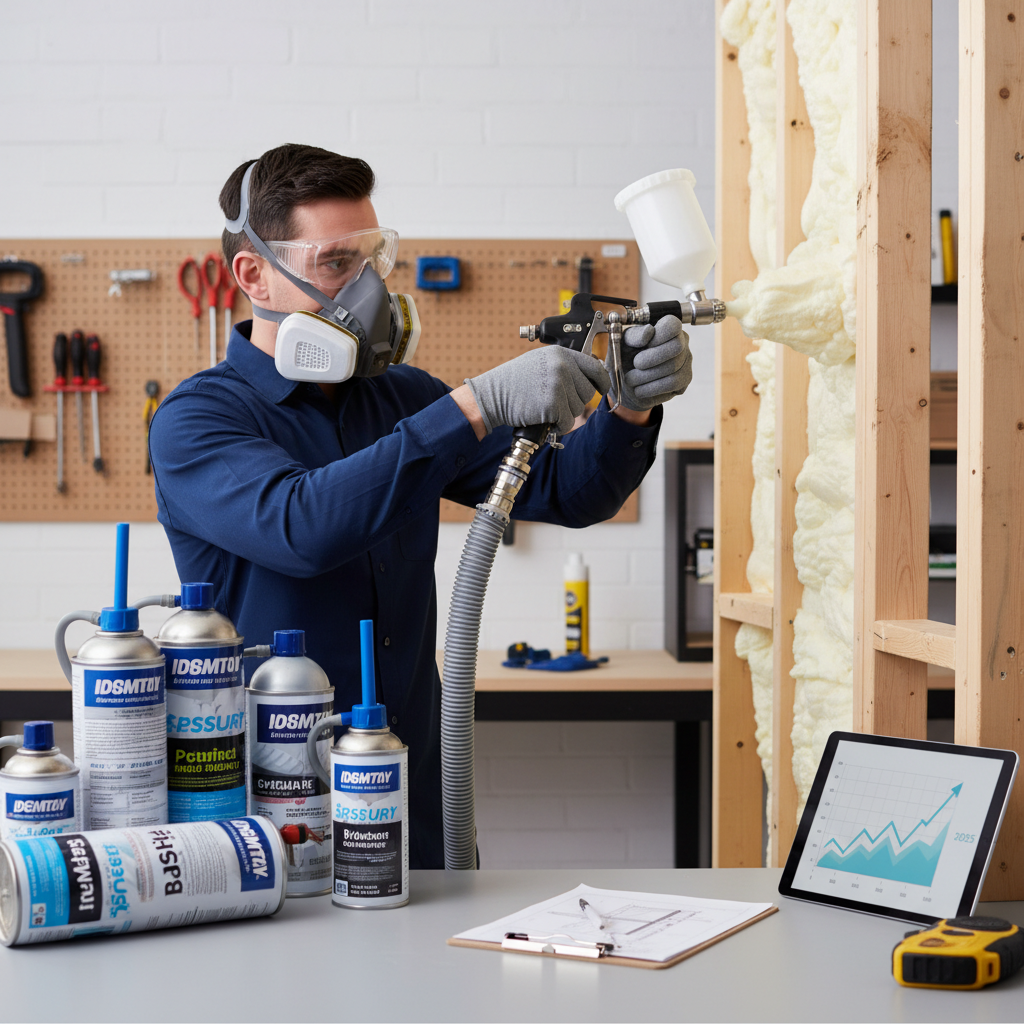
For homeowners looking to improve energy efficiency and seal air leaks, DIY spray foam insulation kits offer a powerful solution. These kits bring professional-grade results into the hands of ambitious DIYers, allowing for the insulation of rim joists, attics, walls, and crawl spaces. Unlike traditional fiberglass or cellulose, spray foam expands to create an airtight seal, providing superior thermal resistance and acting as a vapor barrier. When choosing a kit, it's essential to consider factors like yield (board feet), R-value, whether it's open-cell or closed-cell, and the included application hardware. Below, we explore some of the top options available for projects in 2025.
Top DIY Spray Foam Insulation Kits
1. Dow Froth-Pak 650 Sealant Foam Insulation Kit
The Dow Froth-Pak 650 is a leading choice for large-scale residential projects. As a closed-cell foam, it delivers a high R-value of approximately 6.5 per inch, making it incredibly effective at stopping thermal transfer. The "650" in its name refers to its yield, covering about 650 board feet (a 12x12-inch area at 1-inch thickness). This makes it suitable for insulating entire rim joists in a large basement, a small attic space, or sections of exterior walls. The kit is self-contained and comes with two pressurized tanks (an isocyanate and a polyol resin), a 15-foot hose, and an Insta-Flo dispensing gun with multiple nozzles. The long hose provides excellent reach, and the gun is designed for better control and reduced overspray.
This kit is known for its fast-curing properties, becoming tack-free in as little as 30 to 60 seconds and fully curing within an hour. This rapid cure time allows for quicker project completion, as you can trim excess foam and move on to the next steps without a long wait. However, because it is a professional-grade product, it requires strict adherence to safety protocols. Users must wear a full-face respirator, a chemical-resistant suit, and gloves. Proper ventilation of the space is also non-negotiable due to the off-gassing during the curing process. Its high density also adds a degree of structural rigidity to the surfaces it's applied to, which can be an added benefit in certain applications.
2. Touch 'n Foam Pro System 600
Another strong contender in the high-yield category is the Touch 'n Foam Pro System 600. This two-component, closed-cell polyurethane foam kit is designed to cover up to 600 board feet, placing it in direct competition with the Froth-Pak 650. It boasts a high R-value of around 6.2 per inch and creates a seamless air and vapor barrier. This system is excellent for insulating and sealing gaps in larger areas like pole barns, metal buildings, basements, and crawl spaces. The foam expands rapidly to fill cracks and voids, effectively stopping air infiltration and reducing energy loss.
The Touch 'n Foam kit includes two cylinders, a pre-attached 15-foot hose, and an ergonomically designed application gun that helps minimize user fatigue during extended use. It also comes with multiple nozzles—both cone-shaped for broad application and fan-shaped for covering flat surfaces like wall cavities. The foam is tack-free in about a minute and can typically be trimmed in under an hour. Like all two-component kits, it's crucial to ensure both chemical tanks are at the recommended temperature (typically between 75-85°F) for optimal expansion and yield. Failure to do so can result in a lower-than-expected coverage area and poor foam quality.
3. Foam It Green 202 Closed Cell Spray Foam Kit
Foam It Green is a popular brand that focuses on user-friendliness and providing comprehensive support for DIYers. Their 202 kit is a smaller, more manageable option designed for projects that don't require the massive yield of a 600 board-foot system. This kit covers approximately 202 board feet, making it perfect for sealing rim joists in an average-sized basement, insulating a few wall cavities, or tackling smaller crawl spaces. It provides a robust R-value of about 6.7 per inch, which is among the highest in the DIY market. The foam is also Class 1 fire-rated, offering an added layer of safety.
One of the standout features of Foam It Green kits is the quality of the included accessories and instructions. The kit comes with a professional-grade spray gun, a 15-foot hose, extra nozzles, and a fan spray tip. They also provide clear, easy-to-follow video tutorials and have a reputation for excellent customer support, which can be invaluable for first-time users. The foam cures quickly and provides excellent adhesion to most surfaces, including wood, metal, and masonry. This smaller kit size reduces waste for projects where a large system would be overkill, making it a more economical and practical choice for targeted applications.
4. Handi-Foam E84 Class 1 Two-Component Foam Kit (205 bf)
Handi-Foam is a well-established name in the insulation industry, and its two-component kits are known for their reliability and performance. The Handi-Foam 205 board foot kit is another excellent option for small-to-medium-sized jobs. It's a closed-cell foam that has been specifically formulated to meet the stringent E84 Class 1 fire resistance rating, meaning it has a low flame spread and smoke development index. This makes it a preferred choice for areas where building codes are a primary concern, such as in commercial applications or residential areas with strict fire safety requirements.
This kit delivers a solid thermal performance with an R-value of approximately 6.0 per inch. It is designed for easy portability and setup, featuring two tanks, a pre-attached hose, and the patented Handi-Gun dispenser for precise application. The foam is known for its consistent flow and expansion, helping users achieve a uniform layer of insulation. It cures to a tack-free state in under a minute and is fully cured within an hour. It's ideal for sealing air gaps, insulating ducts, and filling voids around pipes and windows where a fire-rated sealant is necessary.
Understanding Spray Foam Insulation: Open-Cell vs. Closed-Cell
When diving into the world of spray foam, the most fundamental distinction is between open-cell and closed-cell foam. The choice between them impacts R-value, moisture management, structural integrity, and cost. Understanding these differences is key to selecting the right product for your project.
Open-Cell Spray Foam: As the name suggests, open-cell foam is made up of tiny cells that are not completely encapsulated. Think of it like a sponge. This structure makes the foam softer, more flexible, and lighter than its closed-cell counterpart. Its primary advantages are its excellent sound-dampening qualities and lower cost. Because the cells are open, it allows water vapor to pass through, meaning it can breathe. This can be beneficial in certain climates but also means it is not a vapor barrier and can hold moisture if it gets wet. The R-value of open-cell foam is typically lower, ranging from R-3.5 to R-4.5 per inch.
Closed-Cell Spray Foam: In contrast, closed-cell foam is composed of tiny, uniform cells that are completely sealed. These cells are packed tightly together and filled with a blowing agent that helps with insulation. This dense structure makes the foam rigid and strong, capable of adding structural integrity to walls and roofs. It has a much higher R-value, typically ranging from R-6.0 to R-7.0 per inch. Critically, closed-cell foam is impermeable to moisture, making it an effective air and vapor barrier in one product. Most DIY kits on the market are closed-cell because of their higher R-value, durability, and moisture resistance, which makes them suitable for a wider range of applications like basements, crawl spaces, and rim joists.
Common Questions About DIY Spray Foam Projects
What are the essential safety precautions for applying DIY spray foam?
Applying two-component spray foam insulation is a chemical process that requires strict safety measures. The isocyanate component (Side A) is a sensitizer, and exposure can cause respiratory and skin issues. The single most important piece of personal protective equipment (PPE) is a NIOSH-approved respirator with an organic vapor cartridge. A simple dust mask is not sufficient. You must protect your respiratory system from the chemical vapors released during application and curing.
Beyond the respirator, full-body protection is necessary. This includes a disposable, chemical-resistant coverall suit with a hood to protect your skin and clothing from overspray. Chemical-resistant gloves (nitrile or butyl) should be worn at all times. Eye protection is also mandatory; non-vented safety goggles are recommended to prevent any splashback from getting into your eyes. Finally, proper ventilation is critical. Open all windows and doors and use fans to create cross-ventilation that directs vapors outside. The area should remain well-ventilated for at least 24 hours after application to allow the foam to fully cure and off-gas.
How do I calculate the amount of spray foam I need?
Accurately estimating the amount of foam needed is crucial to avoid running out mid-project or over-purchasing. DIY spray foam kits are sold based on their "board foot" yield. One board foot is a one-foot by one-foot square area insulated to a depth of one inch (1' x 1' x 1"). To calculate your needs, you first need to find the total square footage of the area you want to insulate.
The formula is straightforward: (Total Square Footage) x (Desired Insulation Thickness in Inches) = Total Board Feet Needed. For example, if you are insulating a rim joist that is 80 feet long and 1 foot high, your total square footage is 80 sq. ft. If you want to apply 2 inches of closed-cell foam for a good thermal break (achieving an R-value of about R-13), your calculation would be: 80 sq. ft. x 2 inches = 160 board feet. In this case, a kit rated for 200 board feet would be an appropriate choice, giving you a slight buffer for any potential yield loss or uneven application.
Conclusion
Choosing the right DIY spray foam insulation kit for 2025 depends largely on the scale of your project and your specific performance needs. High-yield kits like the Dow Froth-Pak 650 and Touch 'n Foam 600 are excellent for large areas, offering substantial coverage and high R-values. For smaller, more targeted applications such as sealing rim joists or insulating a small crawl space, kits like the Foam It Green 202 or Handi-Foam 205 provide a more economical and manageable solution. Regardless of the choice, understanding the fundamentals of closed-cell vs. open-cell foam and adhering to stringent safety protocols are paramount for a successful and safe DIY insulation project.