The Ultimate Guide to Choosing the Best Kegel Exercise Device
Finding the right Kegel exercise device can feel overwhelming, so we've done the research for you. This guide breaks down the top options on the market, from simple vaginal weights to advanced smart trainers that connect to an app.
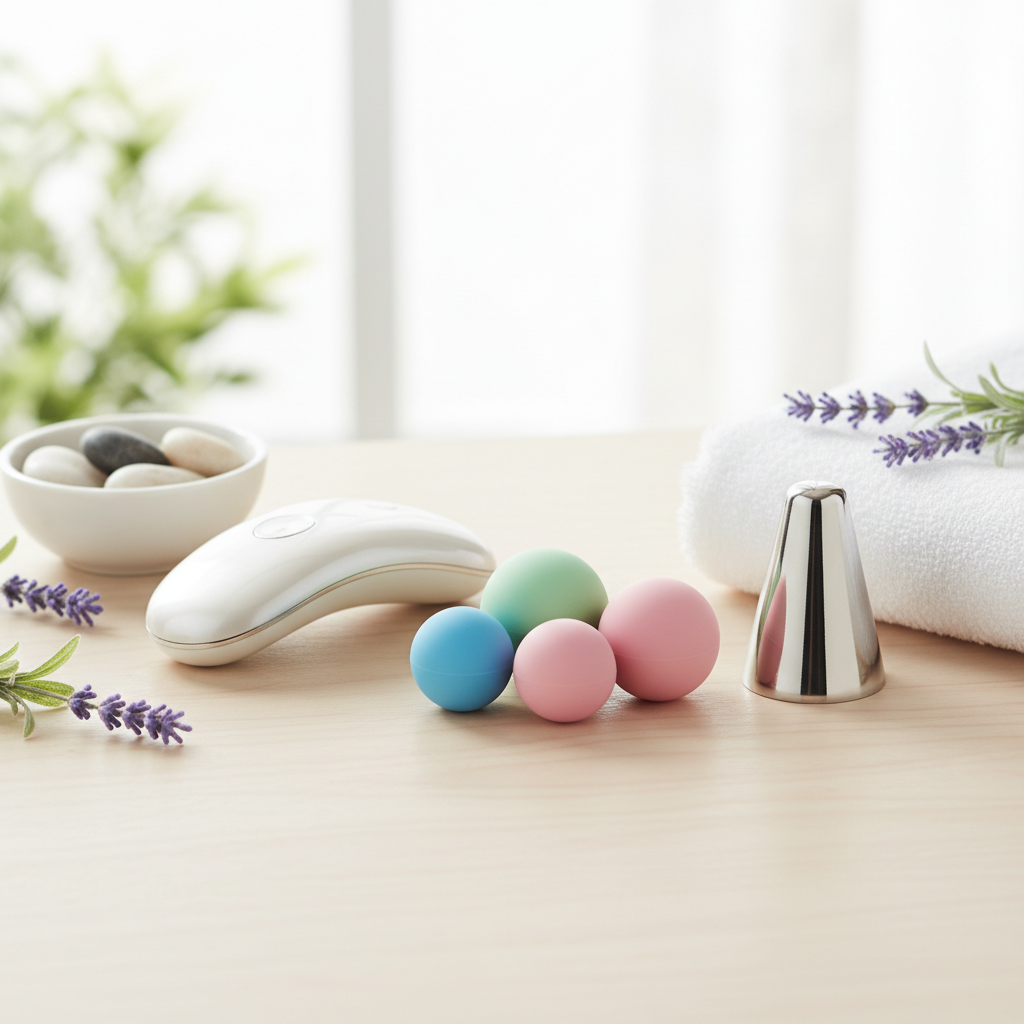
Exploring Popular Kegel Exercise Devices
Kegel exercise devices are designed to help individuals correctly identify and strengthen their pelvic floor muscles. These muscles support the bladder, uterus, and bowels, and strengthening them can address issues like incontinence and improve overall core stability. The market offers a wide range of options, from app-connected smart devices that provide real-time feedback to simpler, non-digital weights. Understanding the features and functionalities of these devices is the first step in determining what might work best for different needs and preferences.
The primary difference between device types often comes down to technology. Smart devices use biofeedback to guide users, while traditional weights rely on passive resistance. This comparison will explore some of the most recognized devices available, breaking down their operational methods, key features, and the user experience they aim to provide.
1. Perifit
The Perifit is a smart biofeedback device that connects to a smartphone app to turn pelvic floor exercises into engaging games. Made from medical-grade silicone, the device contains two pressure sensors that detect the strength of both the superficial and deep pelvic floor muscle contractions. This dual-sensor system is designed to provide a more comprehensive assessment of your Kegel technique, helping to ensure you are performing the exercises correctly and effectively. The app uses this data to control game characters, such as a flying bird, making the workout process interactive and motivating.
Users can follow guided training programs within the app that are tailored to specific goals, such as postpartum recovery, bladder control, or intimate well-being. The app tracks progress over time, displaying metrics like strength, endurance, and contraction quality. This data-driven approach allows users to see tangible results, which can be a powerful motivator to maintain a consistent routine. By gamifying the experience, Perifit aims to transform what can be a mundane exercise into an enjoyable activity, encouraging long-term adherence.
2. Elvie Trainer
The Elvie Trainer is another popular smart Kegel exerciser that utilizes biofeedback technology. It is a small, pebble-shaped pod made of smooth, medical-grade silicone that is inserted vaginally. It syncs via Bluetooth to a smartphone app, guiding users through five-minute workouts. What sets the Elvie Trainer apart is its patented force and motion sensor system. This technology not only measures the force of your pelvic floor contractions but also detects if you are pushing down instead of lifting up—a common mistake when performing Kegels manually.
The app provides real-time feedback and visualizes the contractions, helping users understand and perfect their technique. The workouts are presented as goal-oriented challenges within the app, such as hitting targets by squeezing. Elvie offers different levels of training, from beginner to advanced, allowing the workouts to evolve as the user's muscle strength improves. The device comes with a discreet carrying case that also functions as its wireless charger, adding to its convenience and portability.
3. kGoal Classic
The kGoal Classic is a smart Kegel exerciser that offers a unique design feature: it's a squeezable pillow-like device with an adjustable air-filled tip. This design allows users to customize the fit for their specific anatomy, which can enhance comfort and the accuracy of the feedback. Like other smart devices, it connects to an app and uses biofeedback to guide exercises. The device measures the force of your squeeze and provides real-time feedback through vibrations on the device itself and visual cues within the app.
The app offers guided workouts and games designed to improve muscle strength, endurance, and control. It tracks workout history and progress, allowing users to monitor their improvement over time. The combination of tactile feedback (vibrations) and visual guidance can be particularly helpful for individuals who are just beginning to learn how to isolate their pelvic floor muscles. The adjustable nature of the kGoal makes it a versatile option that can accommodate different body types comfortably.
4. Intimina KegelSmart
The Intimina KegelSmart takes a slightly different approach compared to other app-based trainers. Instead of relying on a smartphone for guidance, this device is a standalone smart exerciser. It uses touch sensors to register your pelvic floor strength at the beginning of each session. Based on this initial reading, it automatically selects one of five progressive exercise levels for a simple, vibration-guided routine. The device uses a series of vibrations to signal when to contract and when to relax the pelvic floor muscles.
This streamlined approach is ideal for individuals who prefer not to use a smartphone app or want a more straightforward, no-fuss workout. The entire session is completed in under five minutes. Made from body-safe silicone, the KegelSmart is simple to use: insert, squeeze when it vibrates, and rest when it stops. A small string allows for easy removal. Its simplicity and automated level progression make it an accessible option for those who want guided training without the complexity of app connectivity and gamification.
5. Traditional Kegel Weights (Vaginal Cones)
Before smart technology, Kegel weights, also known as vaginal cones, were the primary tool for adding resistance to pelvic floor exercises. These are typically sets of small, weighted balls or cone-shaped inserts made from materials like medical-grade silicone or stainless steel. They come in progressively heavier weights, allowing users to gradually increase the challenge as their muscles become stronger. Unlike smart devices, they do not provide electronic feedback or connect to an app.
The principle behind them is simple: the user inserts a weight and uses their pelvic floor muscles to hold it in place while standing or moving around for a set period. This action requires a sustained, gentle contraction of the correct muscles, which helps to build both strength and endurance over time. While they lack the interactive guidance of smart trainers, they are an effective, screen-free, and often more affordable option for strengthening the pelvic floor. Success with weights depends heavily on the user's ability to first identify and engage the correct muscles without guidance.
Understanding the Importance of Pelvic Floor Health
The pelvic floor is a complex system of muscles, ligaments, and connective tissues that form a supportive sling at the base of the pelvis. This muscular hammock plays a crucial role in everyday bodily functions for everyone. It supports pelvic organs, including the bladder, bowels, and uterus (in women). Furthermore, these muscles are essential for maintaining urinary and fecal continence, contributing to core stability, and playing a part in sexual function. A strong and healthy pelvic floor works automatically, contracting and relaxing as needed to keep everything functioning smoothly.
When these muscles weaken, it can lead to a variety of health issues. Common causes of pelvic floor weakness include pregnancy, childbirth, chronic coughing, heavy lifting, high-impact exercise, hormonal changes during menopause, and aging. The most well-known consequence is stress urinary incontinence—the involuntary leakage of urine when coughing, sneezing, or laughing. Other potential issues include pelvic organ prolapse, where one or more pelvic organs descend and bulge into the vagina, and fecal incontinence. Addressing pelvic floor health proactively is a key part of maintaining long-term quality of life.
Kegel exercises, which involve repeatedly contracting and relaxing these muscles, are the primary method for strengthening them. The benefits extend beyond just preventing or managing dysfunction. A strong pelvic floor contributes to a stronger core, which can improve posture and reduce back pain. For women, it can enhance sensation during intimacy and support postpartum recovery. For men, it can help with erectile dysfunction and bladder control, especially after prostate surgery. Recognizing the pelvic floor as a fundamental part of the body's core muscular system is essential for overall health and well-being.
Common Questions About Kegel Exercisers
How Do Smart Kegel Devices Actually Work?
Smart Kegel devices operate on a principle called biofeedback. In simple terms, biofeedback is a technique that uses technology to give you information about your body's physiological processes. In the case of Kegel trainers, sensors embedded within the device measure the pressure or force exerted when you contract your pelvic floor muscles around it. These sensors are highly sensitive and can detect even subtle muscle movements.
This information is then transmitted, usually via Bluetooth, to a companion app on your smartphone. The app translates this raw data into easy-to-understand visual feedback. For example, you might see a graph rise and fall with your contractions or control a character in a game. This real-time feedback loop allows you to "see" your muscles working, which helps confirm you are isolating the correct muscles and performing the exercise with proper form. It also tracks your progress, measuring improvements in strength, endurance, and reaction time, providing clear metrics to keep you motivated.
Are Kegel Devices Safe for Everyone to Use?
For most individuals, Kegel exercise devices made from medical-grade, body-safe materials like silicone are generally safe to use. Reputable manufacturers design these products to be hypoallergenic, non-porous, and easy to clean to minimize health risks. However, safety is not universal, and there are important contraindications and situations where using a device is not recommended without first consulting a healthcare professional.
It is crucial to avoid using these devices during pregnancy unless specifically cleared by your doctor, as the pelvic floor is already under significant strain. They should also not be used if you have a pelvic infection, a urinary tract infection (UTI), or any unexplained pelvic pain. Furthermore, some pelvic floor issues are caused by muscles that are too tight (hypertonic), not too weak. In such cases, performing strengthening exercises can worsen the problem. This is why it's always the best practice to speak with a doctor or a pelvic floor physical therapist before starting any new exercise regimen, with or without a device, to ensure it's appropriate for your specific condition.
Can You Achieve the Same Results Without a Device?
Absolutely. Manual Kegel exercises—simply contracting and relaxing the pelvic floor muscles without any equipment—have been recommended by medical professionals for decades and can be very effective. The key to their success lies in proper technique: correctly identifying the right muscles and performing the exercises consistently. However, this is also their biggest challenge. Many people struggle to isolate the pelvic floor muscles, often mistakenly engaging their abs, buttocks, or thigh muscles instead. Without feedback, it can be difficult to know if you're doing them correctly or making progress.
This is where devices offer a distinct advantage. They provide the guidance and confirmation that many people need to build confidence and ensure effectiveness. Biofeedback from smart devices helps perfect technique, while the progressive resistance from weights adds a clear, structured challenge. The gamification and tracking features in smart trainers also address another common hurdle: motivation. While not strictly necessary for results, a device can make the process more engaging, structured, and measurable, which often leads to better consistency and, consequently, better outcomes for many users.
Conclusion
Choosing a Kegel exercise device depends largely on individual preferences, goals, and comfort with technology. Smart trainers like the Perifit and Elvie Trainer offer an interactive, data-driven approach with biofeedback to ensure correct form and maintain motivation. Simpler smart devices like the KegelSmart provide guided workouts without app dependency, while traditional Kegel weights offer a straightforward, non-digital method of resistance training. Each type of device serves the same fundamental purpose: to assist in the effective strengthening of the pelvic floor muscles. Understanding the different functionalities can help individuals find a tool that best supports their journey toward improved pelvic health and overall well-being.