Top Digital Cameras: A Ranked Guide to Image Quality
When it comes to choosing a camera, nothing matters more than pure image quality. We’ve cut through the hype and ranked today’s top models—from professional full-frame mirrorless systems to powerful compacts—based on the factors that create stunning photos.
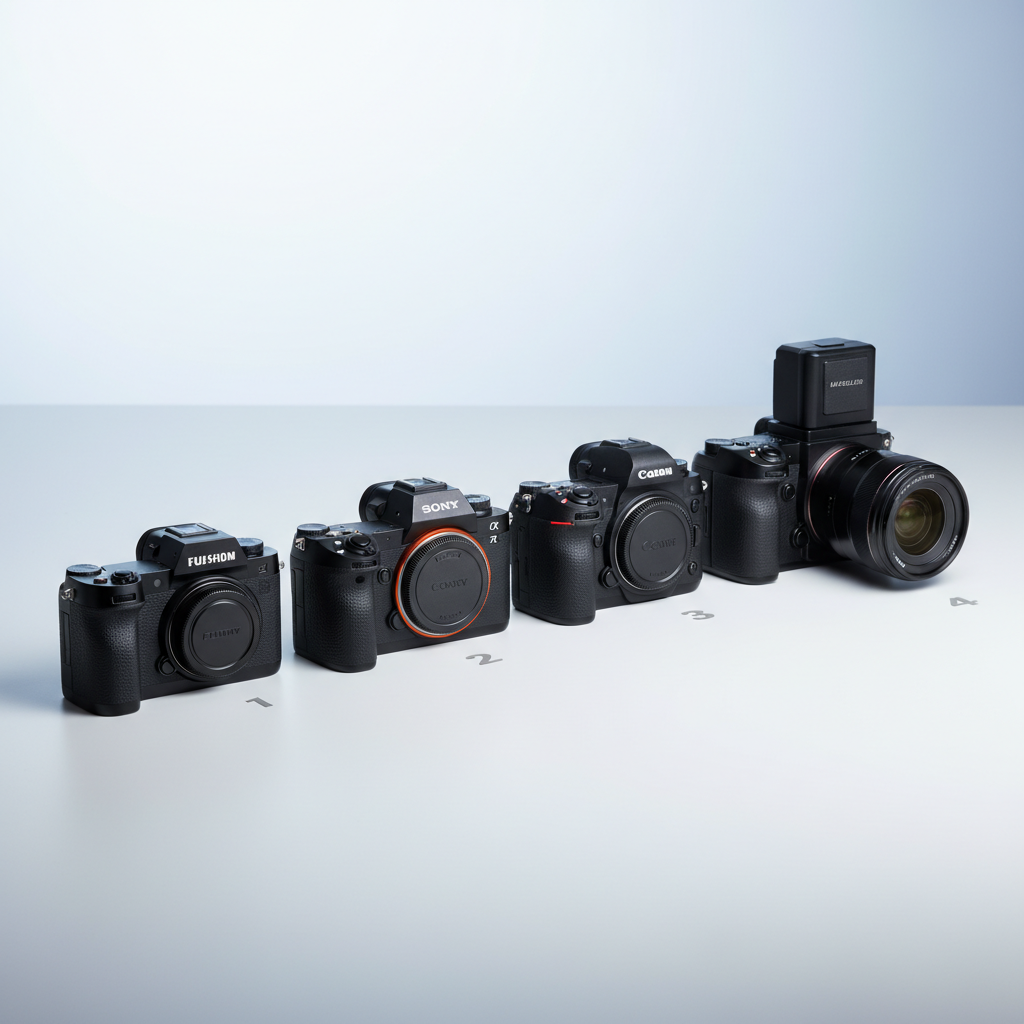
Digital Cameras Ranked By Pure Image Quality
When it comes to digital photography, the term "image quality" is the ultimate goal. It's a combination of detail, clarity, color accuracy, and the ability to perform well in various lighting conditions. While user skill and the lens play enormous roles, the camera body and its internal technology set the ceiling for potential quality. Here, we rank different types of digital cameras based on their raw, technical capability to produce the best possible image files.
Ranking Cameras by Image Quality Potential
This ranking is based primarily on sensor size, which is the single most significant factor in determining a camera's potential for capturing light and detail. A larger sensor can gather more light, which leads to cleaner images, better performance in dim conditions, and a greater dynamic range (the ability to capture details in both the brightest and darkest parts of a scene).
1. Medium Format Cameras
At the absolute pinnacle of image quality sits the medium format camera. These cameras feature sensors that are significantly larger than the standard 35mm "full-frame" size, allowing them to capture an astonishing amount of information. The result is images with unparalleled detail, incredibly smooth tonal gradations, and a depth and richness of color that is simply unmatched by smaller formats. This immense data capture provides incredible flexibility in post-processing, allowing for massive prints and aggressive cropping without a noticeable loss in quality.
Medium format systems, from brands like Hasselblad, Phase One, and Fujifilm's GFX series, are the tool of choice for high-end commercial, fashion, and fine art landscape photographers. Their slower operation, larger size, and considerable cost place them firmly in the professional sphere, where absolute, uncompromising image quality is the primary requirement. For those who need the best of the best, there is no substitute.
2. Full-Frame Cameras
Full-frame cameras are the modern workhorses for the vast majority of professional photographers and serious enthusiasts. Their sensors are the same size as a classic 35mm film frame, which provides a fantastic balance of performance, size, and cost. This large sensor area excels at shooting in low-light conditions, producing clean, low-noise images even at high ISO settings. Furthermore, full-frame sensors allow photographers to achieve a shallow depth of field more easily, creating that desirable background blur (bokeh) that isolates a subject.
This category is where most flagship models from Sony, Canon, and Nikon reside. They offer a mature ecosystem of high-quality lenses for every conceivable purpose, from wide-angle architectural shots to super-telephoto wildlife photography. For most applications, including weddings, portraits, photojournalism, and advanced hobbyist work, full-frame cameras represent the gold standard, delivering exceptional image quality that can handle nearly any situation.
3. APS-C Cameras
APS-C cameras are arguably the sweet spot for many photographers, offering a significant leap in quality from smaller formats without the expense and bulk of a full-frame system. The sensor is smaller than full-frame (typically about 1.5x or 1.6x smaller, known as the "crop factor"), but it is still large enough to deliver excellent detail, good low-light performance, and beautiful image files. Many photographers find the image quality to be more than sufficient for professional work, especially in good lighting.
This format thrives in the enthusiast, travel, and vlogging markets. The slightly smaller sensor allows for smaller and lighter camera bodies and lenses, making an APS-C kit much more portable. Brands like Fujifilm, with their celebrated X-Series, and Sony, with their popular a6000 line, have built incredible systems around this sensor size. It's the perfect choice for someone who wants to get serious about photography and have access to interchangeable lenses without committing to a larger, heavier full-frame setup.
4. Micro Four Thirds (MFT) Cameras
The Micro Four Thirds system, developed by Panasonic and Olympus (now OM System), prioritizes a compact and lightweight system without making a major compromise on image quality. The MFT sensor is about half the size of a full-frame sensor (a 2x crop factor), which allows for exceptionally small cameras and lenses. This is its greatest strength; you can carry a body and several lenses in a small bag that would struggle to hold a single full-frame camera and lens.
While MFT cameras can't compete with larger sensors in extreme low light or in achieving super-shallow depth of field, they produce fantastic, detailed images in most conditions. The system boasts one of the most extensive and affordable lens selections available. It's an outstanding choice for travel photographers, street photographers, and anyone who values portability and discretion above all else. The deeper depth of field can also be an advantage for landscape and macro photography.
5. High-End Compacts (1-Inch Sensor)
For those who want excellent image quality in a camera that can genuinely fit in a pocket, the 1-inch sensor compact is the answer. The sensor in these cameras is substantially larger than what you'll find in a smartphone or a basic point-and-shoot, allowing it to capture far more light and detail. This results in cleaner, sharper, and more dynamic images, especially when you need to move beyond your phone's capabilities.
Cameras like Sony's RX100 series have long dominated this category, offering features like a sharp zoom lens, RAW image capture, and manual controls in a tiny package. These cameras are perfect for travelers who want to pack light, for vloggers who need a simple but high-quality solution, or as a secondary "carry everywhere" camera for serious photographers who don't want to bring their larger gear.
What Actually Determines Image Quality in a Digital Camera?
While sensor size is the biggest piece of the puzzle, it's not the only one. True image quality is the result of several key components working together in harmony. Understanding these factors helps you look beyond marketing hype and see what truly matters.
The first factor is, of course, the sensor. Beyond its physical size, the technology within the sensor, such as its design (BSI, stacked) and its analog-to-digital converter, affects its efficiency in converting light into a clean digital signal. Second is the lens. A camera is nothing without a quality lens to focus light sharply onto the sensor. A high-resolution sensor paired with a soft, cheap lens will produce a soft, low-quality image. Lens sharpness, contrast, and control over aberrations like chromatic aberration and distortion are critical. Finally, the image processor—the camera's brain—plays a vital role. It interprets the raw data from the sensor, controls noise reduction, and renders the final colors and tones for a JPEG image. A powerful processor can produce more pleasing colors and cleaner files, especially at high ISOs.
Answering Your Top Questions About Image Quality
Navigating the world of cameras often brings up common questions. Here are detailed answers to some of the most frequent queries people have when trying to understand what makes a good picture.
Does More Megapixels Mean Better Photos?
This is one of the oldest and most persistent myths in digital photography. The answer is a clear no; more megapixels do not automatically mean better image quality. Megapixels refer to the resolution of the image—how many millions of pixels make up the photograph. Higher resolution is useful for making very large prints or for cropping heavily into a photo while retaining detail. However, it is not a measure of the quality of those pixels.
Image quality is determined by factors like color accuracy, dynamic range, and noise performance. In fact, cramming too many megapixels onto a small sensor can sometimes be detrimental. Smaller pixels are less sensitive to light, which can lead to more digital "noise" (a grainy look) in low-light situations. A 24-megapixel full-frame camera will almost always produce a cleaner, higher-quality image in dim light than a 50-megapixel smartphone camera, simply because its individual pixels are much larger and can gather more light.
How Much Does the Lens *Really* Matter?
The lens matters immensely—arguably more than the camera body itself in many situations. The lens is the "eye" of the camera system. Its job is to gather light and focus it precisely onto the camera's sensor. If the lens projects a soft, distorted, or hazy image, then even the most advanced sensor in the world can only record a soft, distorted, or hazy digital file. A great camera body can't fix the flaws of a poor-quality lens.
High-quality lenses are engineered with precision glass elements that deliver edge-to-edge sharpness, excellent contrast, and minimal distortion. They also typically feature wider maximum apertures (e.g., f/1.8 or f/2.8), which allow more light to enter the camera. This is crucial for two reasons: it enables faster shutter speeds for freezing action and shooting in low light, and it allows for a shallower depth of field to create beautiful background blur. Many experienced photographers would agree that it's better to invest in high-quality lenses for a mid-range camera body than it is to use cheap lenses on a top-of-the-line body.
RAW vs. JPEG: Which Format is Better for Quality?
For anyone serious about getting the absolute best image quality from their camera, shooting in RAW is the only way to go. A JPEG (.jpg) file is a compressed, processed image. When you take a picture in JPEG mode, the camera's internal processor makes permanent decisions about white balance, sharpening, saturation, and contrast. It then compresses the file by discarding data it deems unnecessary to save space. While convenient for sharing immediately, this process limits your editing potential.
A RAW file, on the other hand, is the completely unprocessed, uncompressed data straight from the camera's sensor. It's the digital equivalent of a film negative. This file contains a much wider range of colors and tones, offering incredible flexibility in editing software like Adobe Lightroom or Capture One. With a RAW file, you can drastically adjust exposure, recover seemingly lost details in shadows and highlights, change white balance, and fine-tune colors without degrading the image quality. The trade-off is larger file sizes and the necessity of post-processing, but for maximum quality, RAW is the undisputed champion.
Conclusion
When ranking cameras by pure image quality, a clear hierarchy emerges, dominated by sensor size. Medium format stands alone at the top, followed by the versatile full-frame standard, the balanced APS-C, and the compact Micro Four Thirds system. However, the final image is a product of more than just the sensor. The quality of the lens, the power of the image processor, and the format you choose to shoot in all play critical roles. Understanding how these elements work together is the key to choosing the right system and unlocking its full potential to capture stunning photographs.
For further reading and real-world camera reviews, check out DPReview or browse sample images on Flickr.