Top Essential Home Gym Equipment for Effective Back Pain Relief
Finding the right home gym equipment to ease back pain can feel overwhelming, but the truth is you don't need a massive, expensive setup to find relief. This guide cuts through the noise to focus only on the essential, targeted tools that make a real difference.
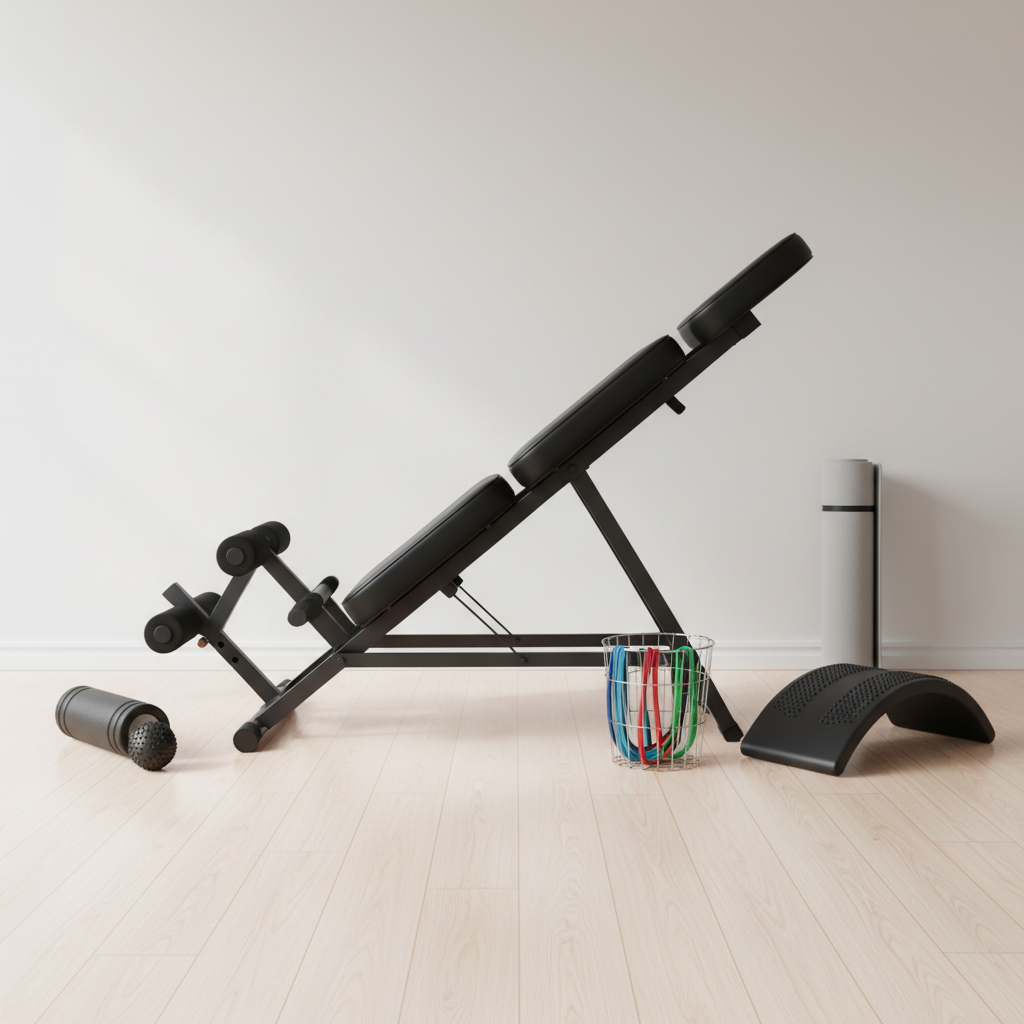
Essential Home Gym Equipment For Back Pain Relief
Managing back pain often involves a combination of rest, therapy, and targeted exercise. Creating a home gym environment with the right equipment can empower you to take control of your recovery and long-term spinal health. The goal isn't to lift the heaviest weights but to focus on tools that promote core strength, flexibility, and spinal decompression. Below are some of the most essential pieces of equipment that can help you build a safe and effective routine for back pain relief right from the comfort of your home.
Key Equipment for Your Back-Friendly Home Gym
1. High-Density Foam Roller
A foam roller is a simple yet incredibly effective tool for self-myofascial release, which is essentially a form of self-massage. For those with back pain, it can be a game-changer. Rolling out tight muscles in the supporting areas—like the hamstrings, glutes, quads, and upper back—can release tension that pulls on the lumbar spine and contributes to discomfort. A tight psoas muscle or stiff hamstrings, for example, can tilt the pelvis and put significant strain on the lower back. By regularly using a foam roller, you can improve blood flow to these muscles, increase flexibility, and alleviate some of the referred tension that manifests as back pain.
When choosing a foam roller, a high-density model is often recommended for its durability and effectiveness. While they may feel intense at first, they provide the firm pressure needed to work out deep knots and adhesions. Start slowly, applying gentle pressure and holding on tender spots for 20-30 seconds until the muscle begins to release. It's crucial to avoid rolling directly on the lower back spine or any bony prominences, as this can cause irritation or injury. Instead, focus on the large muscle groups that support the spine.
2. Quality Yoga Mat
A good yoga mat provides a stable, cushioned, non-slip surface that is essential for performing floor exercises safely. When dealing with back pain, many of the most beneficial movements—such as bird-dog, cat-cow, and pelvic tilts—are done on the hands and knees or while lying down. A hard floor can be uncomfortable and place unnecessary pressure on your joints, particularly your knees and spine. A quality mat offers the cushioning needed to perform these exercises without added discomfort, allowing you to focus on proper form and alignment.
Look for a mat that is at least 1/4-inch thick to provide adequate padding. A non-slip surface is also critical for safety, preventing your hands or feet from sliding during stretches or core exercises. Beyond specific exercises, a mat creates a dedicated space for your routine, which can mentally prepare you to focus on mindful movement. This dedicated zone helps reinforce the habit of daily stretching and strengthening, which is a cornerstone of long-term back pain management.
3. Resistance Bands (Loop and Thera-Bands)
Resistance bands are perhaps the most versatile and back-friendly strength-training tools you can own. They allow you to strengthen key muscle groups without putting compressive loads on the spine, which is a major concern with traditional weights like barbells. For back pain, the focus is on strengthening the core and glutes. Exercises like glute bridges with a loop band around the knees, clamshells, and banded side steps are phenomenal for activating the gluteus medius, a crucial muscle for pelvic stability. A stable pelvis reduces excessive movement and strain in the lower back.
Longer bands with handles (Thera-Bands) are excellent for exercises like seated rows and pallof presses, which strengthen the upper back and deep core muscles, respectively. A strong upper back improves posture, while a strong core acts as a natural corset, supporting and protecting the lumbar spine. Because bands offer variable resistance, they are suitable for all fitness levels and allow you to progress gradually as you get stronger, making them a safe and sustainable choice.
4. Inversion Table
An inversion table is a more specialized piece of equipment designed specifically for spinal decompression. It allows you to hang upside down at a controlled angle, using gravity to gently stretch the spine. This action can increase the space between your vertebrae, which may relieve pressure on spinal discs and nerve roots. Many users report significant, albeit often temporary, relief from pain caused by conditions like sciatica or herniated discs. It helps to hydrate the discs, improve circulation, and relax tense back muscles.
Before using an inversion table, it is absolutely essential to consult with a doctor or physical therapist, as it is not suitable for everyone. Individuals with high blood pressure, heart conditions, or glaucoma should avoid inversion therapy. When starting, begin with a very slight angle (around 20-30 degrees) for just a minute or two to see how your body responds. You don't need to go fully upside down to experience the benefits. Consistent, gentle use is far more effective and safer than aggressive, infrequent sessions.
5. Stability Ball (Exercise Ball)
A stability ball is an excellent tool for developing core strength and stability in a dynamic way. Simply sitting on the ball forces you to engage the small stabilizing muscles in your core and back to maintain balance. This subtle, continuous engagement helps build endurance in the muscles that support your spine throughout the day. You can perform a variety of exercises on the ball, such as pelvic tilts, crunches (with proper form to avoid neck strain), and planks with your feet or forearms on the ball.
One of the key benefits of using a stability ball is that it promotes proper alignment and posture. When performing exercises like a plank or bird-dog on an unstable surface, your body must recruit more muscle fibers to stay balanced, leading to greater functional strength. Be sure to choose a ball that is the correct size for your height—when you sit on it, your hips and knees should be at a 90-degree angle. Start with simple balancing exercises before progressing to more complex movements.
6. Pull-Up Bar
While often associated with advanced upper-body strength, a simple doorway pull-up bar is one of the best tools for passive spinal decompression. You don't even need to be able to do a pull-up to reap the benefits. By simply hanging from the bar (a "dead hang"), you allow gravity to gently stretch your entire spine, from your neck down to your lower back. This can create space between the vertebrae, similar to an inversion table but with less specialized equipment and risk.
Start by hanging for just 10-20 seconds at a time, keeping your shoulders engaged (not scrunched up by your ears) to protect the joints. You can keep your feet on the floor or a stool to reduce the amount of body weight you are supporting until you build up grip strength. This simple daily practice can help relieve the compressive forces that build up from sitting or standing all day, providing noticeable relief and improving shoulder mobility at the same time.
Understanding the Connection Between Exercise and Back Pain Relief
To understand why this equipment is effective, it’s important to grasp the fundamentals of why targeted exercise helps alleviate back pain. The human spine is a complex structure of bones, discs, nerves, and muscles. Pain often arises not from a single event but from chronic issues like poor posture, muscle imbalances, and a weak core. When the muscles designed to support the spine—namely the abdominals, obliques, glutes, and back extensors—are weak, other structures have to compensate, leading to strain, inflammation, and pain.
Core stability is the foundation of a healthy back. Your core is not just the "six-pack" muscles; it's a 360-degree band of muscle that wraps around your midsection. A strong, stable core acts like a natural brace, distributing forces evenly and protecting the delicate structures of the lumbar spine from excessive stress during everyday movements like lifting, twisting, and even sitting. The equipment listed above, particularly resistance bands and stability balls, directly targets these deep stabilizing muscles in a safe, controlled manner.
Furthermore, flexibility and mobility are just as crucial as strength. Tight hamstrings, hip flexors, and glutes can pull the pelvis out of its neutral alignment, a condition known as pelvic tilt. This misalignment places constant strain on the lower back muscles, forcing them to remain in a perpetually tensed state. Tools like the foam roller and yoga mat facilitate the stretching and mobility work needed to correct these imbalances, allowing the spine to rest in a healthier, more neutral position.
Common Questions About Exercising with Back Pain
What exercises should I avoid with back pain?
When you have back pain, certain movements can do more harm than good. High-impact exercises like running on hard surfaces, jumping, or intense aerobics can jar the spine and exacerbate disc issues. It's also wise to be cautious with exercises that involve heavy spinal loading, such as traditional barbell squats and deadlifts, unless you are working with a professional who can ensure your form is impeccable. Any movement that involves significant twisting or forward flexion of the lumbar spine under load should be approached with extreme caution or avoided altogether.
Perhaps the most notorious "bad" exercises are traditional sit-ups and double leg lifts. These movements place a tremendous amount of compressive force on the lumbar discs and often rely on the hip flexors more than the abdominals. A better alternative for core strength would be planks, bird-dogs, or dead bugs, which strengthen the core while keeping the spine in a safe, neutral position.
How often should I be stretching for my back?
Consistency is far more important than intensity or duration when it comes to stretching for back pain relief. Aim for a short stretching routine performed daily rather than one long session per week. Even 10-15 minutes a day can make a significant difference. Focus on gentle, static stretches where you hold a position for 20-30 seconds without bouncing. This allows the muscle to relax and lengthen gradually.
Key areas to target include the hamstrings, hip flexors (psoas), glutes (piriformis), and quads. Stretches like the cat-cow are excellent for promoting gentle mobility in the spine itself. It's best to stretch when your muscles are warm, such as after a short walk or a warm shower. Remember, stretching should never be painful. If you feel a sharp or shooting pain, ease off immediately. The goal is to feel a gentle pull, not to force the muscle into submission.
Can a weak core really cause back pain?
Absolutely. It is one of the most common underlying causes of chronic lower back pain. Think of your spine as a tall, flexible tower. Without strong guy wires supporting it from all sides, it would be incredibly unstable and prone to toppling. Your core muscles are those guy wires. The transverse abdominis, in particular, acts like a deep, internal weightlifting belt, cinching in to create intra-abdominal pressure that stabilizes the lumbar spine from the front.
When these muscles are weak, the small muscles along the spine (like the erector spinae) and the spinal ligaments are forced to do the stabilizing work they were not designed for. This overloads them, leading to muscle spasms, strain, and chronic pain. Strengthening your entire core—including your glutes, which stabilize the pelvis—creates a powerful, supportive cylinder around your midsection, taking the pressure off your spine and allowing it to function as intended.
Conclusion
Building a home gym for back pain relief doesn't require expensive, complex machinery. Instead, the focus should be on simple, versatile tools that promote core stability, improve flexibility, and allow for gentle spinal decompression. Equipment like foam rollers, resistance bands, and stability balls empowers you to perform the targeted exercises recommended by physical therapists in a safe and effective way. By consistently incorporating these tools into your routine, you can build a stronger, more resilient back and take a proactive role in your long-term spinal health. Always remember to consult with a healthcare professional before starting any new exercise program, especially when dealing with pain.