Top Revolutionary Cars Set to Turn Heads in 2026
The year 2026 is shaping up to be a monumental one for the automotive world, with a huge wave of innovation set to arrive. From game-changing electric vehicles and powerful revivals of iconic nameplates to the next generation of supercars, the variety is staggering.
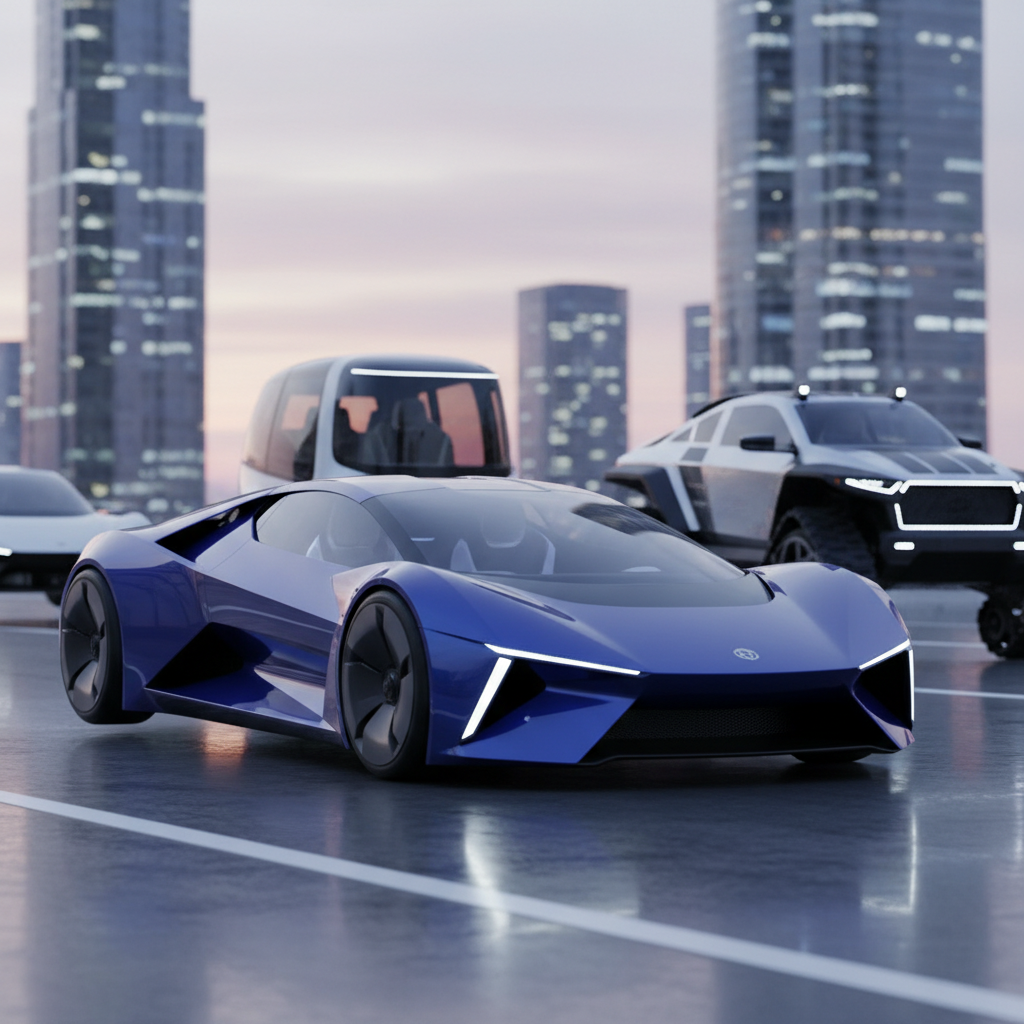
The automotive landscape is evolving at a breathtaking pace, with electrification, software, and bold design philosophies leading the charge. As we look ahead, the 2026 model year is shaping up to be a landmark period, packed with revolutionary new vehicles that promise to redefine our driving experience. From reborn icons to futuristic electric powerhouses, the pipeline is filled with models that are generating significant buzz. These aren't just incremental updates; many represent fundamental shifts for their respective brands.
This list explores some of the most anticipated and exciting cars slated to make their mark in 2026. While some details are based on industry reports and well-sourced rumors, they paint a vivid picture of a future that’s just around the corner. Get ready to explore the vehicles that will be dominating conversations and turning heads in the very near future.
1. Next-Generation Dodge Charger EV
Dodge sent shockwaves through the muscle car world by announcing the end of its V8-powered Charger and Challenger. In their place comes a vehicle that looks to the future without forgetting its past: the all-electric Dodge Charger Daytona SRT. Expected to be in full production for the 2026 model year, this car aims to prove that electric power can be just as visceral and thrilling as gasoline. It features a groundbreaking "Fratzonic Chambered Exhaust" that generates a synthetic engine roar up to 126 decibels, mimicking the auditory punch of its Hellcat predecessors.
Beyond the sound, the Charger EV will be built on Stellantis's new STLA Large platform, offering all-wheel drive and multiple power levels, with top-tier "Banshee" models expected to deliver performance that surpasses the outgoing V8s. Its design is a brilliant blend of retro and modern, incorporating the classic Charger silhouette with aerodynamic enhancements and futuristic lighting. This car isn't just an EV; it's Dodge's audacious attempt to redefine the American muscle car for a new era, making it one of the most-watched launches of the decade.
2. Porsche 718 Boxster/Cayman EV
Porsche has already proven its electric prowess with the Taycan, and now it's turning its attention to its beloved mid-engine sports cars. The next-generation 718 Boxster and Cayman, due around 2026, will be fully electric. This is a monumental shift for a car celebrated for its perfectly balanced chassis and responsive gasoline engines. Porsche’s challenge is to retain that legendary handling and driver-centric feel while incorporating the weight and characteristics of an EV powertrain. The company is using a bespoke sports car platform designed specifically for this purpose, aiming for a low center of gravity and optimal weight distribution.
Early prototypes and concept sketches suggest a sleek, futuristic design that's still unmistakably a 718. Performance is expected to be staggering, with instant torque providing acceleration that could rival many supercars. The biggest question enthusiasts have is whether Porsche can replicate the emotional connection and nimble feedback of the original. If they succeed, the 718 EV will not only be a phenomenal sports car but will also serve as a blueprint for the future of all electric performance vehicles.
3. Scout EV SUV and Pickup
For those who remember the rugged, no-nonsense International Harvester Scout of the 1960s and '70s, this revival is a dream come true. Volkswagen is resurrecting the Scout name as a new, all-electric brand focused exclusively on capable, off-road-oriented SUVs and pickup trucks for the American market. Set to launch its first models for the 2026 model year, Scout is positioning itself as a direct competitor to brands like Rivian, as well as electric offerings from Jeep and Ford.
The Scout vehicles are promised to be "true off-roaders" with a focus on durability, utility, and classic, rugged styling. Unlike many modern SUVs that are built on unibody car platforms, the Scout is expected to feature a new body-on-frame platform designed for extreme capability. This approach prioritizes ground clearance, suspension travel, and toughness over on-road comfort, appealing directly to the overlanding and adventure community. With its iconic heritage and a clear focus on a specific market niche, the Scout brand is poised to make a massive impact.
4. Apple Car (Project Titan)
Perhaps the most mysterious and potentially disruptive vehicle on this list is the long-rumored Apple Car. While Apple remains notoriously secretive about "Project Titan," consistent reports suggest the company is targeting a 2026 launch for its first automotive endeavor. This isn't just about building an electric car; it's about reimagining the vehicle as the ultimate mobile device. The focus is expected to be on a revolutionary user interface, seamless integration with the Apple ecosystem, and a breakthrough in autonomous driving technology.
Speculation points to a design that prioritizes interior space and passenger experience, potentially lacking a traditional steering wheel and pedals in its ultimate form. The car's "brain" would be a powerful new Apple-designed chip, managing everything from driving to infotainment. While massive hurdles remain, from manufacturing to regulation, the potential for Apple to disrupt the century-old auto industry is immense. If the Apple Car does arrive in 2026, it could fundamentally change our relationship with our vehicles forever.
5. Next-Generation Nissan GT-R (R36)
The current Nissan GT-R, the R35, has been a performance icon for well over a decade, earning its "Godzilla" nickname by consistently punching above its weight. By 2026, its long-awaited successor, the R36, is expected to finally be on the horizon. While Nissan has been tight-lipped, top executives have hinted that the future of the GT-R will be electrified. This doesn't necessarily mean it will be a pure EV; a high-performance hybrid system is the more likely path.
The goal will be to use electric motors not just for efficiency, but to enhance performance in ways a purely internal combustion engine cannot. This includes torque-vectoring for even sharper handling and instant torque fill to eliminate any hint of turbo lag. The R36 will need to deliver a quantum leap in performance to honor the GT-R legacy, and a hybrid powertrain is the key to unlocking that potential. Combined with a new chassis and cutting-edge aerodynamics, the next Godzilla is set to be one of the most technologically advanced supercars on the planet.
6. Toyota MR2 Successor
Toyota has been on a roll, reviving its most beloved sports car nameplates with the GR Supra and GR86. The final piece of the brand’s "three brothers" sports car puzzle is a successor to the iconic mid-engine MR2. In late 2023, Toyota showcased the FT-Se concept, a stunning all-electric, two-seater sports car that is widely believed to preview the next-gen MR2, potentially arriving around 2026. The concept’s low, wide stance and sharp lines signal a clear focus on performance and handling.
An electric powertrain is a natural fit for a mid-ship layout, as the battery pack can be placed low and centrally in the chassis to achieve an incredibly low center of gravity and ideal weight balance. Toyota engineers are reportedly focused on making it lightweight and engaging, overcoming the typical heaviness of EVs. If the production version retains the spirit of the concept, it could offer supercar looks and blistering performance at a more accessible price point, bringing the thrill of a mid-engine sports car to a new generation of electric-era enthusiasts.
The Tectonic Shift: Why 2026 is a Pivotal Year for Automobiles
The wave of exciting cars arriving in 2026 isn't a coincidence; it's the result of several massive industry trends converging at once. The primary driver is the global transition to electric vehicles. By 2026, battery technology will have matured significantly, offering longer ranges, faster charging, and lower costs than ever before. This has enabled automakers to move beyond simple compliance cars and start designing EVs from the ground up, unlocking new possibilities in performance, interior space, and design.
Simultaneously, advancements in software are transforming cars into "computers on wheels." Vehicles are becoming defined by their operating systems, processing power, and ability to receive over-the-air updates that can improve performance or add new features long after the car has left the factory. This software-defined approach, championed by Tesla and now being adopted by legacy automakers, is a core component of vehicles like the Apple Car and the next-gen Dodge Charger. Combined with progress in autonomous driving systems, these trends are culminating in a period of unprecedented innovation, making 2026 a truly pivotal year.
Exploring the Future of Driving: Key Questions Answered
Will Solid-State Batteries Be Mainstream by 2026?
Solid-state batteries are often called the "holy grail" of EV technology. Unlike current lithium-ion batteries, which use a liquid electrolyte, solid-state batteries use a solid material. This offers three huge advantages: higher energy density (meaning more range in a smaller, lighter package), improved safety (as the solid electrolyte is not flammable), and potentially much faster charging times. Many automakers, including Toyota, Nissan, and Volkswagen, are investing billions into developing this technology.
However, reaching mass production has proven to be incredibly difficult due to challenges with manufacturing costs and durability over many charging cycles. While we will likely see limited production runs or prototype vehicles featuring solid-state batteries by 2026, it is highly unlikely they will be mainstream. Most experts predict that widespread adoption in mass-market EVs is more likely to occur closer to 2030. For the 2026 models, expect continued improvements in the current lithium-ion chemistry to be the primary source of range and performance gains.
How is AI Changing Car Design and Manufacturing?
Artificial Intelligence is no longer just a buzzword; it's a fundamental tool that is revolutionizing how cars are made. One of the key applications is in "generative design." Engineers input their goals—such as strength requirements, weight limits, and material type—and an AI algorithm generates thousands of potential designs for a component, often resulting in organic, lattice-like shapes that are stronger and lighter than anything a human could conceive. This leads to more efficient and better-performing vehicles.
On the factory floor, AI is the brain behind modern robotics and quality control. AI-powered vision systems can spot microscopic defects in paint or welds that are invisible to the human eye, ensuring higher quality. AI also optimizes the entire supply chain and assembly line, predicting maintenance needs for machinery to prevent downtime and orchestrating the flow of parts for maximum efficiency. This "smart factory" approach reduces waste, lowers costs, and speeds up the time it takes to bring a new car from concept to reality.
What Happens to Gas-Powered Cars as EVs Take Over?
The transition to electric vehicles is a gradual process, and internal combustion engine (ICE) cars will remain on the road for many years to come. However, their role in the market is set to change dramatically. In the new car market, expect to see ICE technology primarily reserved for high-performance enthusiast cars (often as part of a hybrid system) and heavy-duty trucks where electric solutions are not yet as practical. For mainstream sedans and family SUVs, the shift to EV will be most aggressive.
For existing gas-powered cars, the future is more complex. As governments around the world implement phase-out dates for new ICE car sales, the resale value of traditional gasoline vehicles is expected to decline over the long term. Fuel and maintenance may also become more expensive as infrastructure shifts to support EVs. However, there's a growing movement around synthetic fuels, or e-fuels, which are carbon-neutral and can be used in existing ICE cars. This could provide a lifeline for classic cars and the enthusiast community, allowing them to continue operating in a more environmentally friendly way long into the future.
Conclusion
The year 2026 stands as a gateway to a new era in the automotive world. The vehicles on the horizon are more than just new models; they represent bold new ideas and the culmination of years of technological advancement. Whether it's the raw, reinvented power of an electric muscle car, the precision of an electric Porsche, or the disruptive potential of a tech giant entering the space, the common thread is a future that is smarter, faster, and more exciting than ever before. For car enthusiasts and everyday drivers alike, the next few years promise a thrilling ride.