Top Smartphones for Photography Enthusiasts in 2023
If you're looking for a smartphone that can truly replace a dedicated camera, you've landed in the right spot. We're breaking down the top contenders on the market, comparing everything from their powerful zoom capabilities and stunning low-light performance to their pro-level video features.
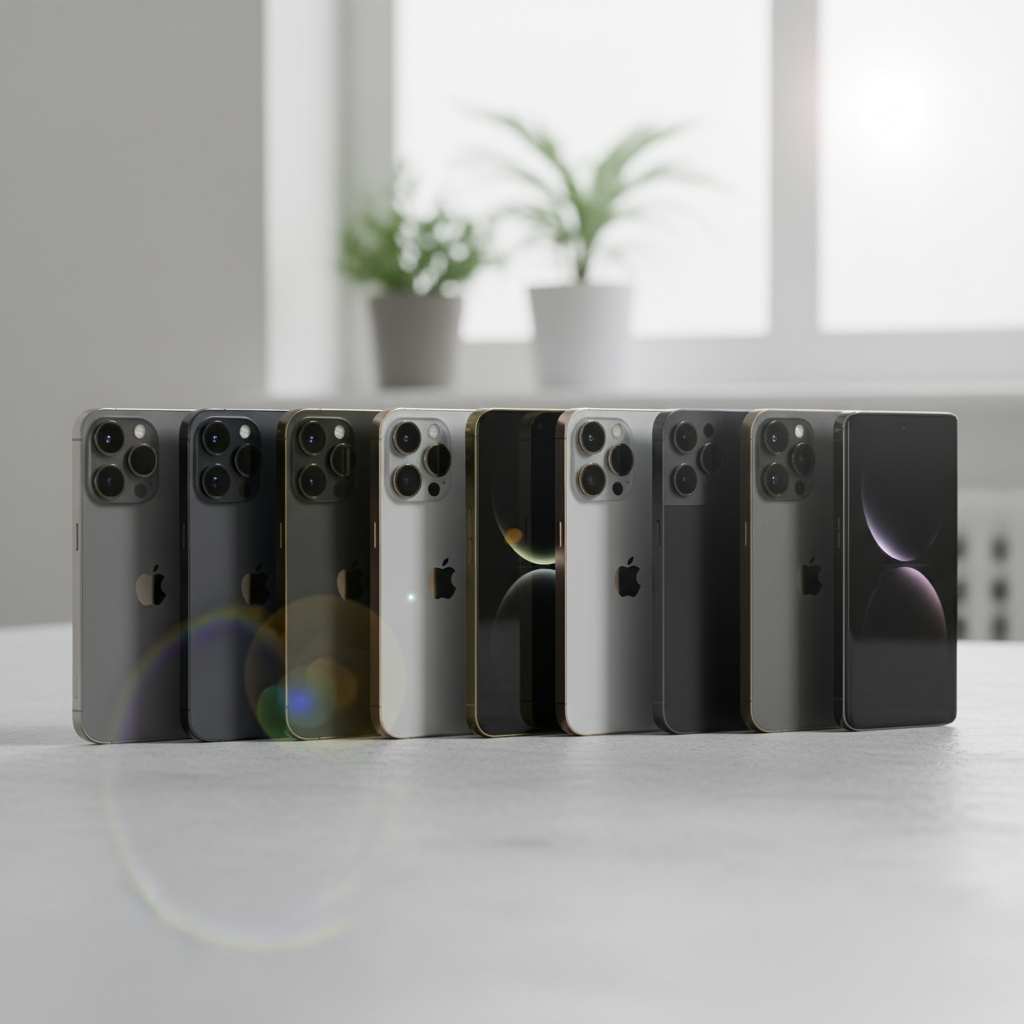
Phones With The Best Camera Options
In today's digital age, a smartphone is often our primary camera, capturing everything from everyday moments to significant life events. As a result, camera quality has become one of the most critical factors for consumers when choosing a new device. Manufacturers have responded by pouring immense resources into developing sophisticated camera systems that blend cutting-edge hardware with powerful software. This guide explores some of the top phones renowned for their exceptional camera capabilities, breaking down what makes each one stand out.
Apple iPhone 15 Pro Max
Apple has long been a leader in smartphone photography, and the iPhone 15 Pro Max continues this legacy with a focus on consistency, reliability, and powerful video features. The main camera boasts a large 48-megapixel sensor that uses pixel binning to produce incredibly detailed 12-megapixel photos with excellent dynamic range and low noise. This technology allows it to capture a huge amount of light, making it a stellar performer in various lighting conditions. The primary lens also offers users the flexibility to shoot at different focal lengths, essentially providing multiple prime lenses in one.
Where the iPhone 15 Pro Max truly distinguishes itself is in its cohesive ecosystem and video capabilities. It introduces a new 5x telephoto lens, using an innovative tetraprism design to achieve a 120mm equivalent focal length without a massive camera bump. This is perfect for capturing distant subjects with clarity. Furthermore, its video recording is arguably the best in the business, offering features like Cinematic Mode for shallow depth-of-field effects and ProRes Log video, which gives professional creators more flexibility in post-production. The color science is consistently natural and pleasing, making it a go-to choice for those who want a "point-and-shoot" experience that delivers stellar results every time.
Samsung Galaxy S24 Ultra
The Samsung Galaxy S24 Ultra is a powerhouse of versatility, known for its incredible zoom capabilities and vibrant image processing. The star of the show is its massive 200-megapixel main sensor. While you can capture photos in full resolution for maximum detail, it typically uses advanced pixel binning to combine 16 pixels into one, resulting in bright, sharp 12-megapixel images with fantastic low-light performance. Samsung's image processing tends to produce photos that are bright, colorful, and saturated, which many users find immediately shareable on social media.
The S24 Ultra's defining feature is its dual-telephoto lens system, which includes a 3x optical zoom lens and a new 5x optical zoom lens with a high-resolution 50MP sensor. This combination, enhanced by AI-powered "Space Zoom," allows for usable photos at extreme distances, far surpassing what most competitors can achieve. The phone is also packed with creative modes and pro-level controls, giving users who love to tinker with settings plenty of options. With the introduction of Galaxy AI, features like Generative Edit allow for impressive photo manipulation right on the device, further cementing its place as a tool for creativity.
Google Pixel 8 Pro
Google's Pixel series has always been celebrated for its software-driven approach to photography, and the Pixel 8 Pro is the pinnacle of this philosophy. While its hardware is top-notch—featuring a 50-megapixel main sensor, an improved ultrawide lens, and a 5x telephoto lens—it's the computational photography that sets it apart. Google's HDR+ processing is legendary for its ability to balance challenging scenes with bright highlights and deep shadows, producing images with an incredible dynamic range that look true to life.
The Pixel 8 Pro introduces a suite of AI-powered editing tools that feel like magic. Best Take allows you to swap faces in a group photo to ensure everyone is smiling with their eyes open. Magic Editor lets you move, resize, or erase objects in your photos with generative AI filling in the background. For more advanced users, the Pro controls unlock manual settings like shutter speed and ISO. The Pixel camera is for the photographer who trusts the phone to make the right decisions, capturing stunningly realistic and detailed photos with minimal effort.
Xiaomi 14 Ultra
The Xiaomi 14 Ultra is a testament to how far smartphone camera hardware has come, making a strong case for being the ultimate tool for photography enthusiasts. It stands out with its massive 1-inch type main sensor, which is significantly larger than the sensors found in most other smartphones. This larger sensor size allows it to capture more light, resulting in cleaner images, better low-light performance, and a natural, shallow depth of field (bokeh) that rivals dedicated cameras. It also features a variable aperture, allowing users to switch between f/1.63 and f/4.0 to control depth of field and light intake.
Co-engineered with the legendary camera company Leica, the Xiaomi 14 Ultra offers two distinct color profiles: Leica Authentic, for a classic, true-to-life look, and Leica Vibrant, for a more punchy, modern aesthetic. The camera system is incredibly versatile, with high-quality ultrawide and dual telephoto lenses (3.2x and 5x) that all use large, capable sensors. This focus on high-quality hardware across all lenses ensures a consistent and premium experience no matter which focal length you choose. It's a phone designed for those who appreciate the finer points of photography and want maximum control over their images.
Understanding What Makes a Phone Camera "Great"
While manufacturers often highlight megapixels in their marketing, it's just one piece of a much larger puzzle. Understanding the key components of a camera system can help you see beyond the hype and identify what truly matters for photo quality. These core elements work together to turn light into the beautiful digital images we share.
Key Hardware Components
- Sensor Size: This is arguably the most critical factor. A larger sensor has larger individual pixels, which can capture more light. This directly translates to better performance in dim conditions, less digital "noise" or graininess, and a wider dynamic range (the ability to capture detail in both the brightest and darkest parts of an image).
- Aperture: Expressed as an f-number (like f/1.8), the aperture is the opening in the lens that lets light through to the sensor. A lower f-number means a wider opening, which allows more light in. This is crucial for low-light photography and also helps create a natural background blur (bokeh) in portraits.
- Lens Quality and Variety: A phone is no longer limited to a single lens. Premium phones come with a multi-lens array, typically including a standard wide lens, an ultrawide lens for expansive landscapes, and a telephoto lens for zooming in on distant subjects. The quality of the glass and coatings on these lenses affects sharpness, color, and flare.
The Power of Software and Processing
Modern smartphone photography is as much about software as it is about hardware. This is called computational photography. When you press the shutter button, the phone instantly captures multiple frames and uses powerful algorithms to merge them. This process, often powered by Artificial Intelligence (AI), is what enables features like HDR (High Dynamic Range) to balance bright skies and dark shadows, Night Mode to create bright and clear photos in near darkness, and Portrait Mode to intelligently blur the background while keeping the subject sharp.
Frequently Asked Questions About Smartphone Cameras
Are More Megapixels Always Better?
The "megapixel race" is one of the oldest marketing tactics in the camera industry, but the answer is definitively no—more is not always better. A higher megapixel count means the image is made up of more individual pixels, which can lead to more detail in ideal, bright lighting. However, cramming more pixels onto a small sensor means each pixel has to be smaller. Smaller pixels capture less light, which can lead to more digital noise and poorer performance in low-light situations.
To counteract this, many high-megapixel phones use a technique called "pixel binning." This process digitally combines a group of adjacent pixels (e.g., four or sixteen) into one larger "super pixel." This super pixel can gather more light, effectively giving you the low-light benefits of a larger pixel while still retaining the option to use the full megapixel count for high-detail shots when the lighting is perfect. Ultimately, a camera with a larger sensor and fewer megapixels can often outperform a camera with a smaller sensor and a very high megapixel count.
How Important is Video Quality in a Phone Camera?
In an era dominated by social media platforms like TikTok, Instagram Reels, and YouTube, video quality has become just as important as still photo quality for many users. A great video camera phone should excel in several key areas. Resolution is the first thing many look for, with 4K being the standard and some phones now offering 8K. However, frame rate is equally important. Shooting in 4K at 60 frames per second (fps) provides incredibly smooth motion, while options for 120fps or 240fps enable dramatic slow-motion effects.
Perhaps the most critical feature for good video is stabilization. Optical Image Stabilization (OIS) uses hardware to physically move the lens or sensor to counteract shaky hands, resulting in smooth, professional-looking footage. Electronic Image Stabilization (EIS) uses software to crop and adjust the frame to reduce shakiness. The best phones often use a hybrid of both. Additional features like cinematic modes that mimic shallow depth-of-field and advanced audio recording capabilities also contribute significantly to the overall video experience.
Final Thoughts on Choosing a Camera Phone
Choosing the phone with the "best" camera ultimately depends on your personal priorities as a photographer. If you value extreme zoom and vibrant, ready-to-share images, a device like the Samsung Galaxy S24 Ultra might be your perfect match. If you prefer a reliable, "it just works" experience with top-tier video and a natural look, the iPhone 15 Pro Max is an excellent choice. For those who love the magic of computational photography and AI-powered editing, the Google Pixel 8 Pro delivers consistently stunning results with minimal effort.
As technology continues to advance, the gap between smartphone cameras and traditional dedicated cameras narrows. The combination of sophisticated hardware like large sensors and versatile lenses with the sheer power of software processing has created a new golden age of mobile photography. By understanding the core strengths of each top contender, you can find a device that not only fits in your pocket but also serves as a powerful creative tool for capturing your world.
For more in-depth camera analysis and reviews, you can visit resources like: