Top Smartphones for Photography Enthusiasts in 2023
In today's world, a smartphone is often your primary camera, making the choice of which one to buy a huge decision. We've put the latest flagships to the test, comparing everything from their stunning low-light performance and powerful zoom lenses to their pro-level video features.
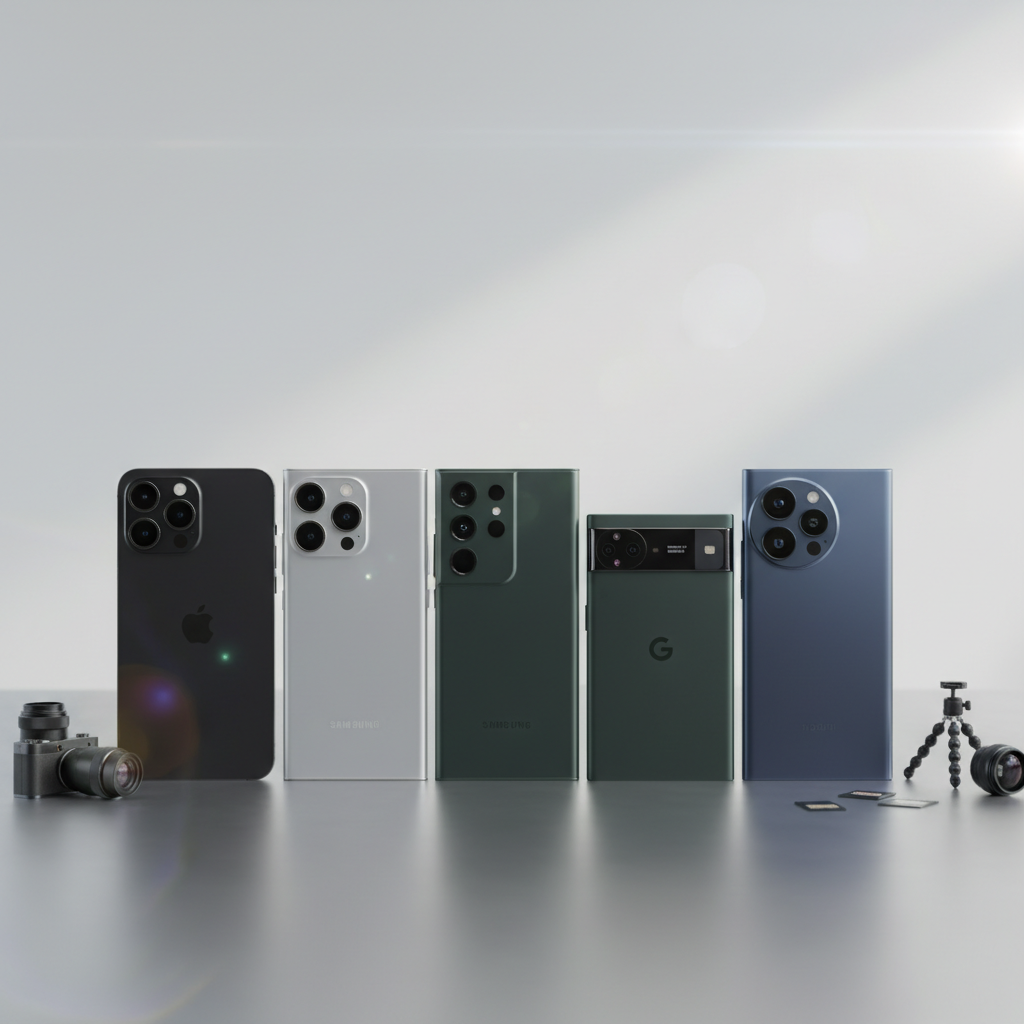
Top Contenders for Best Camera Phone
In the world of smartphones, the camera has become one of the most important battlegrounds. Manufacturers are constantly pushing the boundaries of what's possible with tiny lenses and powerful software. Choosing the "best" one often comes down to personal preference and what you prioritize, whether it's zoom, video quality, or effortless point-and-shoot simplicity. Here’s a look at some of the leading devices known for their exceptional camera systems.
Apple iPhone Pro Series
The iPhone Pro line has built a reputation for consistency and reliability. Its camera system is designed to produce lifelike photos with excellent color accuracy and detail in a wide range of conditions. Apple's approach focuses heavily on computational photography, with features like the Photonic Engine and Smart HDR working behind the scenes to optimize every shot. The result is a camera that is incredibly easy to use; you can point, shoot, and be confident you'll get a great-looking image without much fuss. The system typically includes a main, ultrawide, and telephoto lens, offering versatile framing options for everything from wide landscapes to detailed portraits.
Where the iPhone Pro series truly excels is in video recording. It has long been considered the industry standard for smartphone video, offering smooth stabilization, high-quality 4K footage, and professional-grade features like ProRes video format. This format captures more data, allowing for greater flexibility in post-production color grading and editing. Features like Cinematic Mode, which creates a shallow depth-of-field effect, add a professional touch to videos, making it a top choice for content creators, vloggers, and anyone who values high-quality video as much as still photography.
Samsung Galaxy S Ultra Series
The Samsung Galaxy S Ultra series is all about versatility and power. Its standout feature is undoubtedly its formidable zoom system. Equipped with multiple telephoto lenses, including a powerful periscope lens, the S Ultra can achieve optical and digitally enhanced zoom levels that are unmatched by most competitors. This makes it the ideal phone for capturing subjects from a great distance, such as wildlife, architectural details, or performers at a concert. Samsung's image processing tends to produce vibrant, bright, and punchy photos that look fantastic on social media right out of the camera.
Beyond its zoom capabilities, the S Ultra line boasts a high-megapixel main sensor that captures an incredible amount of detail, especially in good lighting. This provides users with significant cropping flexibility without a major loss in quality. For those who like to take control, the Expert RAW app and Pro mode offer extensive manual controls over settings like ISO, shutter speed, and white balance, mimicking the experience of a dedicated DSLR or mirrorless camera. This combination of powerful automatic processing and deep manual control makes it a fantastic tool for both casual users and serious photography enthusiasts.
Google Pixel Series
Google's Pixel phones have long been celebrated for their mastery of software and computational photography. While other brands often focus on hardware, Google's magic lies in its image processing algorithms. The Pixel camera is renowned for its ability to produce stunningly detailed and well-balanced photos with just a single press of the shutter button. Its HDR+ processing is exceptional at handling tricky lighting situations, preserving details in both the brightest highlights and darkest shadows of a scene. This makes the Pixel arguably the best point-and-shoot experience on the market.
The true power of the Pixel is showcased in its exclusive AI-powered features. Tools like Magic Eraser allow you to seamlessly remove unwanted objects or people from your photos, while Best Take can swap faces in a group shot to ensure everyone is smiling with their eyes open. Features like Night Sight revolutionized low-light smartphone photography, capturing bright and clean images in near darkness. The Google Pixel is the perfect choice for users who want consistently excellent photos without needing to worry about technical settings and who enjoy leveraging cutting-edge AI to perfect their shots after they've been taken.
Xiaomi Ultra Series
Xiaomi has emerged as a major player in the camera phone space, particularly with its flagship "Ultra" models. A key part of its strategy has been its co-engineering partnership with the legendary camera manufacturer Leica. This collaboration brings Leica's color science and lens expertise to the smartphone, resulting in photos with a distinct, professional look. Users can often choose between different Leica color profiles, such as "Leica Authentic" for a natural, classic look and "Leica Vibrant" for a more modern, punchy style.
Hardware is also a primary focus for Xiaomi, which often incorporates massive main camera sensors, sometimes as large as one inch. A larger sensor can capture more light, which translates to better low-light performance, less noise, and a natural, shallow depth of field (background blur) that looks more like what you'd get from a dedicated camera. This focus on large, high-quality hardware combined with sophisticated Leica tuning makes Xiaomi's flagships a compelling option for photographers who appreciate a more artistic and classic approach to their images.
The Evolution of Smartphone Photography
The journey of the smartphone camera is a remarkable story of technological advancement. In the early 2000s, phone cameras were a novelty, capturing grainy, low-resolution images with poor color and limited use. These early cameras, often with less than one megapixel of resolution, were a far cry from the sophisticated tools we carry today. The primary goal was simply to have a camera on a phone, regardless of the quality. As smartphone technology rapidly advanced, so did the demand for better imaging capabilities.
The turning point came with the introduction of more advanced sensors and lenses, but the real revolution was in software. Apple's introduction of Portrait Mode, which used software to simulate the background blur of a professional lens, showed that software could overcome physical limitations. Google's development of Night Sight proved that complex algorithms could pull a usable image from near-total darkness. This shift towards "computational photography"—where the device captures multiple frames and uses AI to merge and process them into a single, superior image—is what defines the modern camera phone. Today, devices use multiple lenses not just for different zoom levels but to gather more data for the processor to create the final, perfected shot.
Understanding Key Camera Phone Features
When comparing camera phones, manufacturers often highlight technical specifications that can be confusing. Understanding what these terms mean is crucial to identifying the camera that best suits your needs.
What Do Megapixels Really Mean?
Megapixels (MP) are one of the most heavily marketed camera specs, and it's easy to assume that more is always better. A megapixel simply represents one million pixels, which are the tiny dots that make up a digital image. A higher megapixel count means the image has a higher resolution, allowing you to print it in larger sizes or crop into it more deeply without it becoming blurry. However, the number of megapixels is not the sole indicator of photo quality.
Many modern phones with high-megapixel sensors (e.g., 108MP or 200MP) use a technique called "pixel binning." This process combines data from multiple adjacent pixels into one larger "super-pixel." For example, a 108MP sensor might combine nine pixels into one, outputting a more manageable 12MP photo. The primary benefit of this is improved low-light performance, as the larger virtual pixel can capture more light and reduce noise. Therefore, it's more important to consider how a phone uses its megapixels rather than just the raw number.
Why Aperture and Sensor Size Matter More
Two of the most critical factors for photo quality, especially in challenging light, are the sensor size and the aperture. The image sensor is the component that actually captures the light to create the image. A larger physical sensor can gather more light, which leads to cleaner, brighter photos with less grain or "noise," particularly indoors or at night. This is why a 12MP photo from a phone with a large sensor will almost always look better than a 12MP photo from a phone with a smaller one.
Aperture refers to the opening in the lens that allows light to pass through to the sensor. It is measured in f-stops, such as f/1.8 or f/2.4. A lower f-stop number indicates a wider opening, which lets in more light. This is beneficial for low-light photography and also helps create a natural background blur (bokeh) in portraits and close-up shots. When you see impressive low-light performance, it is almost always due to the powerful combination of a large sensor and a wide aperture.
The Role of AI and Computational Photography
Modern smartphone photography is as much about software as it is about hardware. Computational photography refers to the use of algorithms and artificial intelligence to process and enhance images. When you press the shutter button, your phone isn't just taking one picture. It's often capturing a burst of frames at different exposure levels in a fraction of a second.
The phone's processor then analyzes these frames. It merges the best parts of each one—taking shadow detail from an overexposed frame and highlight detail from an underexposed frame—to create a final image with a perfectly balanced dynamic range (a feature often called Smart HDR or HDR+). AI also plays a role in recognizing scenes (like landscapes, portraits, or food) to apply specific optimizations, reducing noise, sharpening details, and ensuring colors are accurate. Features like Magic Eraser, Portrait Mode, and Night Sight are all direct results of this powerful software processing.
Finding the Right Camera for You
Ultimately, the best camera phone is subjective and depends entirely on your priorities. If you are a content creator who values top-tier video and a reliable, true-to-life photography experience, the Apple iPhone Pro series is an excellent choice. For those who love the flexibility of a powerful zoom and want vibrant, social-media-ready photos with deep manual controls, the Samsung Galaxy S Ultra series is hard to beat. If you prioritize a simple, effortless point-and-shoot experience that consistently delivers amazing photos powered by brilliant AI, the Google Pixel is an outstanding option. By understanding the unique strengths of each device and the technology behind them, you can make a more informed decision.