Understanding Multiple Sclerosis: Exploring the Gender Disparity in Diagnosis
It’s a well-known fact that women are diagnosed with multiple sclerosis at a rate nearly three times that of men, but the reasons why are incredibly complex. This disparity isn't random; it's a biological puzzle rooted in key differences between the sexes.
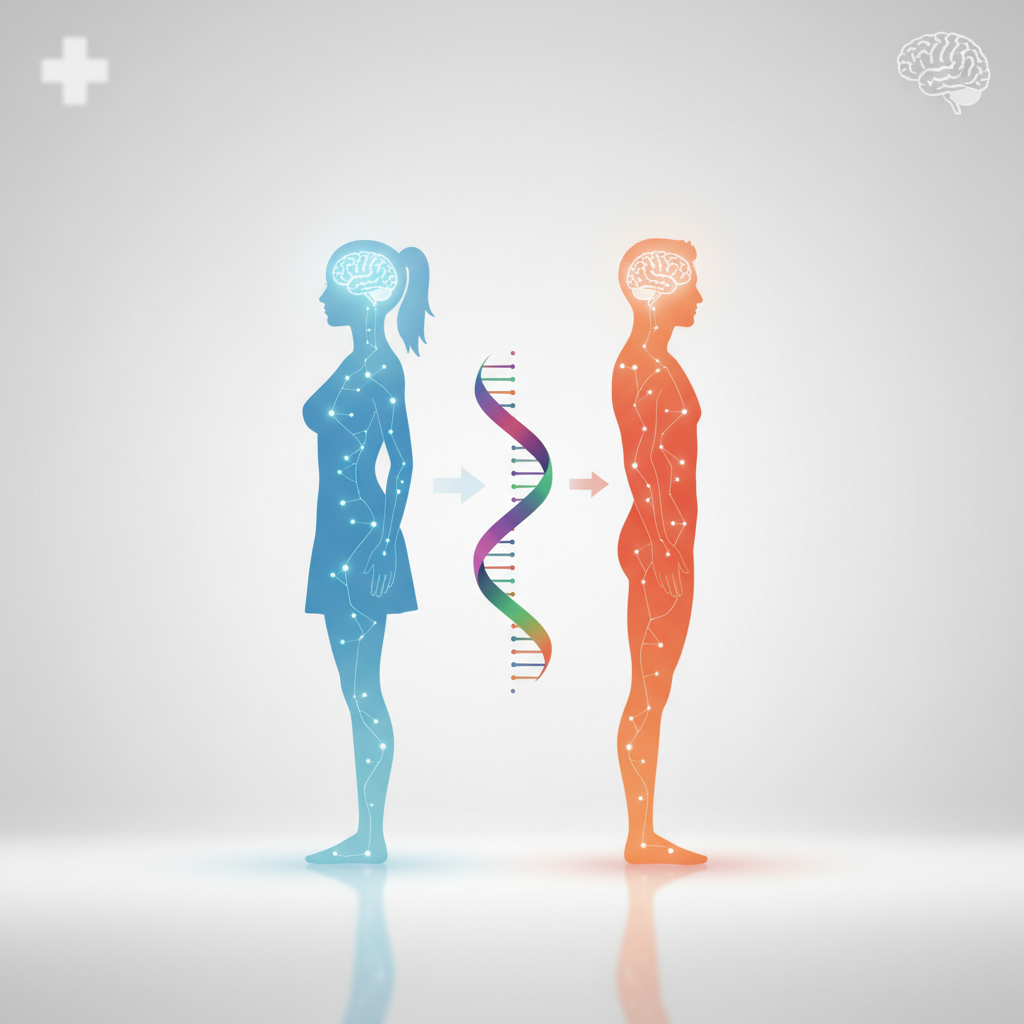
Key Factors Behind the Gender Disparity in MS
Multiple Sclerosis (MS) is a complex autoimmune disease of the central nervous system that disrupts communication between the brain and the rest of the body. One of its most striking characteristics is the significant gender disparity. Globally, women are diagnosed with relapsing-remitting MS (the most common form) at a rate of two to three times, and sometimes even four times, higher than men. This pronounced difference has led researchers to investigate several key biological factors that may contribute to this imbalance.
1. The Powerful Influence of Hormones
Sex hormones, particularly estrogen and testosterone, are believed to play a central role in the gender-based susceptibility to MS. Estrogen, the primary female sex hormone, has a complex and dual role in the immune system. At certain levels, it can have pro-inflammatory effects, potentially triggering or exacerbating autoimmune responses. However, at other levels, such as the high concentrations seen during pregnancy, estrogen can be powerfully anti-inflammatory and neuroprotective, which helps explain why many women with MS experience a significant reduction in relapses while pregnant.
Conversely, testosterone, the primary male sex hormone, is generally considered to have immunosuppressive and anti-inflammatory properties. These effects may offer a degree of natural protection against autoimmune diseases like MS. The lower levels of testosterone in women compared to men could leave their immune systems more susceptible to the kind of dysregulation that leads to the myelin sheath damage characteristic of MS. The hormonal fluctuations throughout a woman's life—during puberty, the menstrual cycle, pregnancy, and menopause—may also influence disease onset and activity.
2. Genetic Predisposition and the X Chromosome
Genetics undoubtedly contribute to MS risk, and the sex chromosomes (X and Y) are a major area of investigation. Women have two X chromosomes (XX), while men have one X and one Y (XY). The X chromosome is rich with genes that are crucial for immune function. Having two X chromosomes could theoretically increase the risk of autoimmune dysfunction. One hypothesis involves a phenomenon called "X-chromosome inactivation," where one of the two X chromosomes in every female cell is randomly "silenced" to prevent a double dose of gene products.
If this inactivation process is incomplete or faulty, it could lead to an over-expression of certain immune-related genes, potentially tipping the balance toward autoimmunity. Furthermore, some studies suggest that specific genes on the X chromosome may be linked to a higher susceptibility to MS. Because men only have one X chromosome, they do not undergo this inactivation process, which might be one reason for their lower incidence rate.
3. Fundamental Differences in the Immune System
From birth, female and male immune systems are wired differently. The female immune system is generally more robust and mounts a stronger and faster response to infections and vaccinations. While this is advantageous for fighting off pathogens, it can also be a double-edged sword. This heightened state of immune readiness can make women more prone to autoimmune diseases, where the immune system mistakenly attacks the body's own healthy tissues—in the case of MS, the myelin sheath that protects nerve fibers.
Women tend to have higher numbers of certain immune cells, like B cells and helper T cells, which are key players in the autoimmune attack seen in MS. They also produce more antibodies and inflammatory signaling molecules (cytokines). These intrinsic differences in immune regulation mean that the female body may be more easily pushed into a state of chronic inflammation and autoimmunity when exposed to certain environmental triggers.
4. The Role of Vitamin D and Environmental Factors
While not a direct cause, low levels of Vitamin D are a well-established risk factor for developing MS. Interestingly, some research indicates that women may process or respond to Vitamin D differently than men. There is also evidence suggesting that the interaction between Vitamin D levels, genetics, and hormones could be gender-specific. For example, the protective effects of Vitamin D might be more or less pronounced in women due to their unique hormonal environment.
Other environmental factors, such as smoking and obesity, are also linked to an increased risk of MS. Obesity, in particular, has a stronger association with MS risk in adolescent girls and young women than in their male counterparts. Fat cells (adipose tissue) are hormonally active and produce inflammatory substances, which could disproportionately affect the female immune system and contribute to the onset of the disease.
5. Gut Microbiome Variations
Emerging research is highlighting the critical connection between the gut microbiome—the trillions of bacteria living in our digestive tract—and the immune system. Studies have shown that there are distinct differences in the composition of gut bacteria between men and women, which are influenced by hormones and diet. Certain types of gut bacteria can either promote or suppress inflammation throughout the body, including in the central nervous system. It's theorized that the female gut microbiome may be more likely to foster a pro-inflammatory environment that contributes to the development of autoimmune conditions like MS.