Understanding the Key Differences Between ATVs and UTVs
Exploring the world of offroad vehicles? Get to know the key differences between an ATV and a UTV (SidebySide). Discover how these vehicles are used, their unique benefits, and when one might be preferable over the other.
Understanding ATVs and UTVs: The Basics
All-terrain vehicles (ATVs) and utility task vehicles (UTVs) are popular choices for off-road enthusiasts, farmers, and outdoor workers. While they might seem similar at a glance, their differences are significant, designed to meet distinct needs and preferences. As these vehicles have evolved, their functionalities have expanded, making it essential to understand which one suits your specific requirements best.
What is an ATV?
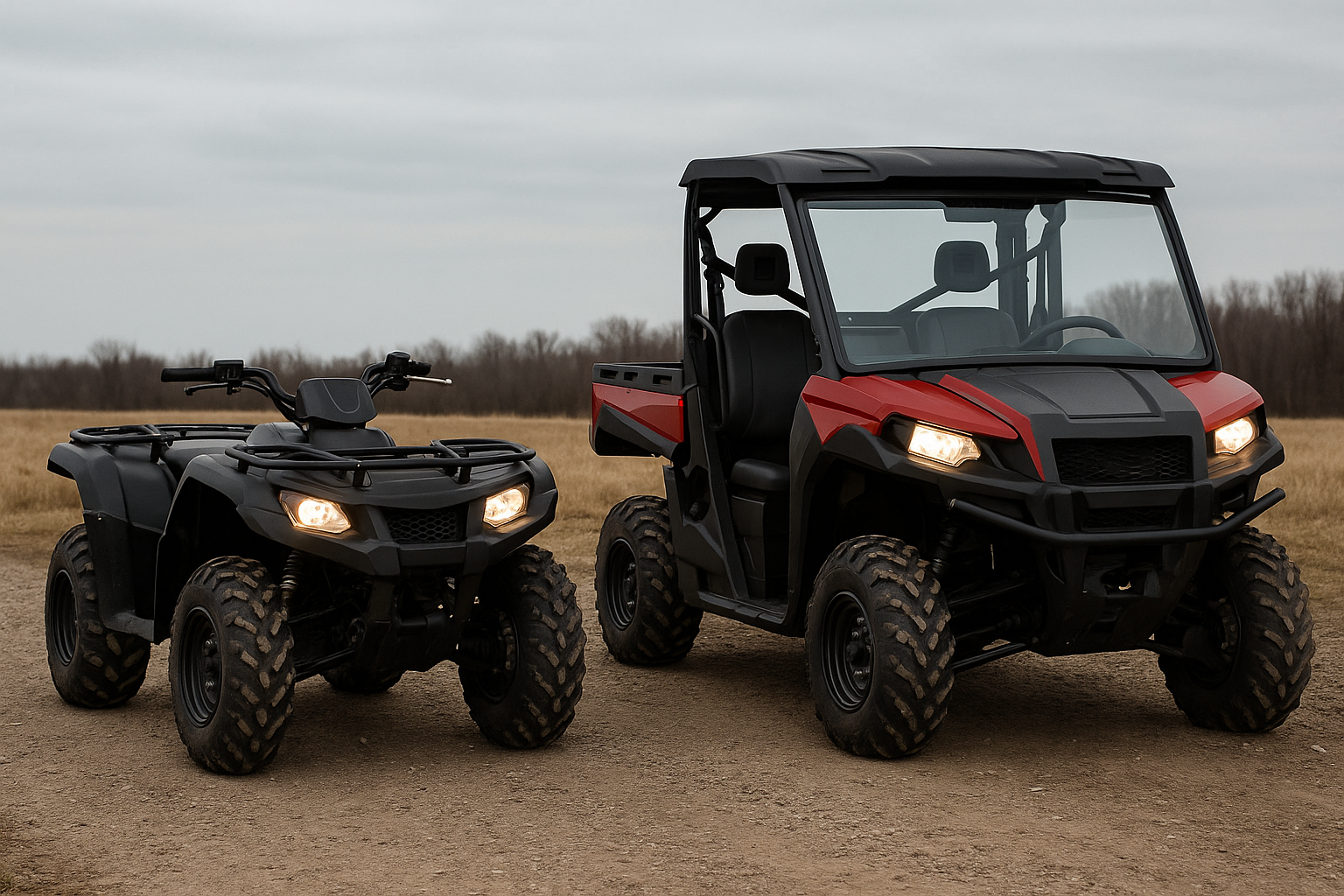
ATVs, commonly referred to as quads, are vehicles designed for single riders or sometimes two. They're compact, lightweight, and maneuverable, with handlebars and a seat that the operator straddles. ATVs are well-suited for navigating narrow trails and tight turns due to their smaller size and quick agility.
- Design and Structure: An ATV typically features a straddle seat and handlebar steering, designed for a sporty experience and individual control.
- Primary Uses: Ideal for recreational trail riding, racing, and small utility tasks like plowing or towing light loads.
- Terrain Capabilities: Excellent for rough, narrow terrains, woods, and paths less traveled.
- Cost Considerations: Generally, ATVs are more affordable than UTVs, with prices in 2026 ranging from $5,000 to $8,000 for new models, depending on features and specifications (source: ATV Market Report 2026).
What is a UTV?
UTVs, often known as side-by-sides, typically seat two to six people comfortably. Unlike ATVs, UTVs have a steering wheel and foot pedals, resembling the driving experience of a car. UTVs are known for their versatility in both work and recreation, providing more space for passengers and cargo.
- Design and Structure: With a seating arrangement that places riders side-by-side, UTVs offer more stability and storage options.
- Primary Uses: Suitable for farming, ranching, construction, and more adventurous recreational activities like off-road racing.
- Terrain Capabilities: Built to handle rougher terrains with ease, including mud, rocks, and steep inclines.
- Cost Considerations: Generally more expensive than ATVs, with 2026 models starting around $10,000 and going upwards based on advanced features (source: UTV Market Insights 2026).
Key Differences Between ATVs and UTVs
Seating and Capacity
The most noticeable difference between an ATV and a UTV is seating arrangement and passenger capacity. ATVs are built for individual use, which can limit their utility in collaborative work settings or group outings. In contrast, UTVs accommodate multiple passengers, making them ideal for team-based activities or family adventures.
Control and Maneuverability
ATVs, with their handlebar steering, offer superior maneuverability and are preferable for those looking for a more hands-on-driving experience. The athletic build and responsive handling make ATVs the choice for solo riders tackling complex trails. UTVs, with a steering wheel, are easier for those accustomed to car controls, offering a more intuitive driving experience, especially on expansive properties or larger paths.
Utility and Functionality
If utility is your primary concern, UTVs stand out with their greater hauling and towing capabilities. Many models come with large cargo beds, which can be essential for tasks in farming, hunting, or construction. Conversely, ATVs can be outfitted with attachments but have a lower payload capacity compared to UTVs.
Safety Features
When it comes to safety, UTVs typically offer more features. Most have roll cages, seat belts, and protective doors, providing better safety for occupants during tough rides or potential rollovers. While ATVs offer gear such as helmets and protective clothing, they lack built-in structural safety features compared to UTVs.
Choosing the Right Vehicle for Your Needs
Intended Use
The choice between an ATV and a UTV largely depends on what you plan to use the vehicle for. For recreational users keen on solitary exploration and the thrill of speed, an ATV might be the perfect fit. For those who require a vehicle deeply integrated with work tasks, family outings, or robust recreational activities, a UTV is likely more appropriate.
Budget Considerations
Your budget is, unsurprisingly, another critical factor. For those looking to make a cost-effective purchase, ATVs generally have a lower entry price. However, if you're looking for enhanced functionalities and can afford a higher initial cost for versatility and safety, investing in a UTV might offer more value in the long run.
Future Upgrades and Adaptability
When considering future needs, UTVs provide more customization options. From adding better suspension, enhancing storage, to integrating tech upgrades like GPS or improved lighting, UTVs often offer a broader canvas for modifications compared to ATVs. As technology continues to evolve, having a versatile base vehicle might enhance your overall investment.
Conclusion: ATV or UTV?
Ultimately, whether an ATV or UTV is the right choice depends on your specific needs, preferences, and budget. Both vehicles offer unique benefits suited to various aspects of work and play. By understanding the distinct features and capabilities of each, you can ensure that you're making an informed decision that aligns perfectly with your personal or professional pursuits.
For further reading on the latest trends and innovations in ATV and UTV markets, you can refer to comprehensive guides and expert analyses available on platforms like AutoTrader and Off-Road.com.