Understanding the Key Ingredients in Hair Care Products for Aging Hair
As our hair matures, its needs fundamentally change, often becoming drier, more brittle, and finer. This is why the products that worked in your 20s may not be delivering the same results today.
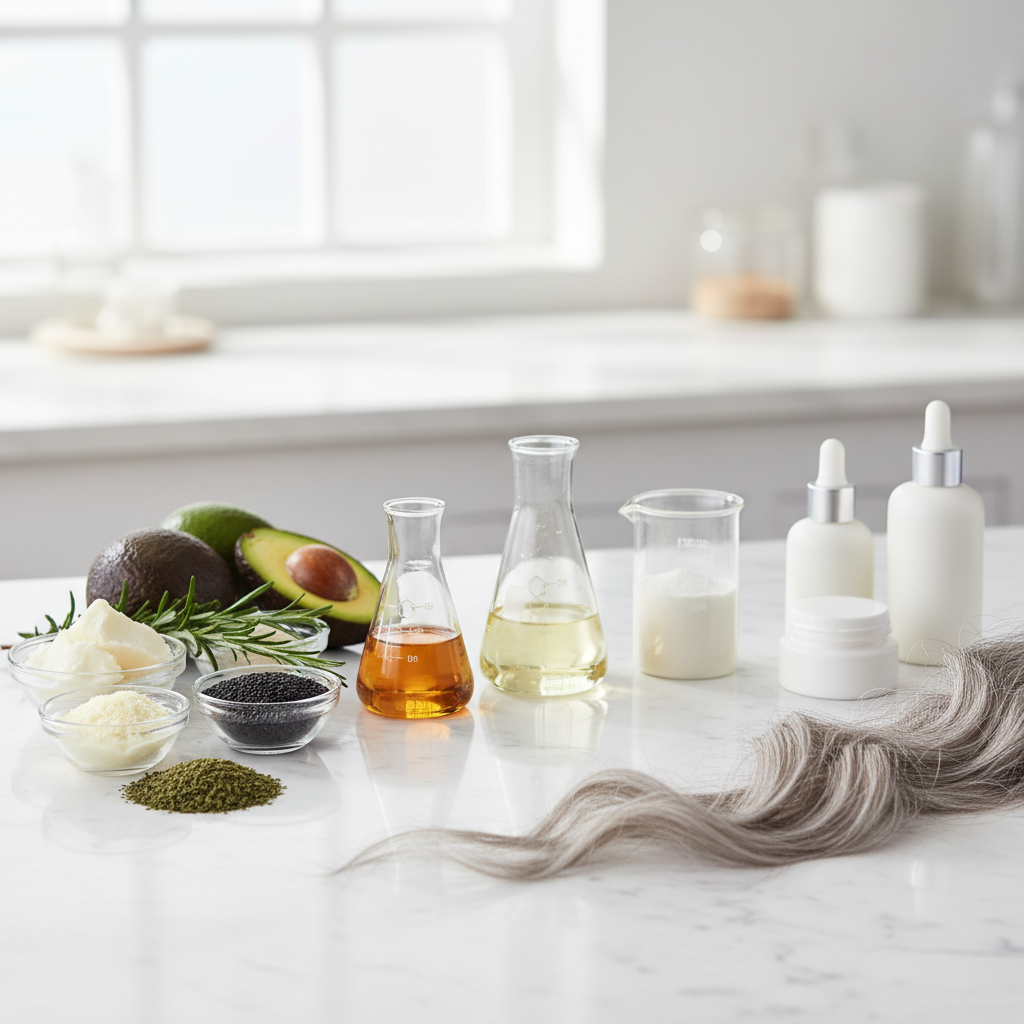
Key Ingredients and Formulations for Mature Hair
As hair ages, its structure and needs change significantly. It often becomes drier, more brittle, and thinner due to hormonal shifts, a decrease in natural oil production, and slower cell renewal. Hair care products designed for aging hair are formulated specifically to counteract these changes. They go beyond simple cleansing and conditioning to deliver targeted nourishment and support. Understanding the key ingredients and formulations is the first step in choosing products that will truly make a difference.
Intense Hydration and Moisture Retention
One of the most common complaints about aging hair is persistent dryness. The sebaceous glands on the scalp, which produce the natural oil (sebum) that moisturizes hair, become less active over time. This leaves the hair shaft unprotected and prone to moisture loss, resulting in a coarse, dull, and brittle texture. Products for mature hair combat this with powerful hydrating agents known as humectants and emollients. Humectants, like hyaluronic acid and glycerin, attract moisture from the environment and bind it to the hair strand.
Emollients, on the other hand, form a protective barrier on the hair's surface to lock that moisture in. Ingredients like shea butter, argan oil, jojoba oil, and avocado oil are excellent emollients. They smooth the hair's cuticle, which not only prevents moisture from escaping but also reduces frizz and enhances shine. This dual-action approach of attracting and sealing in moisture is crucial for restoring the softness, flexibility, and luster that aging hair often lacks.
Strengthening and Repairing Proteins
Hair is primarily made of a protein called keratin. Over the years, exposure to styling, environmental factors, and chemical treatments can break down this protein structure, leading to weakened, porous strands that are susceptible to breakage and split ends. Hair care products for aging hair often include hydrolyzed proteins, such as keratin, silk, wheat, or rice protein. "Hydrolyzed" means the protein molecules have been broken down into smaller pieces that can more easily penetrate the hair shaft.
Once inside, these proteins work to patch up the gaps and weak spots in the hair's cuticle and cortex. This process, often referred to as "rebuilding," reinforces the hair's internal structure, making it stronger and more resilient from the inside out. This added strength helps prevent future breakage, improves elasticity, and gives the hair a fuller, healthier appearance.
Scalp Health and Follicle Stimulation
Healthy hair growth begins with a healthy scalp. As we age, scalp circulation can decrease, and the follicles may become clogged or inflamed, which can impede hair growth and even contribute to thinning. Formulations for aging hair frequently include ingredients aimed at nourishing and stimulating the scalp. Ingredients like caffeine, for example, are known to help boost circulation to the hair follicles, potentially promoting healthier growth.
Niacinamide (a form of Vitamin B3) is another popular ingredient that helps improve the scalp's barrier function and reduce inflammation. Gentle exfoliants, like salicylic acid, can help remove product buildup and dead skin cells, ensuring the follicles remain clear. Furthermore, soothing botanical extracts like peppermint oil or tea tree oil can provide a refreshing sensation while offering antimicrobial benefits, creating an optimal environment for hair to thrive.
Volume and Thickness Enhancers
Thinning is a major concern for many as they get older. This can be due to a decrease in the number of hair strands and a reduction in the diameter of each individual strand. To address this, products for aging hair utilize lightweight ingredients that add body and fullness without weighing the hair down. Ingredients like biotin and panthenol (Pro-Vitamin B5) are known to swell the hair shaft, creating a temporary plumping effect that makes hair look and feel thicker.
Specialized polymers and rice proteins can also coat each strand, providing lift at the root and creating more space between hairs for a fuller appearance. Unlike heavy silicones that can accumulate and flatten hair, these modern volumizing ingredients are designed to be light and flexible, giving fine or thinning hair a much-needed boost of body and movement.
Protection from Environmental Stressors
Aging hair is more vulnerable to damage from external factors. The sun's UV rays can degrade the hair's protein and strip its color, while pollution and free radicals can cause oxidative stress that accelerates the aging process. To combat this, many anti-aging hair products are fortified with antioxidants like Vitamin C and Vitamin E. These ingredients help neutralize free radicals and protect the hair from environmental damage.
Additionally, some formulas include UV filters, similar to those found in sunscreen, to shield the hair from the harmful effects of the sun. This protective element is crucial for preserving hair health, maintaining color vibrancy (whether natural or dyed), and preventing the hair from becoming even more dry and brittle over time.
Understanding the Science of Hair Aging
The changes we see in our hair as we age are not just superficial; they are rooted in biological processes that affect the hair follicles and the structure of the hair itself. One of the most visible signs is graying. This happens when the pigment-producing cells in the hair follicle, called melanocytes, gradually become less active and eventually stop producing melanin, the pigment that gives hair its color. This is a largely genetic process, with the timing varying greatly from person to person.
Beyond color, the texture and density of hair also change. The life cycle of a hair strand consists of a growth phase, a transition phase, and a resting phase. As we age, the growth phase shortens, meaning hair may not grow as long as it once did. The follicles themselves can also shrink, a process known as miniaturization. This causes the hair strands that emerge to be finer and weaker, contributing to an overall reduction in volume and density. Hormonal fluctuations, particularly during menopause, can further exacerbate these changes.
Finally, the natural conditioning system of our scalp slows down. The decreased production of sebum means there is less natural oil to travel down the hair shaft. This lack of lubrication leaves the cuticle, the hair's outer layer, rough and raised. A rough cuticle doesn't reflect light well, which is why aging hair often looks dull. It also makes the hair feel coarser and more prone to tangling and breakage. These scientific realities are precisely why specialized hair care becomes so important for maintaining the health and appearance of mature hair.
Common Questions About Caring for Aging Hair
Can you reverse the signs of hair aging?
This is a common question with a nuanced answer. When it comes to graying, the process is largely irreversible through topical products, as it is determined by the depletion of pigment cells within the follicle. However, many other signs of hair aging can be effectively managed and improved with the right care. You can't turn back the clock on the follicle itself, but you can significantly improve the quality of the hair it produces and protect the hair you have.
Using products rich in proteins and hydrators can reverse the appearance of damage, making hair feel stronger, softer, and shinier. Volumizing ingredients can counteract the look of thinning by plumping up the hair shaft. Consistent scalp care can create a healthier environment for growth, potentially slowing down the rate of thinning. So, while you may not "reverse" aging in a biological sense, you can absolutely restore a more youthful, healthy, and vibrant appearance to your hair through a targeted regimen and healthy lifestyle choices.
How often should you wash aging hair?
Since aging hair is naturally drier due to reduced sebum production, washing it too frequently can be counterproductive. Harsh shampoos and even the minerals in tap water can strip the hair of its precious natural oils, leading to increased dryness, brittleness, and potential scalp irritation. For most people with aging hair, washing two to three times per week is a good starting point. This schedule is often enough to keep the scalp clean without over-drying the hair strands.
Pay attention to how your hair and scalp feel. If your scalp feels oily or itchy, you may need to wash more often. If your hair feels exceptionally dry and straw-like, you might try stretching the time between washes or incorporating a "co-wash" (washing with only conditioner) on some days. Regardless of frequency, it's critical to use a gentle, sulfate-free shampoo and to always follow up with a deeply moisturizing conditioner, focusing it on the mid-lengths and ends.
Final Thoughts on Choosing the Right Products
Caring for aging hair is about shifting focus from a one-size-fits-all approach to a targeted strategy that addresses its unique needs. The key is to look for products formulated to deliver intense moisture, structural strength, scalp support, and protection. By understanding the roles of ingredients like hyaluronic acid, hydrolyzed keratin, and antioxidants, you can make informed choices that help restore vitality, shine, and manageability to your hair.
Ultimately, the goal is not to fight the natural aging process but to work with it. The right hair care regimen can make a significant difference, helping your hair look and feel its absolute best at any age. Prioritizing gentle handling, deep nourishment, and protection will help you maintain healthy, beautiful hair for years to come.