Unlock Your Trucking Career: A Guide to Securing a Pell Grant for Truck Driving School
Yes, you can use a Pell Grant to pay for truck driving school, and it could cover a huge portion of your tuition costs. Getting it, however, requires a few specific steps.
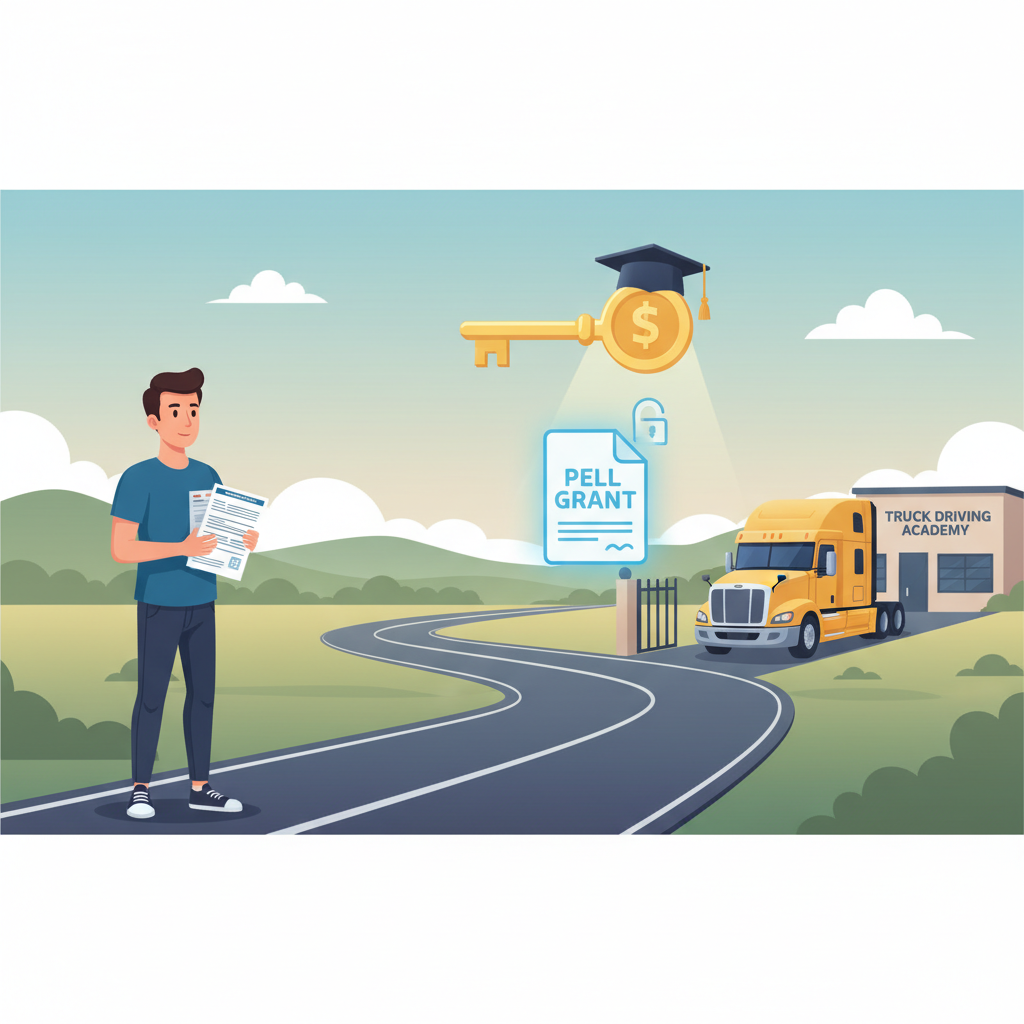
How To Get A Pell Grant For Truck Driving School: A Step-by-Step Guide
Embarking on a career as a professional truck driver is an exciting venture, but the cost of Commercial Driver's License (CDL) training can be a significant hurdle. Fortunately, financial aid options are available, and one of the most valuable is the Federal Pell Grant. Traditionally associated with four-year colleges, the Pell Grant program has expanded, making it possible for aspiring truckers to fund their education. This guide will walk you through the essential steps to secure a Pell Grant for truck driving school.
Step 1: Understand the Basics of Pell Grant Eligibility
Before you begin any application, it's crucial to understand what a Pell Grant is and who qualifies. A Pell Grant is a form of federal financial aid provided by the U.S. Department of Education that, unlike a loan, does not have to be repaid under most circumstances. The primary factor for eligibility is financial need, not academic merit.
To be considered, you must demonstrate significant financial need, be a U.S. citizen or an eligible non-citizen, have a high school diploma or GED, and be enrolled in an eligible program at a participating school. The amount you receive depends on your Expected Family Contribution (EFC), the cost of attendance at your chosen school, your enrollment status (full-time or part-time), and whether you attend for a full academic year or less.
Step 2: Complete the Free Application for Federal Student Aid (FAFSA)
The FAFSA is the cornerstone of all federal student aid applications. This is the single most important document you will fill out to determine your eligibility for a Pell Grant. The application collects information about your (and your parents', if you're a dependent) finances to calculate your EFC. A lower EFC indicates a higher level of financial need, increasing your chances of qualifying for a Pell Grant.
To complete the FAFSA, you will need your Social Security number, federal income tax returns, W-2s, and records of other money earned. It's essential to fill out the form accurately and honestly, as any errors can cause significant delays. The FAFSA can be completed online at the official government website, and it's recommended to do so as soon as the application becomes available each year (typically October 1st) since some aid is first-come, first-served.
Step 3: Find an Accredited Truck Driving School That Accepts Federal Aid
This step is just as critical as filling out the FAFSA. Not all truck driving schools are eligible to participate in federal student aid programs. A school must be accredited by an agency recognized by the U.S. Department of Education to offer Pell Grants. This accreditation ensures the school meets certain quality standards.
When researching CDL programs, make it a priority to ask their financial aid office directly if they accept FAFSA and are eligible for Federal Pell Grants. You can often find this information on the school's website under a "Financial Aid" or "Admissions" section. A good school will have a dedicated financial aid advisor who can guide you through the process and confirm their eligibility. Don't assume a school accepts this aid; always verify.
Step 4: Add Your Chosen School(s) to Your FAFSA Application
Once you've identified one or more accredited truck driving schools that you're interested in, you need to add their unique Federal School Code to your FAFSA application. You can add up to 10 schools at a time. This step authorizes the Department of Education to send your FAFSA information, known as the Student Aid Report (SAR), to those specific schools.
The financial aid office at each school will then use your SAR to determine the exact amount of Pell Grant funding and other aid you are eligible to receive for their specific program. If you decide to apply to a different school later, you can log back into your FAFSA account and add the new school's code.
Step 5: Review Your Student Aid Report (SAR) and Financial Aid Offer
After you submit your FAFSA, you will receive a Student Aid Report (SAR) within a few days to a few weeks. The SAR summarizes the information you provided and will state your Expected Family Contribution (EFC). Review it carefully for any errors. If you find a mistake, you must correct it immediately through the FAFSA website.
Shortly after the school receives your SAR, they will send you a financial aid award letter. This letter will detail all the financial aid you are eligible for, including the specific amount of your Pell Grant. It may also include information about other federal aid, like loans, or institutional scholarships. This is the final confirmation of the funding you will receive to help pay for your CDL training.
Understanding Pell Grants and Vocational Training
The inclusion of short-term vocational programs like CDL training in the Pell Grant program is a relatively recent and significant development. Historically, these grants were aimed at students pursuing associate's or bachelor's degrees at traditional colleges. However, policymakers recognized the growing importance of skilled trades and the need for a well-trained workforce in sectors like transportation and logistics. The high demand for qualified truck drivers, coupled with the barrier that training costs present for many individuals, highlighted a critical gap in financial aid.
Expanding Pell Grant eligibility to cover high-quality, short-term career programs was a strategic move to address workforce shortages and provide pathways to stable, well-paying careers without the long-term commitment of a traditional degree. This shift acknowledges that valuable education and career preparation happen outside of a four-year university setting. For aspiring drivers, this means access to the same foundational financial aid that has helped millions of college students, making a career behind the wheel more accessible than ever before.
Common Questions About Truck Driving School Financial Aid
What other financial aid can I use for truck driving school?
While the Pell Grant is an excellent starting point, it may not cover the entire cost of tuition. Fortunately, other resources are often available. Many states offer their own grant programs for residents attending in-state vocational schools, which you can often apply for through the FAFSA or a separate state application. Another major source of funding is the Workforce Innovation and Opportunity Act (WIOA). WIOA programs are federally funded and administered by states to help individuals with barriers to employment get training for in-demand jobs, which frequently includes truck driving.
Additionally, you should explore scholarships specifically for truck driving. Many trucking companies, industry associations, and private organizations offer scholarships to attract new talent. Finally, some schools offer their own institutional grants or have partnerships with lenders for private loans. While federal student loans (applied for via the FAFSA) are also an option, they must be repaid with interest, making grants and scholarships the more desirable choice.
Do I have to pay back a Pell Grant?
In almost all cases, you do not have to repay a Federal Pell Grant. It is a grant, not a loan. The primary purpose is to provide "gift aid" to students with exceptional financial need to help them pay for their education. However, there are a few rare circumstances where repayment might be required. For instance, if you withdraw from your CDL program early, you may be required to return a portion of the grant funds.
Another scenario is if your enrollment status changes (e.g., from full-time to less than half-time) and it results in an overpayment of your grant. Your school's financial aid office is required to recalculate your eligibility in these situations. If it is determined that you received funds you were not eligible for, you would be responsible for repaying that amount. Outside of these specific situations, the money is yours to use for your educational expenses without the burden of repayment.
What if I don't qualify for a Pell Grant?
Not everyone will qualify for a Pell Grant, as it is strictly need-based. If your FAFSA results in an EFC that is too high, don't be discouraged. You still have many other avenues to explore for funding your CDL training. Submitting the FAFSA is still valuable, as it is often the application used to determine eligibility for other forms of aid, including low-interest federal student loans.
Your next step should be to contact your local American Job Center to inquire about WIOA grants. Investigate scholarships from organizations like the Women In Trucking Association or other industry groups. Many trucking companies also offer company-sponsored CDL training programs. In these arrangements, the company often covers the full cost of your training upfront in exchange for a commitment to drive for them for a specified period, typically one year. This is an excellent way to get your CDL with no out-of-pocket costs.
Conclusion
Securing a Pell Grant can significantly reduce or even eliminate the cost of attending truck driving school, opening the door to a rewarding and in-demand career. The process requires careful attention to detail, from ensuring your FAFSA is accurate to verifying that your chosen school is accredited and participates in the federal aid program. By following these steps, understanding the requirements, and exploring all available financial aid options, you can successfully navigate the funding process and get on the road to achieving your professional driving goals.
For more information, visit the official Federal Student Aid website: https://studentaid.gov/