Unlock Your Vocal Potential: How Professional Training Can Elevate Your Singing Skills in 2026
If you’ve always wanted to sing, hiring a vocal trainer is one of the most effective ways to finally find your voice.
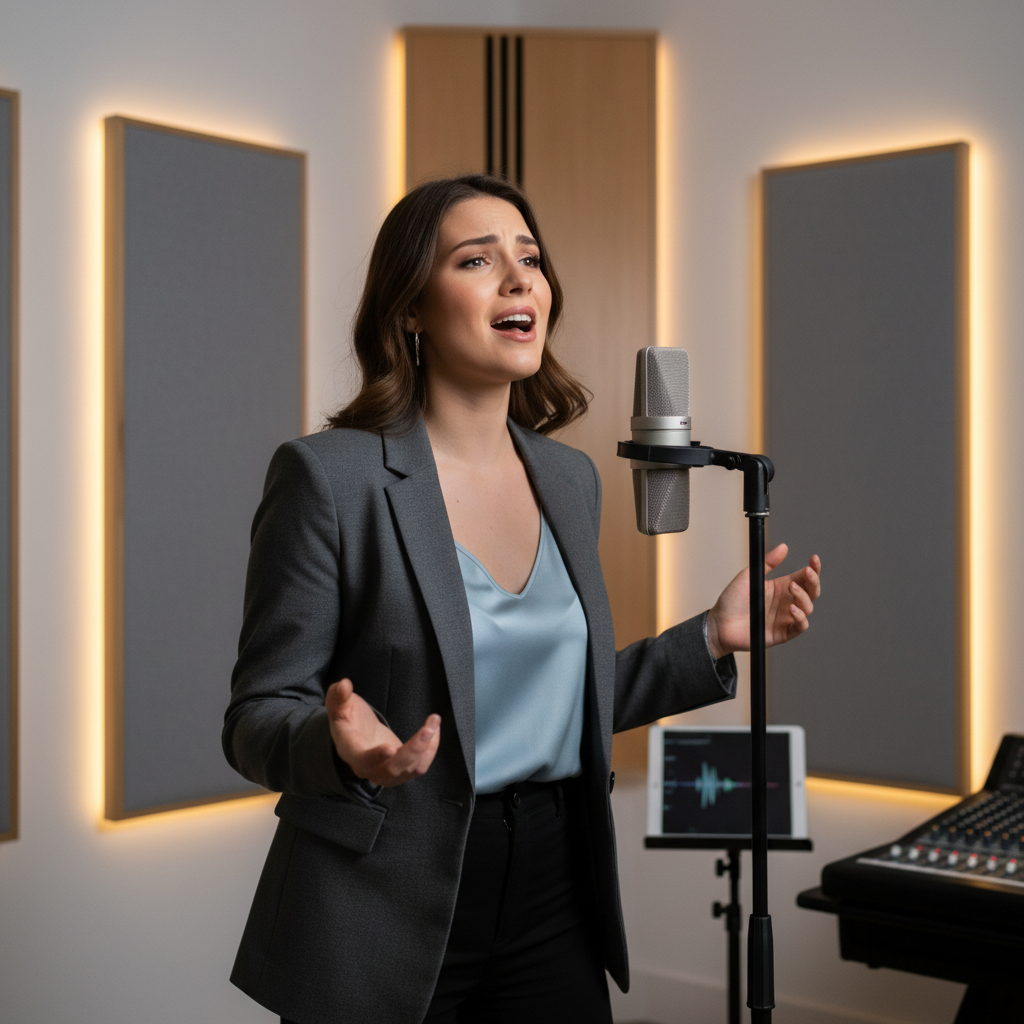
Mastering the Fundamentals: Beyond Just Hitting Notes
Many aspiring singers believe that singing is all about hitting the right notes. While pitch accuracy is important, it's merely the tip of the iceberg. A professional vocal trainer focuses on the foundational pillars that support a great voice. The most crucial of these is breath support. A coach will teach you diaphragmatic breathing—how to breathe deeply from your core rather than taking shallow breaths from your chest. This technique provides a steady, controlled stream of air, which is the fuel for your voice. It allows you to sustain notes longer, control your volume, and maintain a consistent tone without running out of breath.
Beyond breathing, posture is another fundamental that is often overlooked. A vocal trainer will help you identify and correct any postural habits that restrict your airflow or create tension, such as slouching shoulders or a tight jaw. Proper alignment of the spine, neck, and head creates an open and relaxed channel for sound to travel through. These core elements—breath and posture—are what separate amateur singers from trained vocalists. By building this strong foundation, you create the potential for significant and sustainable vocal growth.
Personalized Feedback and Customized Exercises
One of the biggest limitations of self-teaching through online videos or apps is the lack of personalized feedback. You might be practicing an exercise incorrectly for weeks, reinforcing bad habits without even realizing it. A vocal trainer acts as your mirror and guide, providing real-time, specific feedback on your technique. They can hear the subtle nuances in your tone, identify tension in your voice, and see the physical habits that might be holding you back.
Based on this direct observation, a coach creates a customized regimen of exercises tailored to your unique voice, challenges, and goals. If you struggle with transitioning from your chest voice to your head voice, they will provide specific exercises to smooth out that break. If your pitch is inconsistent, they will design drills to improve your ear training and muscle memory. This bespoke approach ensures that your practice time is efficient and effective, leading to much faster and more reliable progress than a one-size-fits-all program ever could.
Expanding Your Vocal Range Safely
Hitting those impressive high notes or rich low notes is a common goal for many singers, but trying to expand your range without proper guidance can be dangerous. Pushing or straining your voice to reach notes that are outside your comfortable range can lead to vocal fatigue, hoarseness, and even long-term damage like vocal nodules. A vocal trainer provides a systematic and safe pathway to expanding your range.
They will teach you exercises that gradually stretch and strengthen your vocal cords, much like a personal trainer helps an athlete increase their flexibility and strength. They help you understand your different vocal registers (chest, mix, head, and falsetto) and how to navigate between them smoothly. By focusing on releasing tension and using proper breath support, you learn to access higher and lower notes with ease and resonance, rather than force. This not only expands your range but also improves the overall quality and tone of the notes you can already sing.
Developing Vocal Health and Stamina
Professional singers view their voice as an athletic instrument that requires care and maintenance. A vocal coach is essential in teaching you the principles of vocal health to ensure longevity in your singing journey. This includes proper warm-up and cool-down routines, which are critical for preparing your vocal cords for use and helping them recover afterward. Just as a runner wouldn't sprint without stretching, a singer shouldn't perform complex pieces without warming up.
Furthermore, a coach can teach you how to sing for extended periods without experiencing vocal fatigue. This involves developing efficient vocal production, where you use the minimum amount of effort to produce the maximum amount of resonant sound. They provide guidance on hydration, diet, and lifestyle habits that can impact your voice. Learning to recognize the signs of vocal strain and knowing when to rest are invaluable lessons that protect your most important asset, allowing you to sing healthily for years to come.
Building Confidence and Overcoming Stage Fright
The psychological aspect of singing is just as important as the physical technique. Many people who dream of singing are held back by a lack of confidence or intense performance anxiety. A vocal trainer provides a safe, supportive, and non-judgmental environment where you can experiment, make mistakes, and grow without fear of criticism. This consistent positive reinforcement is crucial for building self-belief.
As you gain mastery over your instrument through structured lessons, your confidence naturally grows. Knowing that you have a reliable technique to fall back on reduces the anxiety associated with performance. A coach can also provide specific strategies for managing stage fright, such as mindfulness techniques, visualization exercises, and performance practice. They act as your biggest cheerleader, celebrating your progress and helping you transform your fear into focused, expressive energy.
Utilizing Modern Technology in 2026
As we look towards 2026, the field of vocal coaching is increasingly integrated with technology, and a modern trainer knows how to leverage these tools for their students. Coaches are no longer limited to just a piano and a good ear. They can now use advanced software that provides real-time visual feedback on pitch, volume, and timbre. This allows you to see exactly when you are sharp or flat, helping to train your ear and voice with incredible precision.
Furthermore, many trainers are incorporating biofeedback tools and apps that can analyze vocal fold vibrations or breath pressure, giving a scientific dimension to your training. For students taking lessons remotely, technology like high-fidelity audio and collaborative digital whiteboards makes the experience nearly identical to being in the same room. A forward-thinking coach in 2026 will use this tech not to replace their teaching, but to enhance it, providing you with more data, better feedback, and a more comprehensive understanding of your own voice.
Finding Your Unique Voice and Style
In the beginning, many singers try to imitate their favorite artists. While imitation can be a useful learning tool, the ultimate goal is to discover your own unique vocal identity. A great vocal trainer helps you move beyond mimicry to uncover the natural qualities of your voice. They guide you in exploring different musical styles and genres to see where your voice truly shines.
Through this exploration, they help you develop your own artistic interpretation of songs. You learn how to use dynamics, phrasing, and vocal color to convey emotion and tell a story in a way that is authentic to you. A coach doesn't try to make you sound like someone else; they work to bring out the best version of your own sound, helping you cultivate a style that is both technically proficient and personally expressive.
The Evolution of Vocal Coaching: From Classical Studios to Digital Frontiers
Vocal training has a rich history that has transformed dramatically over the centuries. Historically, the practice was rooted in the classical traditions of European opera, known as the bel canto (Italian for "beautiful singing") method. This approach emphasized breath control, legato phrasing, and a pure, resonant tone, and it was often taught through a rigid master-apprentice model. The focus was almost exclusively on preparing singers for the opera house, with little consideration for other musical genres.
The 20th century saw a significant shift with the rise of popular music genres like jazz, blues, rock, and pop. These styles demanded different vocal qualities—grittiness, breathiness, and raw emotional expression—that classical training didn't always address. This led to the development of new pedagogical approaches, such as the Estill Voice Training and Speech Level Singing (SLS) methods, which focused on the physiological mechanics of the voice. These science-based models sought to give singers control over the specific structures of their larynx, allowing for stylistic versatility without causing vocal harm.
Today, and looking ahead to 2026, vocal coaching is in its most eclectic and accessible phase. The modern vocal trainer is often a hybrid, drawing from classical foundations, contemporary voice science, and even holistic practices like yoga and mindfulness. The rise of the internet has democratized access to information and instruction, with online lessons connecting students to world-class coaches regardless of geographical location. Technology now plays a supportive role, with apps and software providing visual feedback that supplements a coach's expert ear. The future of vocal training is personalized, science-informed, and globally connected, offering aspiring singers more tools and pathways to success than ever before.
Common Questions About Starting Vocal Lessons
Can anyone really learn to sing, or is it just natural talent?
This is one of the most common questions and sources of hesitation for aspiring singers. The answer is overwhelmingly that singing is a skill that can be learned and developed, not just an innate talent. While some individuals may have a natural predisposition—such as a pleasant vocal tone or a good ear for music—these are simply starting points. The vast majority of what makes a great singer is technical skill developed through consistent, guided practice.
Think of the voice as a muscular instrument. Just like an athlete trains their body to run faster or lift more, a singer trains the small muscles in and around their larynx, along with their respiratory system, to work with coordination and efficiency. A vocal trainer guides you through this physical conditioning. The concept of being "tone-deaf" is also extremely rare clinically. Most people who believe they are tone-deaf simply have an untrained ear and a lack of coordination between what they hear and what they produce, both of which can be significantly improved with training.
What's the difference between online and in-person vocal lessons?
Choosing between online and in-person lessons is a key decision in 2026. In-person lessons offer the traditional benefit of being in the same physical space as your coach. This allows the trainer to observe subtle physical cues, like jaw tension or posture, more easily and make immediate physical adjustments. The shared acoustics of a room can also make it easier to work on concepts like resonance and projection.
On the other hand, online lessons offer unparalleled convenience and access. You can connect with expert coaches from anywhere in the world, finding the perfect teacher for your specific genre and goals without being limited by geography. As long as you have a stable internet connection, a decent microphone, and a camera, you can receive high-quality instruction from the comfort of your home. Modern technology has largely bridged the gap, with high-fidelity audio minimizing lag and clear video allowing for detailed observation. The best format ultimately depends on your learning style, budget, and accessibility needs.
How long does it take to see improvement with a vocal coach?
The timeline for vocal improvement varies greatly from person to person and depends on several factors, including your starting skill level, your goals, and—most importantly—the consistency of your practice. However, most students who work with a vocal coach begin to notice some immediate changes within the first few lessons. These initial improvements are often in awareness, such as understanding how to breathe correctly or feeling what a relaxed jaw feels like.
More noticeable and consistent improvements in tone, range, and control typically become apparent within three to six months of regular lessons and dedicated practice (at least 3-5 days a week). Significant, transformative changes and the development of a reliable technique can take a year or more. It's crucial to view singing as a long-term journey, not a destination. A coach helps you set realistic milestones and celebrate small victories along the way, keeping you motivated as you build your skill over time.
Conclusion
Embarking on a journey to learn to sing is a deeply rewarding endeavor. While the desire to sing often starts as a simple wish, transforming that wish into a confident skill is best achieved with expert guidance. A vocal trainer provides the essential framework for success, from mastering the fundamentals of breath and posture to offering personalized feedback that accelerates growth. They are instrumental in safely expanding your range, ensuring vocal health, and building the confidence needed to share your voice with the world. In 2026, with the aid of modern technology and a deeper scientific understanding of the voice, a coach is more equipped than ever to help you unlock your true vocal potential and discover the unique artist within you.