Unveiling 2025's EV Champions: Which One Dominates in Range?
Wondering which 2025 electric vehicle can take you the farthest on a single charge? The race for the top spot is fiercer than ever, with impressive new entries from luxury flagships and innovative startups challenging the established range champions.
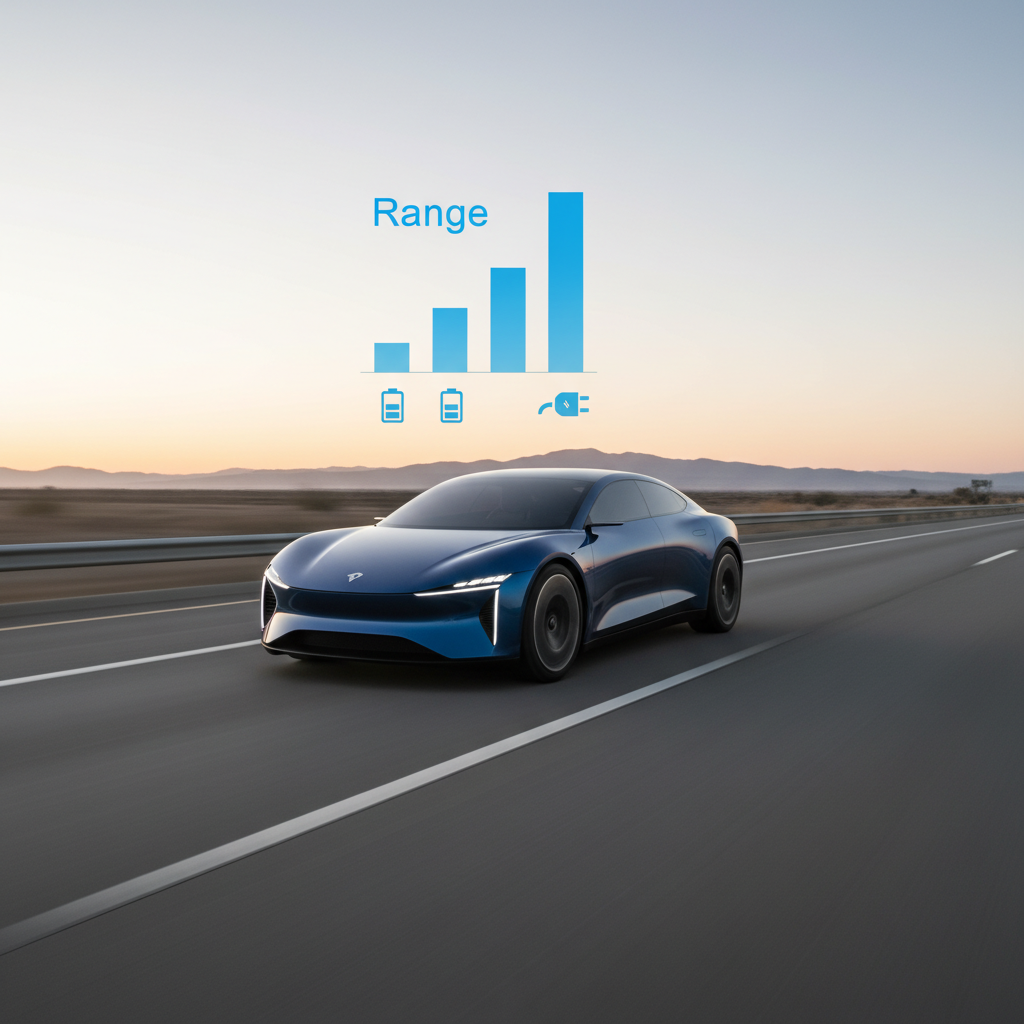
The Longest-Range Electric Vehicles of 2025
As electric vehicle technology continues its rapid evolution, one of the most critical metrics for consumers is range. The ability to travel long distances on a single charge is a key factor in overcoming range anxiety and making EVs a practical choice for more drivers. The 2025 model year is set to push the boundaries of what's possible, with several manufacturers offering vehicles that can travel well over 400 miles before needing to plug in. Here’s a detailed look at the contenders for the title of the longest-range EV of 2025.
Top Contenders for the Longest Range EV Title in 2025
While official EPA ratings for all 2025 models are still being finalized, based on current technology, manufacturer claims, and existing model performance, these vehicles are poised to lead the pack.
1. Lucid Air Grand Touring
Lucid Motors has firmly established itself as the leader in electric vehicle range, and the 2025 Lucid Air Grand Touring is expected to continue this legacy. The 2024 model already boasts an incredible EPA-estimated range of 516 miles on a single charge, a figure that no other manufacturer has come close to matching. This remarkable achievement is due to Lucid's intense focus on efficiency, from its compact and powerful proprietary motor technology to its class-leading aerodynamics. The car's sleek design isn't just for looks; it allows it to slice through the air with minimal resistance, conserving precious energy.
The foundation of this range is a massive 112 kWh battery pack, but the magic is in how efficiently the vehicle uses that energy. The 2025 model is expected to feature minor software and hardware tweaks that could potentially maintain or even slightly improve upon this figure. Beyond its range, the Lucid Air Grand Touring is a true luxury sedan, offering a stunning interior, advanced driver-assistance features, and blistering performance, making it a complete package for those who want the best of the best in the EV world.
2. Chevrolet Silverado EV (4WT Trim)
It may come as a surprise to see a full-size pickup truck on a list of longest-range EVs, but the 2025 Chevrolet Silverado EV, particularly in its Work Truck (4WT) configuration, is an absolute powerhouse. General Motors has claimed a remarkable range of up to 450 miles for this specific trim. This is made possible by leveraging GM's massive Ultium battery platform, with the Silverado EV housing one of the largest battery packs available in a consumer vehicle, estimated to be around 200 kWh.
While the more consumer-focused RST trim offers slightly less range due to different features and larger wheels, the 4WT is designed for endurance. This truck combines incredible utility, including a versatile mid-gate that extends the bed length, with the ability to travel long distances between job sites or on cross-country trips without constant charging stops. Its impressive range fundamentally changes the perception of what an electric work vehicle can accomplish.
3. Rivian R1T / R1S with Max Pack
Rivian has made a name for itself with its rugged and highly capable electric adventure vehicles. For 2025, the R1T pickup and R1S SUV equipped with the optional "Max Pack" battery are expected to deliver a range of up to 410 miles. This option significantly increases the battery capacity to approximately 149 kWh, providing the necessary energy for long-haul adventures, towing, or simply reducing the frequency of charging for daily driving.
What makes Rivian's offering compelling is that this impressive range doesn't come at the expense of performance or off-road capability. The quad-motor setup provides astounding acceleration and precise control over any terrain. The combination of long-distance touring ability and genuine go-anywhere ruggedness makes the Rivian models with the Max Pack a unique proposition in the EV market, appealing to those with an active and adventurous lifestyle.
4. Tesla Model S
The Tesla Model S was one of the original long-range EV champions, and it remains a formidable contender in 2025. The standard dual-motor All-Wheel Drive version is expected to offer an EPA-estimated range of around 402 miles. Tesla has spent over a decade refining its battery technology, motor efficiency, and software to squeeze every possible mile out of its battery pack. The Model S is also known for its incredibly low coefficient of drag, which helps it maintain efficiency at highway speeds.
Beyond its impressive range, the Model S continues to be a benchmark for performance and technology. It provides access to Tesla's extensive Supercharger network, which is often considered the most reliable and widespread fast-charging infrastructure available. This combination of a long-range vehicle and a robust charging network makes the Model S one of the most practical EVs for road trips and daily use alike.
5. Mercedes-Benz EQS Sedan
The Mercedes-Benz EQS Sedan, particularly the EQS 450+ variant, is a leader in the luxury EV space, delivering an estimated range of around 395-400 miles for the 2025 model year. Mercedes has prioritized aerodynamic efficiency, giving the EQS one of the lowest drag coefficients of any production car. This "one-bow" design is futuristic and highly functional, allowing the car to slip through the air with minimal effort.
The EQS Sedan is built on a dedicated EV platform that accommodates a large 108.4 kWh battery pack. The vehicle is the epitome of electric luxury, featuring the optional Hyperscreen, a 56-inch curved glass instrument panel that stretches across the dashboard. It offers a supremely comfortable and quiet ride, combining classic Mercedes-Benz refinement with next-generation electric performance and range, proving that luxury and long-distance capability can go hand-in-hand.
What Factors Determine an EV's Maximum Range?
Achieving a high range figure is a complex balancing act involving several key engineering and design factors. It's not as simple as just installing a bigger battery. Understanding these elements helps explain why some EVs can travel so much farther than others on a single charge.
The most obvious factor is battery capacity, measured in kilowatt-hours (kWh). A larger battery holds more energy, just as a larger gas tank holds more fuel. The vehicles listed above all have large battery packs, typically exceeding 100 kWh. However, efficiency is just as important. Efficiency, often measured in kWh per 100 miles, describes how effectively the vehicle uses its stored energy. A highly efficient vehicle can travel farther on the same amount of energy. Key contributors to efficiency include aerodynamics—how easily the car moves through the air—and the design of the electric motors and inverters. A lower drag coefficient means the car uses less energy to overcome air resistance, especially at highway speeds. Finally, vehicle weight plays a significant role. Heavier vehicles require more energy to get moving and maintain speed, which is why automakers are increasingly using lightweight materials to offset heavy battery packs.
Common Questions About Maximizing EV Range
Even with a long-range EV, real-world conditions and driving habits can significantly impact how far you can actually travel. Here are answers to some common questions about EV range.
How Does Cold Weather Impact Electric Vehicle Range?
Cold weather is one of the most significant external factors affecting EV range. There are two primary reasons for this. First, the electrochemical reactions inside a lithium-ion battery slow down in cold temperatures, making the battery less efficient at discharging energy. This means less power is available to the motors. Think of it like a person moving more slowly when they are cold.
The second, and often more impactful, reason is the energy required for cabin heating. Unlike internal combustion engine vehicles that generate abundant waste heat, EVs must use energy directly from the battery to power a resistive heater or a more efficient heat pump to warm the cabin. This can consume a significant amount of power, especially on short trips in freezing temperatures. Studies have shown that EV range can decrease by 20% to 40% in very cold conditions due to these combined factors. Many new EVs offer features like pre-conditioning (warming the car while it's still plugged in) and heated seats/steering wheels, which use less energy than heating the entire cabin.
Does Fast Charging Affect Battery Health and Range?
DC fast charging is a game-changer for long-distance travel, allowing EVs to regain hundreds of miles of range in as little as 20-30 minutes. However, many owners wonder if frequent use of fast chargers can harm the battery over time. Fast charging generates more heat than slower Level 2 charging, and excessive heat is a known enemy of battery longevity. Fortunately, modern EVs have sophisticated battery management systems (BMS) that actively cool or heat the battery to keep it within an optimal temperature range during a fast-charging session.
While relying exclusively on DC fast charging for 100% of your charging needs may lead to slightly accelerated battery degradation over many years compared to slower home charging, the effect is generally minimal for most users. The BMS is designed to protect the battery. For day-to-day use, charging at home on a Level 2 charger is ideal for battery health. Using fast chargers as intended—primarily for road trips or when you need a quick top-up—is perfectly safe and will not cause significant harm to the battery or its long-term range capabilities.
Conclusion
The race for the longest-range electric vehicle is pushing the entire industry forward. For 2025, the Lucid Air Grand Touring is poised to remain the undisputed king, with a range exceeding 500 miles. However, strong competition from vehicles like the Chevrolet Silverado EV, Rivian R1T/R1S, Tesla Model S, and Mercedes-Benz EQS shows that long-range capability is becoming more accessible across different vehicle types, from luxury sedans to rugged pickup trucks. As battery technology and vehicle efficiency continue to improve, the convenience and practicality of electric vehicles for all types of drivers will only grow.
For more official information on vehicle fuel economy and range, you can visit: