Unveiling the Most Reliable Home Value Calculators: A Guide to Precision and Accuracy
If you've ever typed your address into an online estimator, you've probably wondered how accurate that number really is. We're breaking down the most popular options—from Zillow's Zestimate to Redfin's Estimate and others—to see how they stack up.
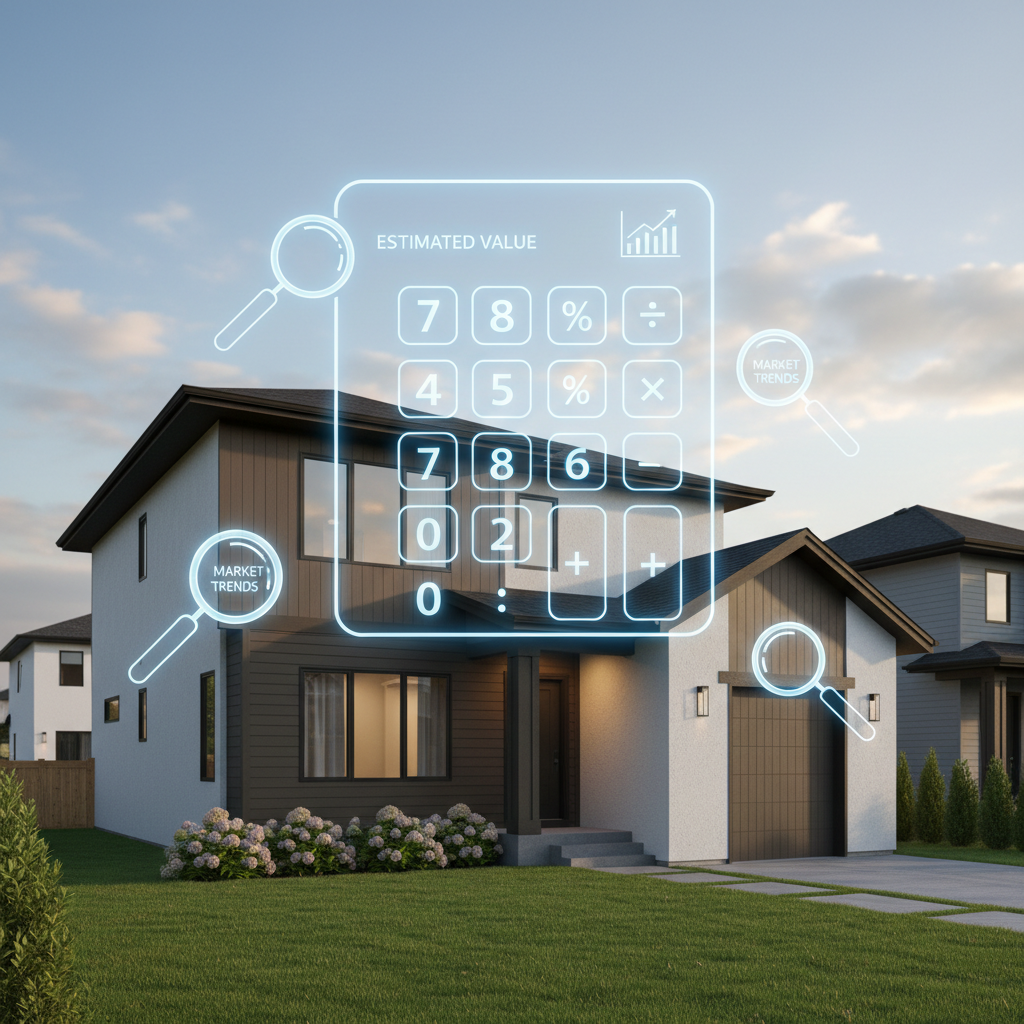
A Look at the Top Home Value Calculators
When you're curious about your home's worth, turning to an online home value calculator is often the first step. These tools, also known as Automated Valuation Models (AVMs), use complex algorithms to provide an instant estimate. However, their accuracy can vary significantly. No single calculator is perfect, but some have a stronger reputation for reliability than others. The best approach is often to consult several tools to find a common price range. Let's explore some of the most prominent options available today.
1. Zillow's Zestimate
Perhaps the most well-known home value estimator, the Zillow Zestimate is a household name. It pulls a massive amount of data from public records, tax assessments, and user-submitted information, as well as listing information from the Multiple Listing Service (MLS). Zillow has continuously refined its algorithm over the years, and its transparency about its accuracy is a major plus. The site provides a national median error rate, which currently hovers around 2% for on-market homes and around 6-7% for off-market homes. This means half of the estimates are within that percentage of the final sale price, while half are not.
The Zestimate's accuracy can differ greatly depending on your location. In areas with abundant, recent, and similar home sales, the estimate tends to be more precise. However, in rural areas with unique properties or in non-disclosure states where sales data isn't public, the Zestimate can be less reliable. It's an excellent starting point for getting a general idea of your home's value, but it should be viewed as one data point among many, not as a definitive appraisal.
2. Redfin Estimate
Redfin, another major real estate brokerage, offers its own powerful AVM, the Redfin Estimate. This tool is often praised for its accuracy, particularly for homes that are currently for sale. This is because Redfin has direct access to MLS data, which is the most up-to-date information available on listed properties. Like Zillow, Redfin is transparent about its error rates, publishing a median error rate that is often competitive and sometimes even lower than Zillow's for on-market properties.
The Redfin Estimate algorithm analyzes hundreds of data points about the market and the home itself. Its reliance on active listing data gives it a potential edge in fast-moving markets where prices are changing quickly. For homeowners who are actively considering selling, the Redfin Estimate can provide a very relevant and current snapshot of potential market value. However, just like any AVM, it can't account for the home's interior condition, recent renovations, or unique neighborhood features that a human agent would notice.
3. Realtor.com Home Value Estimator
Realtor.com, the official consumer website of the National Association of Realtors, takes a slightly different approach. Instead of relying on a single proprietary algorithm, its home value tool often pulls data from several different AVM providers. This gives users not just one number but a range of estimates from trusted third-party sources. This method acknowledges that different models can interpret data differently, and providing a range can give a more realistic picture of a home's potential value.
This multi-faceted approach is a significant benefit. Seeing three different estimates can help a homeowner understand the potential variance in their property's valuation. It reinforces the idea that an AVM is an estimate, not a certainty. Because of its direct ties to the MLS, the data used by the underlying AVMs is typically robust and current, making it a reliable resource for initial research.
4. Bank of America & Chase Home Value Estimators
Major financial institutions like Bank of America and Chase also offer their own free home value calculators. These tools are often overlooked but can be highly valuable. Banks have a vested interest in providing conservative and realistic valuations, as this data informs their mortgage lending and home equity line of credit (HELOC) decisions. Their tools are typically powered by industry-leading AVM providers like CoreLogic or Black Knight, which are also used by lending professionals.
While these bank-provided estimators may not have the flashy, consumer-facing interfaces of Zillow or Redfin, their underlying data is exceptionally solid. They tend to be less influenced by marketing and more focused on risk assessment, which can result in more grounded estimates. If you are exploring refinancing options or a HELOC, using your bank's tool can give you an early indication of the value they might assign to your property.
5. Ownerly
Ownerly is a platform that offers a more comprehensive look into a property's value and history, often positioned as a professional-grade report for homeowners. While it provides a free initial estimate, its main product is a more detailed report available for a fee. The initial estimate is a good starting point and works similarly to other AVMs by pulling from public records and market data.
The value of a service like Ownerly is its ability to compile a wide range of information into one place, including property history, tax information, and local market trends. For homeowners who want to dig deeper than a simple number, it can be a useful tool. The free estimate serves as a solid data point to compare with others, helping you build a more complete picture of your home's potential worth.
The Technology Behind the Numbers: Understanding AVMs
At the heart of every online home value calculator is an Automated Valuation Model, or AVM. This is a sophisticated software program that uses statistical modeling and machine learning to calculate a property's value at a specific point in time. It does this by analyzing a vast database of information, essentially trying to replicate the logic a real estate appraiser would use, but on a massive, automated scale.
The key data points that fuel these AVMs include public records, such as deeds, property tax assessments, and transaction histories. They also heavily rely on data from the Multiple Listing Service (MLS), which provides up-to-the-minute information on homes for sale, pending sales, and recent sales prices. The algorithm considers property characteristics like square footage, the number of bedrooms and bathrooms, lot size, and location. Finally, it layers on market trends, such as the average days on market for homes in the area and overall price appreciation or depreciation. The AVM weighs all these factors to produce its final estimate.
Beyond the Algorithm: What Online Calculators Can't See
While AVMs are incredibly powerful, they have inherent limitations. Understanding these limitations is key to using home value calculators effectively and not mistaking an estimate for an official appraisal.
The Impact of Home Condition and Upgrades
The single biggest blind spot for any AVM is the physical condition of a property. The algorithm has no way of knowing if your home has a brand-new, gourmet kitchen or if the original 1970s avocado-green appliances are still in place. It cannot see a leaky roof, a beautifully landscaped backyard, or a recently finished basement. The AVM typically assumes an "average" condition for a home of its age and size in that neighborhood.
This is where valuations can diverge significantly from reality. A home that has been meticulously maintained and thoughtfully upgraded will likely sell for more than its online estimate. Conversely, a home in a state of disrepair will almost certainly be worth less. This is why a real estate agent's Comparative Market Analysis (CMA) or a professional appraisal, both of which involve a physical inspection, are critical for determining an accurate sales price.
Why Local Market Dynamics Matter
AVMs are heavily dependent on "comps"—recent sales of comparable properties in the immediate area. In a uniform suburban neighborhood with many similar homes selling regularly, AVMs can be quite accurate. However, in areas with diverse housing stock or in rural locations where the nearest "comp" is miles away and vastly different, the algorithm struggles.
Furthermore, AVMs can be slow to react to hyper-local, rapidly changing market dynamics. They might not immediately capture the effect of a new school being built, a major employer moving in, or a sudden spike in buyer demand in a specific subdivision. A local real estate professional has their finger on the pulse of these nuanced market shifts and can provide a much more accurate assessment of value based on current, on-the-ground conditions.
The Difference Between an AVM and a Professional Appraisal
It's crucial to distinguish between an AVM estimate and a professional appraisal. An AVM is an automated, computer-generated estimate of value that is a great tool for casual research. It is not a legally binding document and cannot be used by a lender to secure a mortgage. Think of it as a preliminary, informational data point.
A professional appraisal, on the other hand, is a formal opinion of value conducted by a state-licensed appraiser. This process involves a thorough physical inspection of the property, detailed measurements, and a carefully researched analysis of recent comparable sales. The appraiser produces a comprehensive report that is a legal document used by banks and mortgage lenders to determine how much money they are willing to lend for a property. For any official transaction like a purchase, refinance, or HELOC, an appraisal is non-negotiable.
Putting It All Together
So, which home value calculator is most accurate? The answer is that no single tool holds the crown. Accuracy depends heavily on your location, your specific property, and the availability of quality data. The Zestimate and Redfin Estimate are excellent, user-friendly starting points, while tools from Realtor.com and major banks can provide a valuable range and a more conservative perspective.
The most effective strategy is to use two or three different calculators to establish a likely value range for your home. Treat these numbers as a starting point for a conversation. For a more accurate and actionable valuation, the next step should always be to consult a local real estate agent for a CMA or, for lending purposes, to hire a licensed appraiser. Online tools have empowered homeowners with more information than ever before, but they are one piece of a much larger puzzle.