Unveiling the Technology Behind the 2026 Buick Electra E5's Impressive Range
The impressive range of the 2026 Buick Electra E5 isn't just a simple story of a massive battery. While its size is a factor, the real secret lies in a clever combination of technology and design working in perfect harmony.
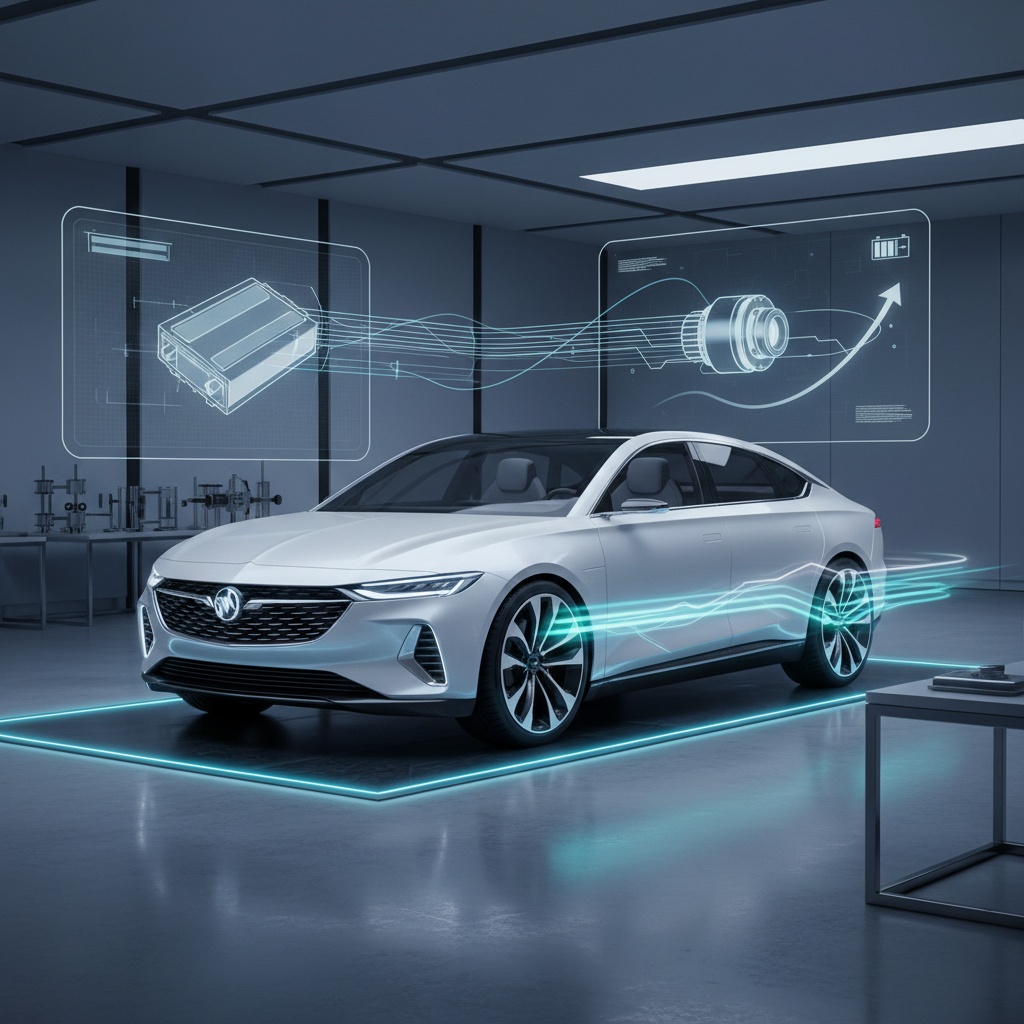
As the automotive world pivots towards electrification, electric vehicle (EV) range remains a top concern for consumers. The 2026 Buick Electra E5 is making headlines not just for its luxury and style, but for its impressive projected driving range. This isn't the result of a single breakthrough, but rather a combination of several key technological and design pillars working in harmony. Understanding these factors reveals why the Electra E5 is poised to be a leader in its class for how far it can travel on a single charge.
Below, we break down the core reasons behind the Electra E5's exceptional range, moving beyond simple battery size to explore the sophisticated engineering that makes it possible.
1. The Foundation: GM's Ultium Platform
At the very heart of the Buick Electra E5's performance is General Motors' revolutionary Ultium platform. This isn't just a battery pack; it's a dedicated, flexible EV architecture designed from the ground up. The Ultium platform's genius lies in its modularity. It uses large-format, pouch-style battery cells that can be stacked vertically or horizontally. This allows engineers to optimize the battery pack's shape and size for any vehicle, from a large SUV like the Electra E5 to a smaller sedan or a massive truck like the GMC Hummer EV.
For the Electra E5, this means designers could maximize the number of cells packed into the vehicle's long wheelbase without compromising interior space or vehicle dynamics. By integrating the battery pack as a structural component of the chassis, the platform lowers the center of gravity, enhancing stability and handling while creating an incredibly dense energy storage solution. This fundamental design choice is the single biggest contributor to the vehicle's ability to hold a massive amount of energy efficiently.
2. Advanced Battery Chemistry and Management
While the platform provides the structure, the battery cells themselves contain the advanced chemistry that unlocks long range. GM's Ultium cells use a nickel-cobalt-manganese-aluminum (NCMA) chemistry. A key innovation here is the significant reduction in cobalt—one of the most expensive and controversially sourced materials in batteries. Compared to previous-generation batteries, Ultium cells use about 70% less cobalt, which not only helps control costs but also improves thermal stability.
This is all governed by a state-of-the-art wireless Battery Management System (BMS). Instead of complex and heavy wiring harnesses connecting all the battery modules, the Ultium BMS communicates wirelessly. This industry-first approach reduces weight, frees up more space for active battery material, and simplifies manufacturing and servicing. The BMS constantly monitors the health of each cell, optimizing charging and discharging to maximize both the vehicle's range and the battery's long-term lifespan.
3. A Slippery, Aerodynamic Design
Pushing a large vehicle through the air requires a tremendous amount of energy, especially at highway speeds. A vehicle's aerodynamic efficiency, measured by its drag coefficient, plays a massive role in its overall range. The Buick Electra E5 was sculpted with this principle in mind. It embodies Buick’s "Pure Design" philosophy, which emphasizes clean lines, smooth surfaces, and a flowing, uninterrupted profile.
Key aerodynamic features include a sealed front grille (since there's no traditional engine to cool), flush door handles that retract when not in use, and an aerodynamically optimized wheel design. The vehicle's roofline tapers gently towards the rear, and the underbody is almost completely flat, helping air move over, around, and under the car with minimal resistance. Each of these small details adds up, reducing the energy needed to maintain speed and directly translating into more miles driven per charge.
4. Highly Efficient Powertrain and Regenerative Braking
Storing a lot of energy is only half the battle; using it efficiently is just as important. The Electra E5 utilizes GM's next-generation electric motors, which are designed for high efficiency across a wide range of speeds. Whether you are in stop-and-go city traffic or cruising on the highway, the motors are optimized to convert electrical energy into motion with minimal loss.
Furthermore, the Electra E5 features a sophisticated regenerative braking system. When the driver lifts their foot off the accelerator or applies the brakes, the electric motor essentially runs in reverse, acting as a generator. This process converts the car's kinetic energy—which would normally be lost as heat in traditional friction brakes—back into electrical energy and sends it to the battery. The E5 will offer adjustable levels of regeneration, including a "one-pedal driving" mode. In this mode, lifting off the accelerator engages strong regeneration, slowing the car down significantly without ever touching the brake pedal, maximizing the amount of energy recaptured during daily driving.