Your Essential Guide to Choosing the Best Senior Mobility Walker
Choosing the right mobility walker can feel overwhelming, but finding the perfect fit for yourself or a loved one is a key step toward maintaining safety and independence.
Your Comprehensive Senior Mobility Walker Guide for 2026
Navigating the world of mobility aids can feel overwhelming, but understanding the different types of walkers available is the first step toward reclaiming independence and ensuring safety. As we look toward 2026, the designs and features of mobility walkers continue to evolve, offering more specialized support than ever before. This guide breaks down the primary categories of walkers to help you understand their functions, benefits, and ideal use cases.
Key Types of Mobility Walkers Explained
Choosing a walker isn't a one-size-fits-all decision. The right choice depends on a person's stability, strength, environment, and lifestyle. Below are the most common types you'll encounter.
1. The Standard Walker (No Wheels)
The standard walker is the most basic and often most stable option available. It has four legs capped with rubber tips and no wheels. This design requires the user to lift the walker completely off the ground with each step, move it forward, and then step into it. This "lift and move" motion provides a very secure base of support, making it an excellent choice for individuals who have significant balance issues or are in the early stages of rehabilitation after a surgery or injury. Because it lacks wheels, it prevents the walker from accidentally rolling away.
However, this same feature makes it the slowest and most cumbersome option for walking longer distances. The constant lifting can be fatiguing for users with limited upper body strength. It is best suited for indoor use on flat surfaces, such as moving from the bedroom to the living room. For someone who needs maximum stability for short, careful movements, the standard walker remains a reliable and fundamental choice.
2. Two-Wheeled Walker (Front-Wheeled Walker)
A two-wheeled walker, often called a front-wheeled walker, offers a hybrid solution between the standard walker and a full rollator. It features two wheels on the front legs and two rubber-tipped stationary legs in the back. This design allows the user to push the walker forward smoothly without having to lift it entirely off the ground. The back legs provide friction and stability, preventing the walker from rolling away too quickly. This makes it easier to use than a standard walker and promotes a more natural walking rhythm.
This type of walker is ideal for individuals who need more stability than a four-wheeled rollator can offer but still want a bit more mobility and less exertion than a standard walker requires. It's a great intermediate option, suitable for both indoor and some outdoor use on even terrain. Users still need to have good balance, as they bear weight on the walker while it's in motion, but it removes the need for significant upper-body strength to lift it with every step.
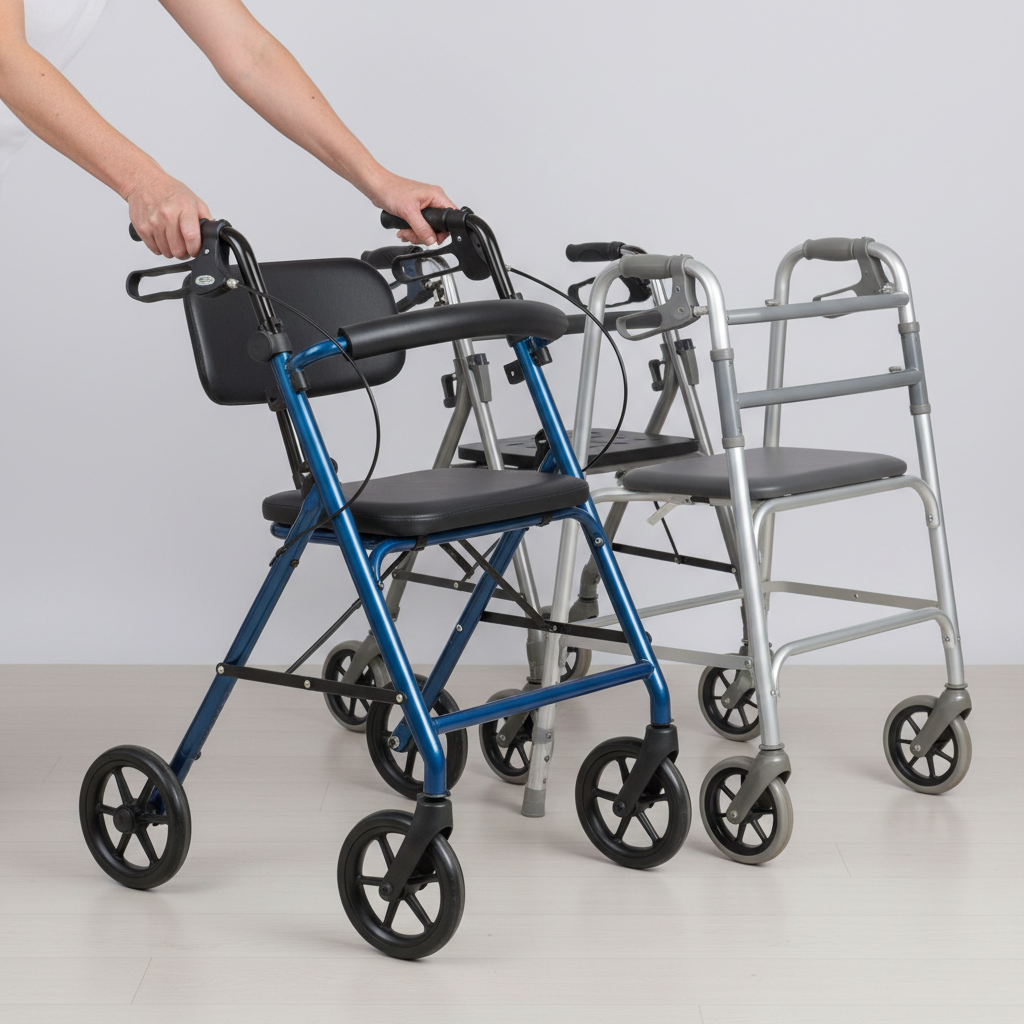
3. The Rollator (Three- and Four-Wheeled Walkers)
Rollators are a popular choice for active seniors who need support but do not want to be slowed down. These walkers have three or four wheels, handlebars with brakes, and often come with a built-in seat and storage basket. The four-wheeled design provides excellent maneuverability, allowing users to navigate corners and uneven surfaces more easily than other walker types. The hand brakes are a critical safety feature, giving the user full control over their speed and allowing them to lock the wheels before sitting down.
The built-in seat is a major advantage for individuals who tire easily, providing a convenient place to rest anytime, anywhere. This makes rollators perfect for longer walks, shopping trips, or social outings. It's important to note that because rollators are always on wheels, they require the user to have a decent amount of balance and coordination. They are designed to support, not to bear the user's full weight like a standard walker.
4. Upright Walker (Posture Walker or Stand-Up Walker)
A significant innovation in mobility aids, the upright walker is designed to address a common problem with traditional walkers: poor posture. Standard walkers and rollators often cause users to hunch over, which can lead to back, neck, and shoulder pain. Upright walkers feature adjustable, padded forearm supports that allow the user to stand straight and walk with a more natural, upright posture. This shifts the user's center of gravity and reduces strain on the wrists and back.
By promoting better posture, these walkers can enhance comfort, improve line of sight, and increase confidence while walking. They typically come equipped with four large wheels and a braking system similar to a rollator, making them suitable for both indoor and outdoor use. While they are often bulkier and more expensive than traditional models, the ergonomic benefits make them a leading choice for those who will be using a walker for extended periods and are concerned about long-term postural health.
5. Hemi Walker (One-Handed Walker)
A Hemi walker is a specialized mobility aid designed for individuals who have limited or no use of one hand or arm, often due to a stroke, neurological condition, or injury. It looks like a standard walker that has been folded in half, with two legs on one side and a wider base for stability. It provides more support than a quad cane but is more manageable and lighter than a full-sized walker.
The user holds the walker with their stronger hand and moves it in tandem with their weaker leg. The wider base of support helps with balance during walking. Hemi walkers are adjustable in height and are typically used for navigating smaller indoor spaces. They are an essential tool for helping individuals regain mobility and independence when they can only rely on one side of their body for support.
Why Choosing the Right Mobility Aid is Crucial for Senior Independence
For many seniors, a mobility aid like a walker is more than just a piece of equipment; it's a lifeline to independence, safety, and a higher quality of life. The transition to using a walker can be emotionally challenging, but the physical benefits often far outweigh any initial reluctance. A properly chosen walker provides the stability needed to prevent falls, which are a leading cause of serious injury among older adults. By reducing the fear of falling, a walker empowers individuals to continue engaging in daily activities they enjoy, from tending to a garden to visiting with family.
Beyond fall prevention, the right mobility aid plays a vital role in maintaining physical health. It allows for continued light exercise, such as walking, which is crucial for cardiovascular health, muscle strength, and joint flexibility. Without this support, a fear of instability might lead to a sedentary lifestyle, which can accelerate physical decline. Furthermore, maintaining mobility directly impacts mental and emotional well-being. The ability to move around one's home and community fosters a sense of self-reliance and connection, reducing feelings of isolation and depression that can accompany limited mobility.
Common Questions About Walker Selection and Use
Once you've identified the potential types of walkers, several practical questions often arise. Addressing these is key to making the best and safest choice.
How Do You Properly Size a Walker for a Senior?
Proper sizing is not just about comfort; it's a critical safety issue. An incorrectly sized walker can lead to poor posture, back pain, and an increased risk of falling. To size a walker correctly, the user should stand inside the walker with their arms hanging naturally at their sides. The top of the walker's handgrips should be level with the crease of their wrist.
When the user places their hands on the grips, their elbows should have a comfortable bend of about 15 to 30 degrees. This angle allows for proper leverage and support without forcing the user to hunch over (if the walker is too short) or overextend their arms (if it's too tall). Most walkers are height-adjustable, so take the time to set it to the correct level before the first use and re-check it periodically.
What are the Most Important Safety Features to Look For?
Beyond the basic design, specific safety features can make a significant difference. For any walker with wheels, especially rollators, the braking system is paramount. Look for brakes that are easy to engage, even for someone with arthritis or limited hand strength. Loop-style brakes that can be pushed down to lock the wheels are often the most user-friendly. A secure locking mechanism ensures the walker won't move when the user is sitting down or standing up.
The quality of the grips is also important. They should be made of a non-slip material that is comfortable to hold. For standard walkers, the rubber tips on the legs must be in good condition, as worn-out tips can slide on smooth surfaces. Finally, check the walker's weight capacity to ensure it can safely support the user. A sturdy, well-constructed frame made from lightweight aluminum or durable steel will provide peace of mind.
What are Some Must-Have Walker Accessories for 2026?
Accessories can transform a basic walker into a highly functional personal assistant. A storage basket or bag is perhaps the most popular accessory, allowing users to carry personal items like a purse, phone, or groceries, keeping their hands free for safely operating the walker. Trays that attach to the top of the walker are also incredibly useful for carrying meals, drinks, or books from one room to another.
Other popular and practical accessories include cup holders, which are perfect for staying hydrated on the go, and clip-on lights for better visibility in dimly lit areas. For added comfort, padded seat covers and backrests for rollators are great additions. As technology integrates more into daily life, we may even see more holders designed specifically for tablets or smartphones, making it easier to stay connected while moving about.
Conclusion
Selecting the right mobility walker is a crucial decision that directly impacts a senior's safety, confidence, and freedom. From the rock-solid stability of a standard walker to the ergonomic comfort of an upright model, each type serves a unique purpose. By understanding the core features of standard walkers, rollators, upright walkers, and other specialized models, users and their families can make an informed choice that best suits their physical needs and lifestyle goals for 2026 and beyond. Proper sizing, attention to safety features, and useful accessories further customize the experience, turning a simple mobility aid into a powerful tool for maintaining an active and independent life.