Your Guide to Launching a Successful Career as a Sonographer
So, you're interested in becoming a sonographer? It's a rewarding and in-demand healthcare career, and you've found the right place to map out your journey. In this guide, we'll break down the entire process into clear, manageable steps.
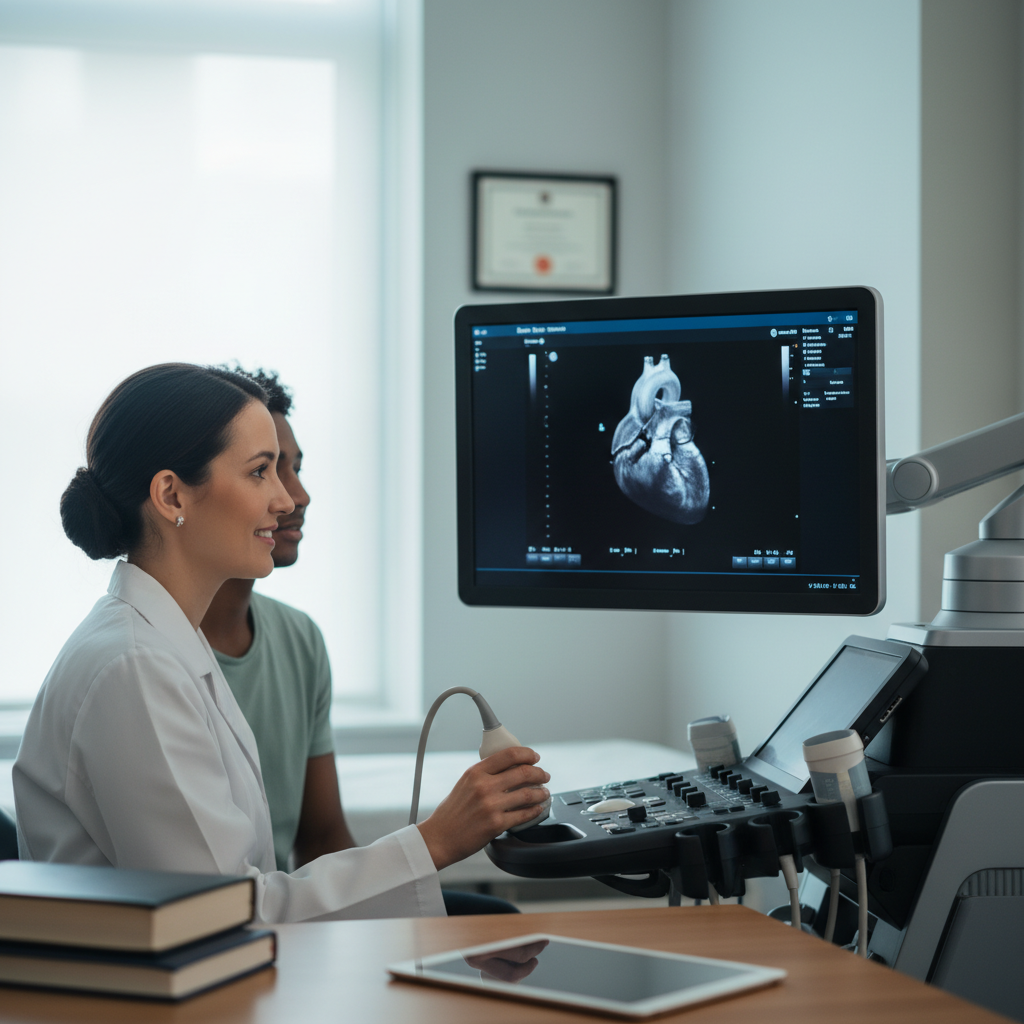
A Step-by-Step Guide to Becoming a Sonographer
Embarking on a career as a diagnostic medical sonographer is a journey that combines rigorous academic learning with intensive hands-on clinical training. It's a rewarding path for individuals passionate about healthcare, technology, and direct patient interaction. Following a structured approach is the key to successfully entering this dynamic and growing field. Here is a comprehensive breakdown of the essential steps you need to take.
Step 1: Fulfill Educational Prerequisites
The foundation of your sonography career begins long before you enter a specialized program. The first requirement is to have a high school diploma or a GED equivalent. Excelling in science and math courses during high school can provide a significant advantage and prepare you for the demanding curriculum ahead. Focus on subjects like biology, anatomy, physiology, chemistry, physics, and algebra.
These subjects build the fundamental knowledge base you'll rely on to understand complex concepts like ultrasound physics, cross-sectional anatomy, and pathophysiology. Many competitive sonography programs look for strong academic performance in these areas, so treating them with importance is a crucial first step.
Step 2: Choose an Accredited Sonography Program
This is arguably the most critical decision in your journey. It is essential to enroll in a program accredited by the Commission on Accreditation of Allied Health Education Programs (CAAHEP). Graduating from a CAAHEP-accredited program is a prerequisite for sitting for the professional certification exams that are vital for employment. Accreditation ensures the program meets high standards for curriculum, faculty, and clinical training.
Sonography programs are available in several formats:
- Certificate Programs: These are typically 12-18 months long and designed for individuals who already have a degree in a related healthcare field, such as nursing or radiologic technology.
- Associate of Science (AS) Degree: This is the most common pathway, usually taking about 24 months to complete. It provides a comprehensive education in sonography principles and includes all necessary clinical training.
- Bachelor of Science (BS) Degree: A four-year degree offers a more in-depth education and can open doors to future leadership, research, or academic roles. It combines general education courses with specialized sonography training.
Step 3: Complete Your Sonography Program Coursework
Once enrolled, you will dive into a curriculum that blends theoretical knowledge with practical skills. Classroom learning will cover a wide range of subjects, including medical terminology, patient care and ethics, ultrasound physics and instrumentation, and detailed anatomy for various parts of the body.
You will learn the science behind how ultrasound waves interact with human tissue to create images. In dedicated scanning labs, you'll get your first hands-on experience using ultrasound machines (transducers) on models and fellow students, learning how to manipulate the equipment to produce clear and diagnostic images.
Step 4: Gain Extensive Clinical Experience
Theoretical knowledge is only one piece of the puzzle. The bulk of your learning will happen during your clinical externship or practicum. Accredited programs have partnerships with hospitals, clinics, and imaging centers where students work alongside experienced sonographers and radiologists. This real-world experience is invaluable and non-negotiable for graduation and certification.
During your clinical hours, you will learn to interact with diverse patients, perform a wide variety of ultrasound examinations, and understand the workflow of a medical imaging department. You'll refine your scanning techniques, learn to identify normal and abnormal anatomy, and practice communicating your findings to the medical team. Most programs require over 1,000 hours of clinical scanning to ensure you are competent and ready for entry-level employment.
Step 5: Obtain Professional Certification
After graduating from your accredited program, the next step is to become professionally certified. The primary credentialing body in the United States is the American Registry for Diagnostic Medical Sonography (ARDMS). Earning the title of Registered Diagnostic Medical Sonographer (RDMS) is the industry standard and required by the vast majority of employers.
To become certified, you must pass at least two exams. The first is the Sonography Principles and Instrumentation (SPI) exam, which covers the physics and technical aspects of ultrasound. After passing the SPI, you must pass a specialty exam in an area like Abdomen (AB), Obstetrics and Gynecology (OB/GYN), Breast (BR), or Pediatric Sonography (PS). Earning multiple specialty credentials can significantly enhance your job prospects.
Step 6: Secure State Licensure (If Required)
While most states do not currently require a specific license to practice sonography, a growing number are moving in that direction. As of now, only a handful of states have licensure requirements. However, it's crucial to research the specific laws in the state where you plan to work.
In states that do require a license, holding an ARDMS certification will almost always meet the primary requirement for licensure. Staying informed about state-level regulations is an important part of maintaining your professional standing throughout your career.
Step 7: Build Your Resume and Begin Your Job Search
With your education, clinical training, and certification complete, you are ready to enter the workforce. Create a professional resume that highlights your academic achievements, the scope of your clinical experience (including the number of hours and types of exams performed), and your ARDMS credentials. Tailor your resume and cover letter for each job application.
Look for job openings on hospital career websites, major online job boards, and through professional organizations like the Society of Diagnostic Medical Sonography (SDMS). Networking with instructors and clinical preceptors can also be an excellent way to hear about unadvertised openings.