Your Guide to the Canada Pension Payment Dates in 2026
Discover the essential dates with our Canada Pension Payment Calendar 2026. Stay informed about when your pension payments are scheduled and plan ahead effectively. This comprehensive calendar provides you with the key dates to ensure you receive your Canada pension benefits on time.
Understanding the Canada Pension Plan (CPP)
The Canada Pension Plan (CPP) is a public pension plan that ensures Canadians have a reliable income in retirement. It is mandatory for all employed and self-employed individuals, contributing to the plan through their earnings. The CPP provides retirement pensions, post-retirement benefits, disability benefits, survivor benefits, and children's benefits to contributors and their families.
As of 2026, the contribution rate for employees and employers is 5.95% each, while self-employed individuals contribute at a rate of 11.9% on earnings between the annual basic exemption and the year's maximum pensionable earnings. The maximum annual contribution for this year is set at $3,754.45 for employees and employers and $7,508.90 for self-employed individuals.
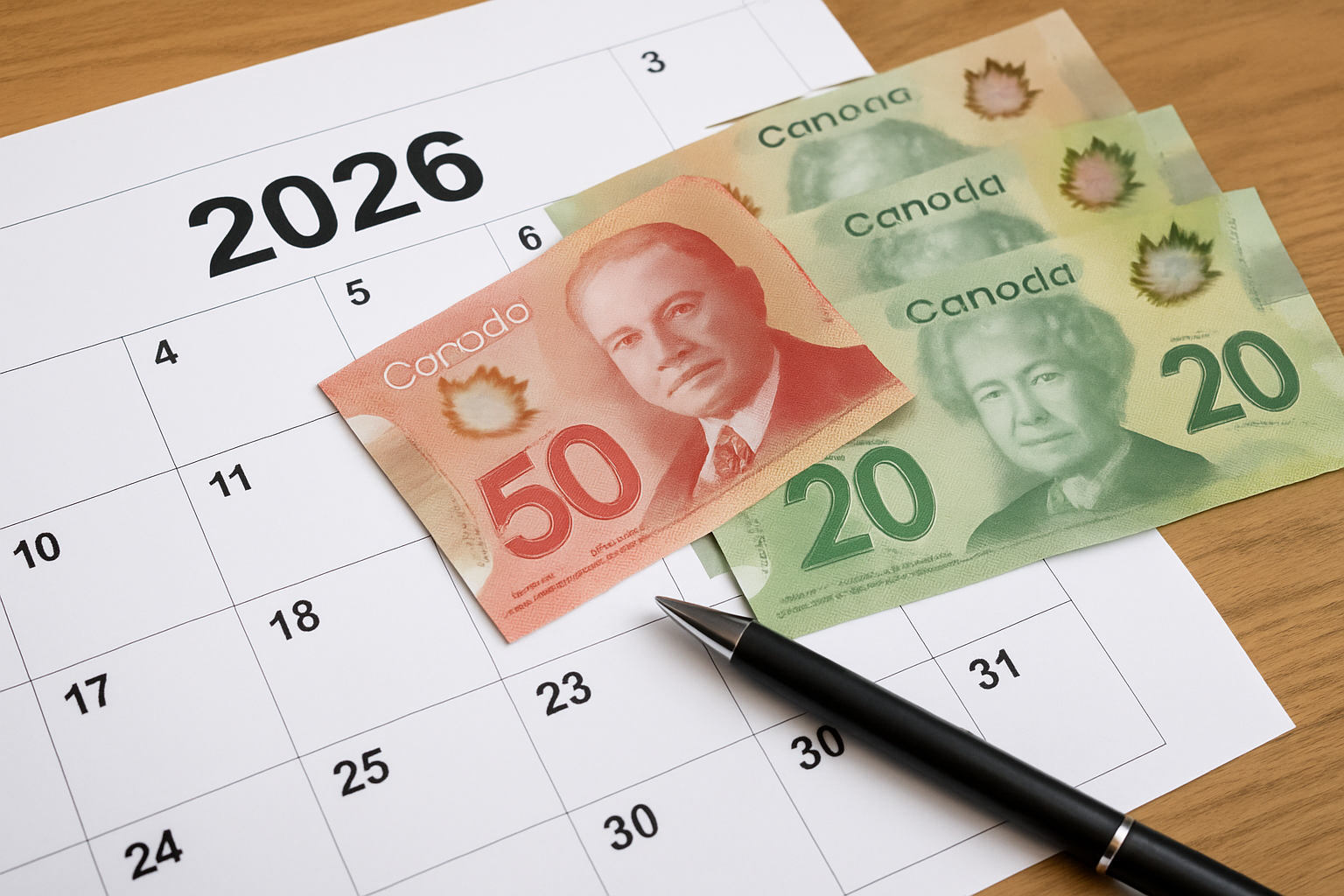
Canada Pension Payment Calendar 2026
Knowing when you can expect your pension payments is crucial for budgeting your finances during retirement. The Canada Pension Payment Calendar is designed to help seniors plan their monthly expenses by providing specific dates when payments will be made.
2026 Payment Dates
For 2026, the CPP payments are scheduled to be distributed on the following dates:
- January 29
- February 26
- March 30
- April 29
- May 28
- June 29
- July 30
- August 28
- September 29
- October 29
- November 27
- December 29
These are usually the last three business days of each month, but exact timing may vary depending on weekends and holidays.
How to Access Your CPP Payments
Receiving your CPP payments is simplified through multiple options:
Direct Deposit
Direct deposit is the most efficient and secure method to receive your CPP. The funds are automatically transferred into your bank account on the payment dates, eliminating the worry of mail delays. To set up direct deposit, you need to provide your banking information to Service Canada.
Cheque
If you prefer to receive payments via cheque, they will be mailed to your home. Note that physical cheques can take more time and may be delayed due to postal service disruptions.
Factors Affecting CPP Payments
Several factors can influence the amount and timing of CPP payments:
- Retirement Age: You can choose to start receiving CPP payments as early as age 60 or delay until age 70. Choosing to start early will result in reduced payments, while delaying increases monthly benefits.
- Amount of Contributions: The more you contribute, the higher your CPP benefits. Contributions are based on your earnings during your working years up to the maximum pensionable earnings.
- Indexation: CPP rates are indexed annually to keep pace with inflation, ensuring benefits maintain purchasing power over time. For 2026, the CPP benefits have increased by 2.6% from the previous year to reflect inflation adjustments.
The Role of the Canada Pension Plan in Retirement Planning
The Canada Pension Plan is a crucial component of retirement income for Canadians. It’s important to understand its function in your overall retirement strategy. While CPP provides a stable income, it's advisable to complement it with other sources, such as private savings or employer pensions, to ensure a comfortable retirement.
Combining Income Sources
Many retirees supplement their CPP with Old Age Security (OAS), Registered Retirement Savings Plans (RRSPs), and Tax-Free Savings Accounts (TFSAs). Planning early and recognizing how these income streams can be combined is vital for financial security after leaving the workforce.
Additional Resources for Canadian Pensioners
Here are some resources for gaining a better understanding of how the CPP and other retirement benefits can work for you:
- Government of Canada's Official Site - Provides comprehensive information on how to manage your CPP and other benefit programs.
- Canadian Retirement Income Calculator - A useful tool for estimating your retirement income from all sources based on current savings and expected lifestyle.
- Your Money - Financial Literacy Site - Offers strategies and advice for effectively managing your finances pre- and post-retirement.
Through careful planning and understanding your options under the CPP, you can achieve a more secure financial future. Keep informed and regularly review your retirement plan to adapt to any legislative changes or personal life shifts.