2.5 GPM vs. 1.75 GPM Shower Heads: Which Flow Rate Should You Buy (and Will Low Flow Feel Weak)?
What GPM means on a shower head, the difference between 2.5 and 1.75 GPM, which states require low flow, how much water you save, and how to get a strong shower at a lower flow rate.
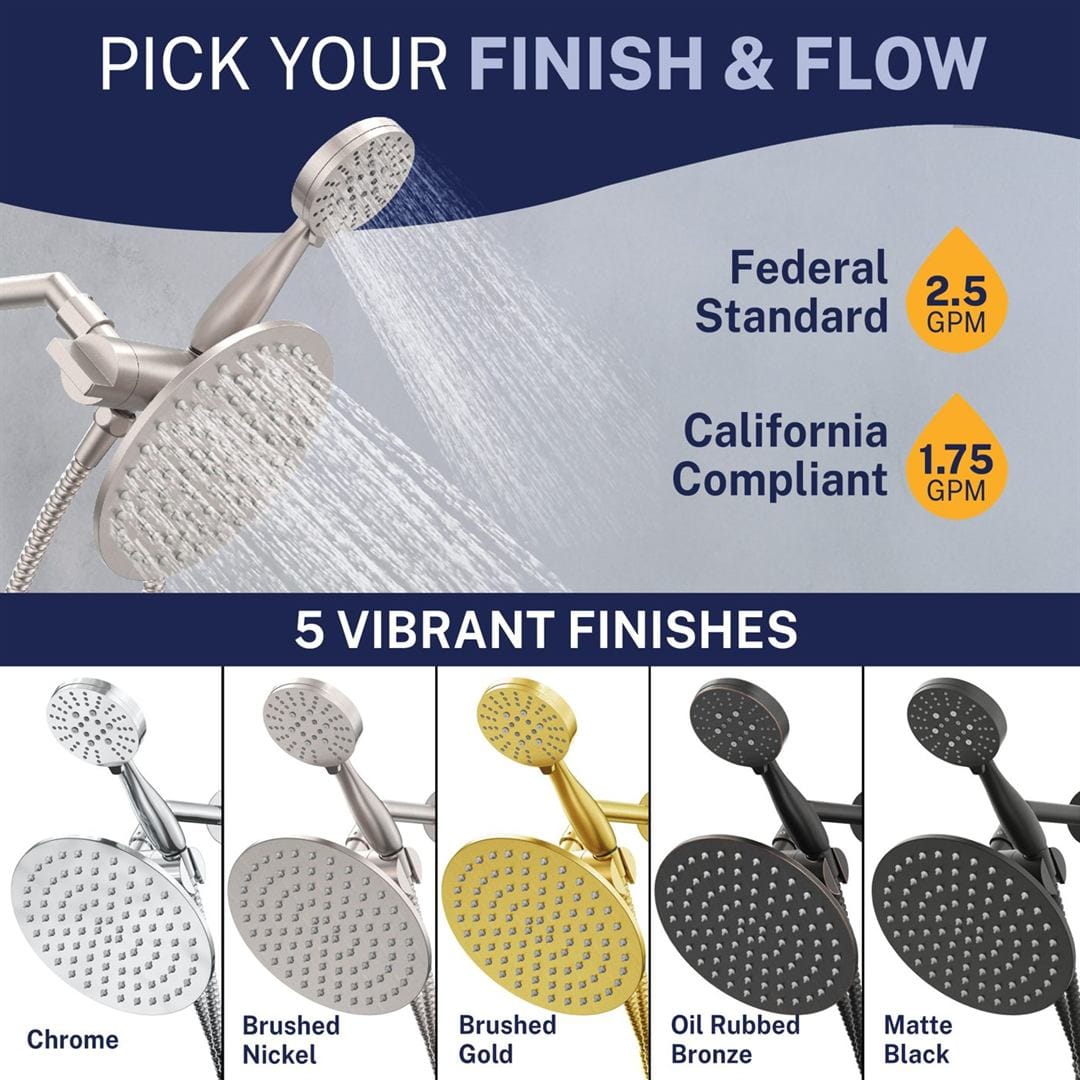
Almost every shower head now comes in two versions, and the only difference on the box is a number: 2.5 GPM or 1.75 GPM. Pick the wrong one and you either fail your local code or end up with a shower you do not love. Here is how to choose.
What does GPM actually mean?
GPM stands for gallons per minute: the maximum amount of water a shower head lets through each minute. It is set by a small flow restrictor inside the head.
Since 1992, US federal rules have capped new shower heads at 2.5 GPM (measured at 80 psi). Some states and many water utilities go further. California limits new shower heads to 1.8 GPM, and other states, such as Colorado and Washington, also set limits below the federal maximum. The EPA's WaterSense label is given to heads that use 2.0 GPM or less.
That is why good shower heads are now made in two versions. A 1.75 GPM head comes in under every one of these limits.
2.5 GPM vs 1.75 GPM at a glance
2.5 GPM | 1.75 GPM | |
Water per minute | 2.5 gallons | 1.75 gallons |
Water in an 8-minute shower | 20 gallons | 14 gallons |
Legal in all 50 states | No (exceeds CA and some other state limits) | Yes |
Meets WaterSense threshold (2.0 or less) | No | Yes |
Feel | Fullest, heaviest flow | Firm if nozzles are well designed |
Best for | Maximum feel, homes where it is permitted | CA and similar states, saving water and energy |
How much water and money does 1.75 GPM save?
The difference is 0.75 gallons every minute the shower runs. That adds up quickly:
Per 8-minute shower: 6 gallons saved
Two people showering daily: about 4,380 gallons a year
A family of four: about 8,760 gallons a year
Most of that is hot water, so the savings show up on your gas or electric bill as well as your water bill. Less hot water per shower also means the water heater runs out less often when everyone showers back-to-back in the morning.
Will a 1.75 GPM shower head feel weak?
This is the real question, and the honest answer is: it depends on the nozzles, not just the number.
Two things decide how strong a shower feels:
Flow (how much water): set by the GPM rating.
Velocity (how fast it hits you): set by the size, shape and number of nozzle openings.
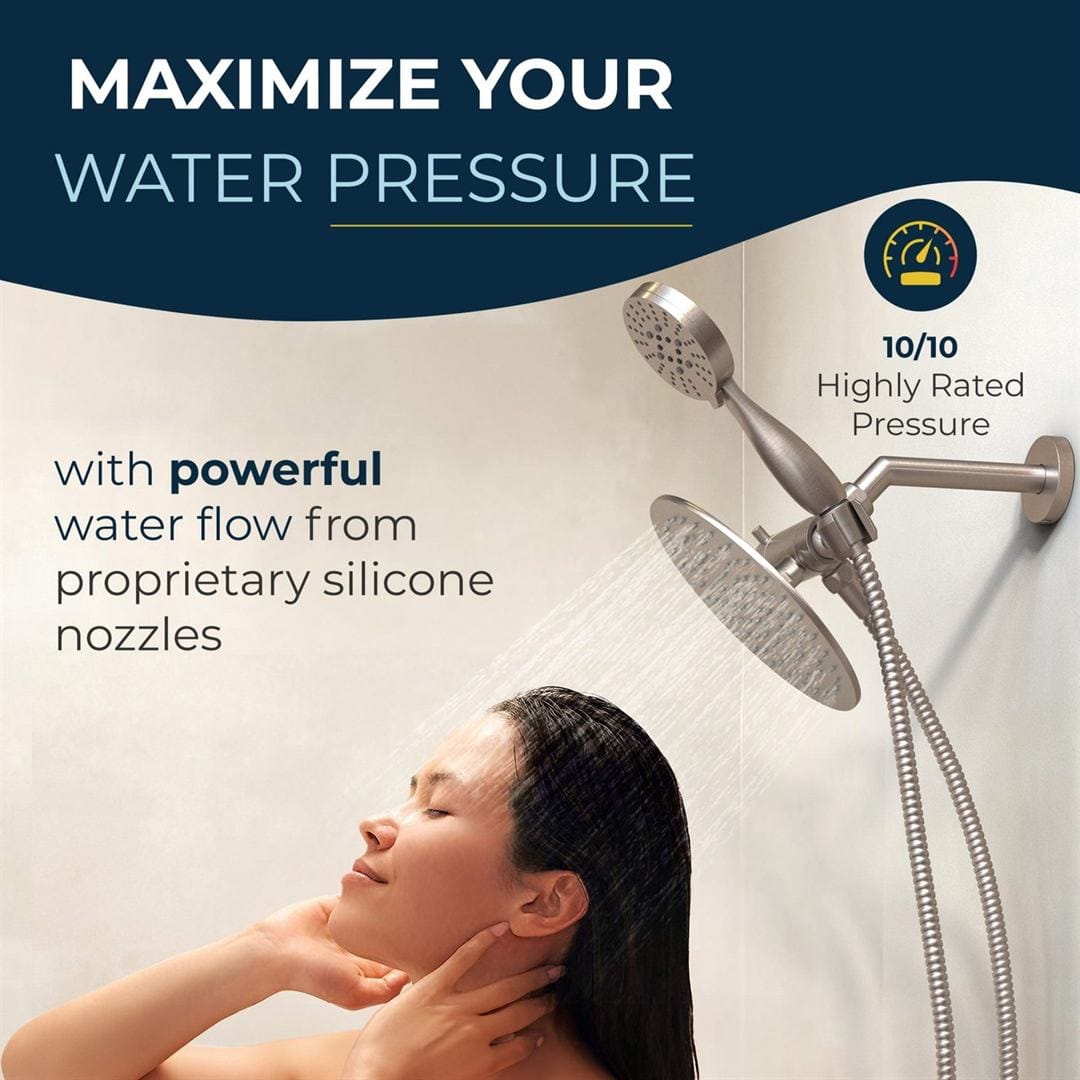
A cheap low-flow head simply restricts water to a wide, flat faceplate with big holes. The water dribbles out and the shower feels like a drizzle. A well-designed low-flow head forces the same water through smaller, pressurized nozzles, so each stream leaves faster and hits harder.
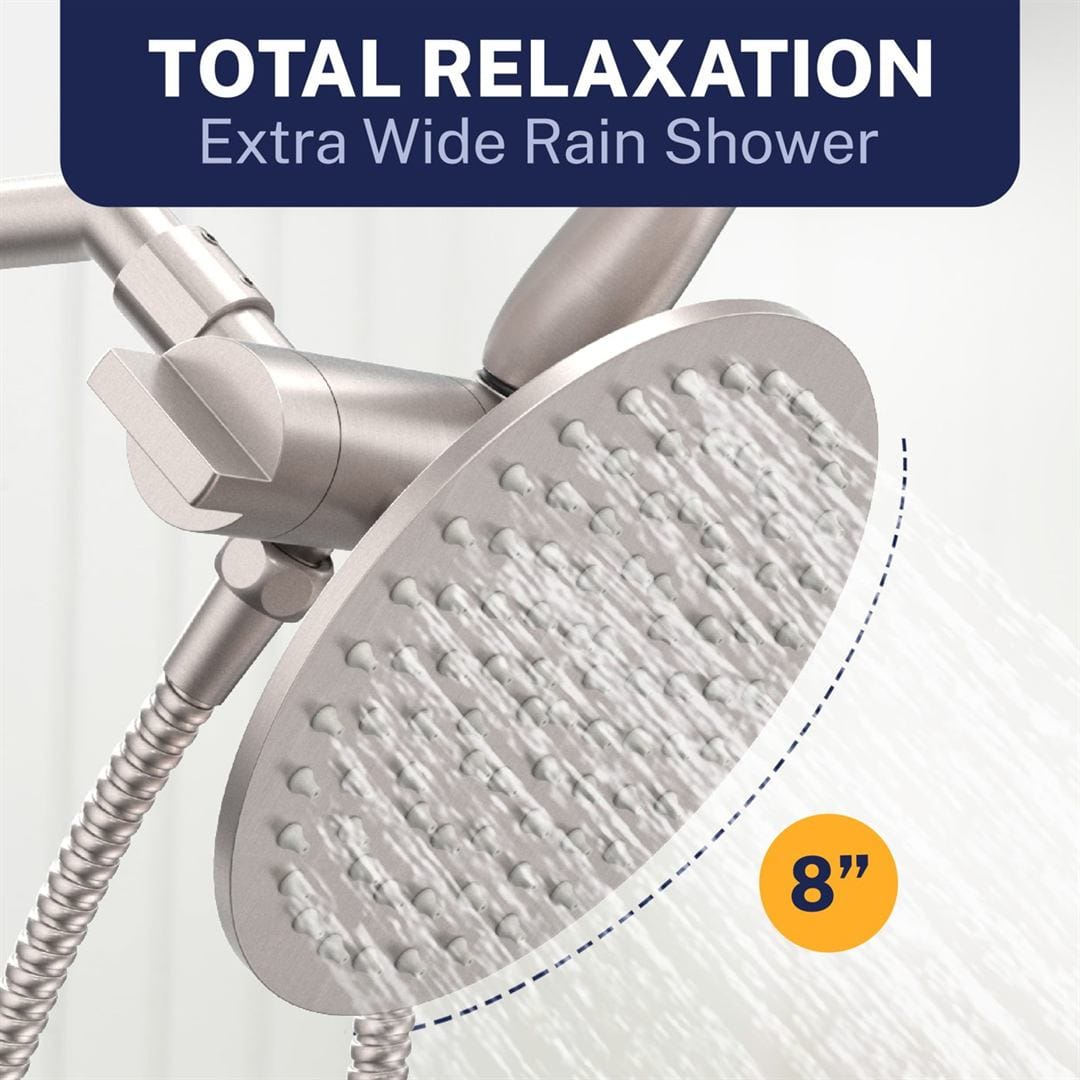
HammerHead's Dual Shower Head uses pressurized silicone nozzles on both the 8" rain head and the 4" handheld. On the 1.75 GPM version, that is what keeps the rain shower feeling like rain rather than mist. The handheld's Massage setting concentrates flow even further, which is noticeably more forceful than the wide settings.
Tip: if a low-flow shower ever feels weak, try the handheld on its own rather than both heads together. In "both" mode the flow is shared between the two heads.
Which should you buy?
Choose 1.75 GPM if...
You live in California, or in another state or city with a limit below 2.5 GPM (check your local code or water utility)
You are on a well, a tankless water heater, or a small tank and want hot water to last
You pay for water by usage or are in a drought-restricted area
You want to lower energy bills without changing how long you shower
Shop the HammerHead Dual (Brushed Nickel) on Amazon →
Choose 2.5 GPM if...
Your state allows it and you want the fullest, heaviest flow possible
Your home has strong, steady water pressure and a large water heater
You mostly use the rain head and want maximum coverage
Shop the HammerHead Dual (Chrome) on Amazon →
Shop the HammerHead Dual (Oil Rubbed Bronze) on Amazon →
A word on "high pressure" shower heads
Many listings promise to "boost" or "increase" water pressure. No shower head can create pressure that your plumbing does not supply. What a good head can do is make the most of the pressure you have, by shaping the water into faster, more focused streams. Be sceptical of any product that claims more than that.
If your shower is weak with every head you try, the cause is usually elsewhere: a partly closed shut-off valve, mineral build-up in the old head, a failing pressure regulator, or corroded pipes. A new shower head is the best final step after those are ruled out.
Should you ever remove the flow restrictor?
You will find online videos showing how to pull the restrictor out of a shower head. We do not recommend it. It can void the warranty, it may violate local water codes, it wastes water and energy, and on a well-designed head it often makes the spray feel worse, not better, because the nozzles are tuned for a specific flow.
Both flow rates, same hardware
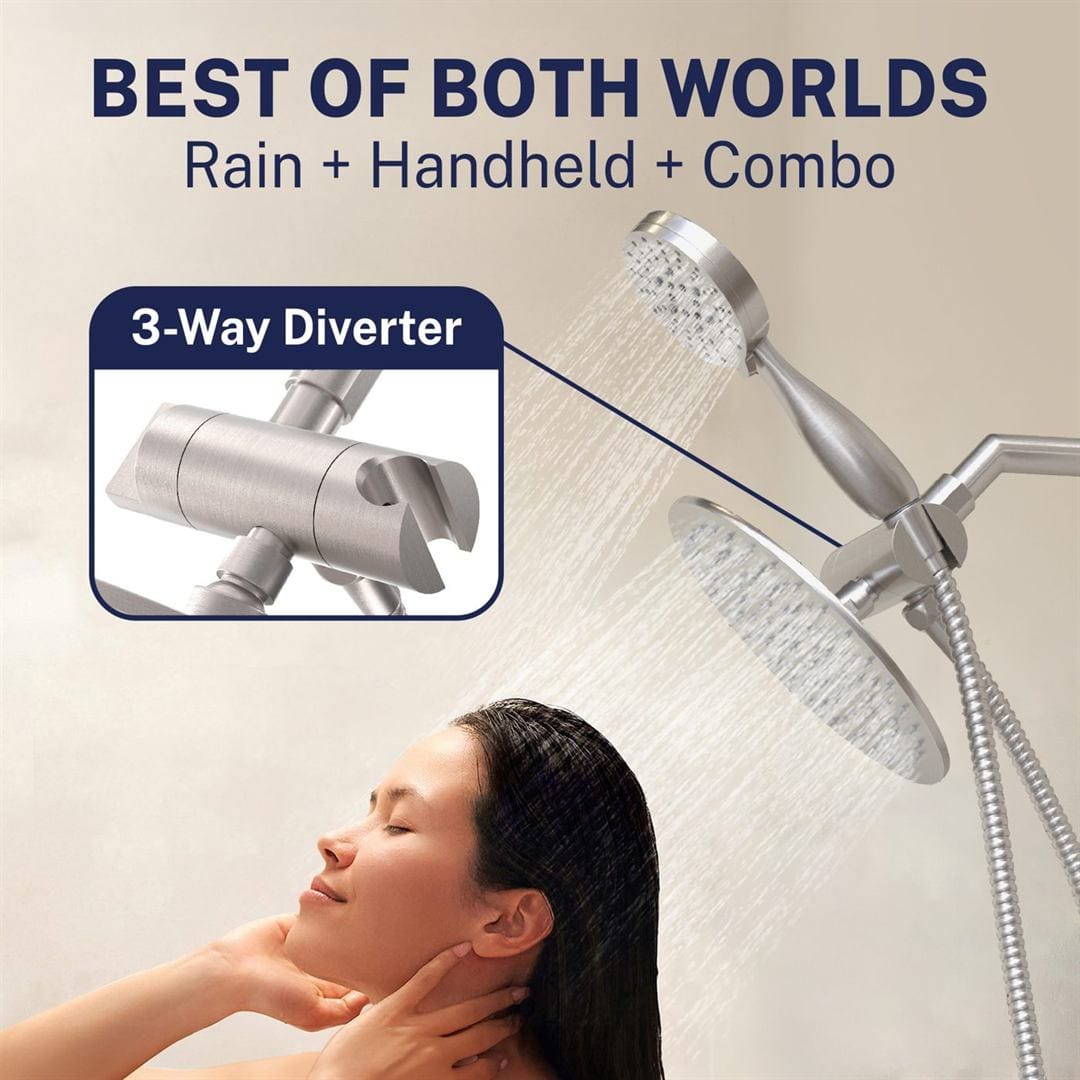
Whichever you pick, the HammerHead 3-Spray Dual Shower Head is the same product: an 8" rain head, a 4" handheld with Mist, Wide and Massage, a solid brass 3-way diverter, a 72" metal hose with silicone inner tube, stainless steel and brass construction, cUPC certification, and a limited lifetime warranty. It is available in Chrome, Brushed Nickel, Brushed Gold, Oil Rubbed Bronze and Matte Black.
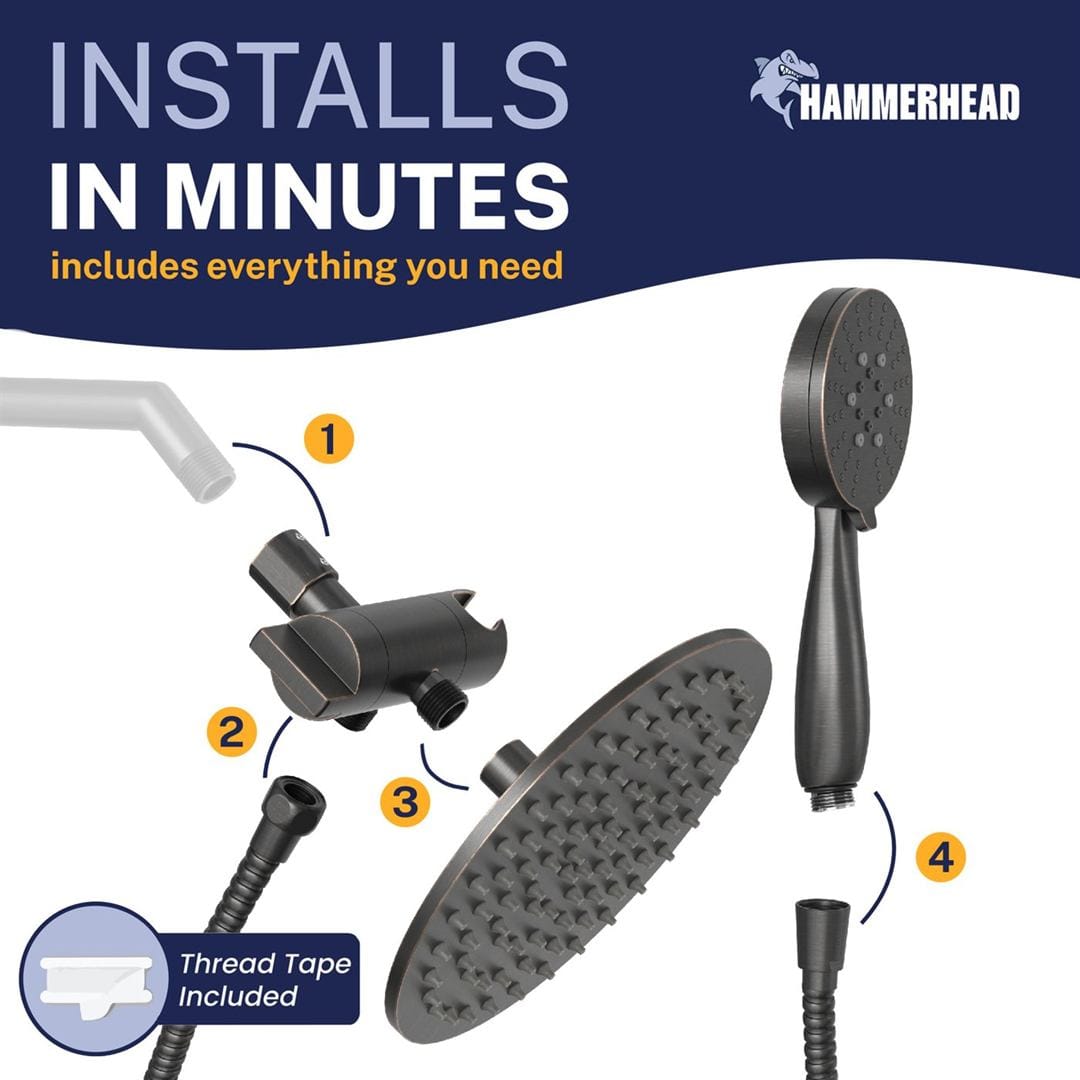
The simpler HammerHead 1-Spray Handheld also comes in both 2.5 and 1.75 GPM.
Shop the HammerHead 1-Spray Handheld on Amazon →
Frequently asked questions
Is 1.75 GPM good for a shower?
Yes, with a well-designed head. Pressurized nozzles keep the spray firm, and it meets the strictest state limits in the US.
Is 2.5 GPM legal everywhere?
No. It is the federal maximum, but California and several other states set lower limits for new shower heads. Check your local rules before buying.
How do I know my shower head's GPM?
It is usually printed on the face or side of the head, or on the box. If it is not marked and the head was installed before 1992, it may use well over 2.5 GPM.
Do I need a different version for a tankless water heater?
Not necessarily, but a 1.75 GPM head makes it easier for a tankless heater to keep up, especially if another tap is running at the same time