Discover the Simple Penny Test: Check Your Tire Tread Depth with Ease
Curious about your tire tread's condition? Discover how to check your tire tread depth using the simple penny test. This easy method can help you assess if it's time for new tires. All you need is a penny to get started.
Understanding Tire Tread Depth: Why It Matters
Maintaining the health of your tires is essential for safe driving, and one critical aspect of tire maintenance is monitoring tread depth. Tread depth influences the grip, braking performance, and overall handling of your car, especially in wet conditions. Inadequate tread depth increases the risk of accidents, hydroplaning, and can increase your stopping distance. In 2026, a report from the National Highway Traffic Safety Administration indicated that tires with less than 2/32 of an inch tread depth are more likely to contribute to tire-related crashes.
The Legal and Recommended Tread Depth
While the legal minimum tread depth varies by country, in the United States, the suggested minimum tread depth is generally 2/32 of an inch. However, many automotive experts and safety advocates recommend maintaining a tread depth of at least 4/32 of an inch for optimal performance and safety during adverse weather conditions like rain or snow.
The Penny Test Explained
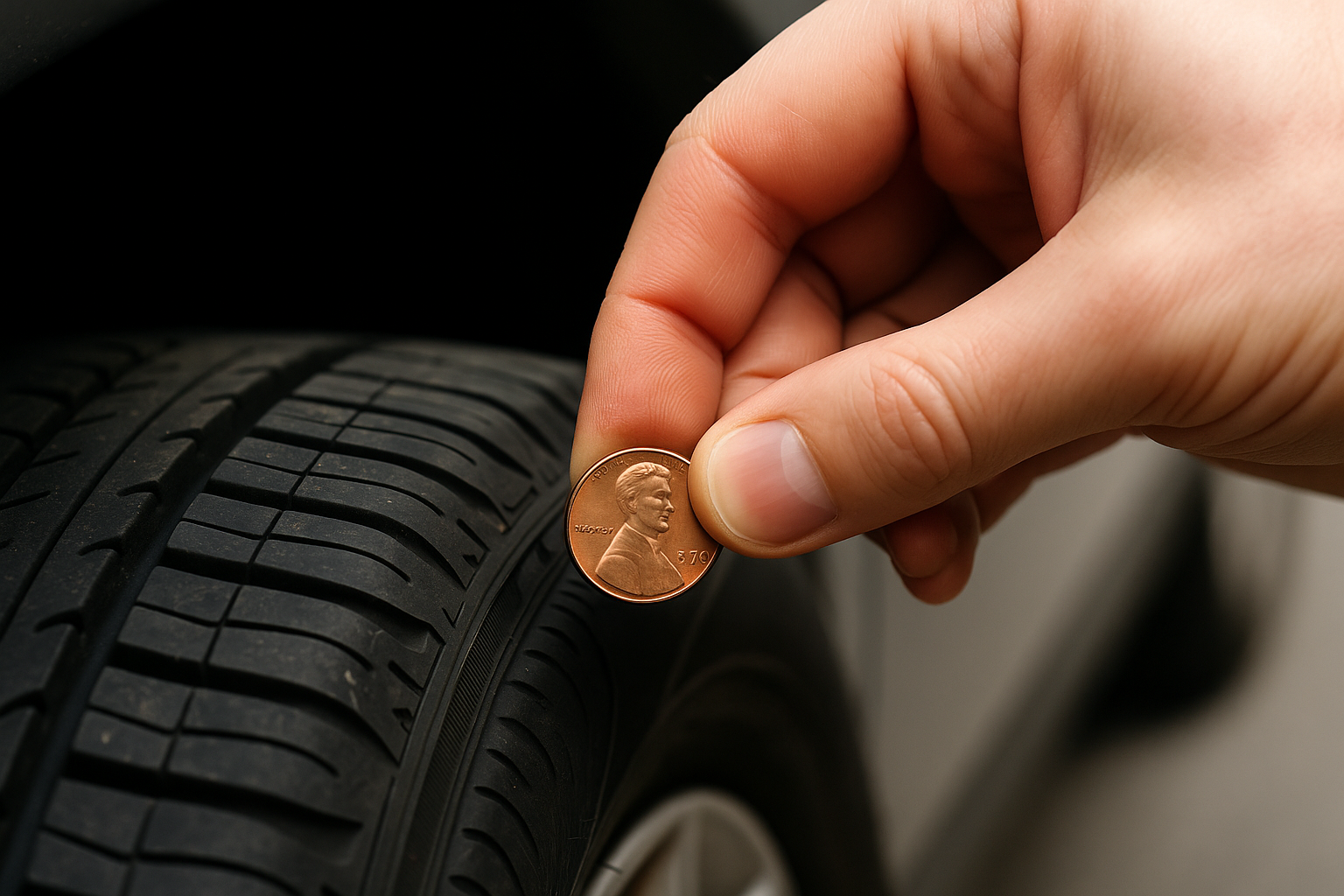
The penny test is a simple, traditional method used by drivers to check tire tread depth. It's a quick, cost-free, and effective way to see if your tires are safe to drive on. This method, as basic as it is, can help determine when it’s time to replace your tires.
Step-by-Step Guide for the Penny Test
- Find a Penny: Use a standard U.S. penny for this test.
- Position the Penny: Insert the penny into the tire tread groove with Lincoln's head facing you and upside down.
- Assess the Tread Depth: Observe if the top of Lincoln's head is visible. If you can see all of Lincoln’s head, your tread depth is less than 2/32 of an inch, meaning it's time to replace your tires.
- Check Multiple Areas: Inspect various spots around each tire, as uneven tread wear can indicate other issues like improper tire alignment or a suspension problem.
Why the Penny Test is Still Relevant
Despite technological advances, the penny test remains relevant today because of its simplicity and accessibility. In 2026, an automotive maintenance survey revealed that 70% of drivers prefer easy and quick checks like the penny test to assess tire conditions regularly. It's a method that empowers drivers to take charge of their vehicle maintenance without needing specialized tools.
Beyond the Penny: Additional Ways to Check Tire Tread
While the penny test is a great tool, there are other ways to measure tread depth more precisely if needed.
Using a Tread Depth Gauge
A tread depth gauge is an inexpensive tool available at auto parts stores. It offers a precise measurement, allowing you to assess whether your tread is wearing evenly or if there’s unseen damage to the tires. By providing exact numbers, a tread depth gauge can help in making more informed decisions about tire maintenance and replacement.
Checking with Tread Wear Indicators
Many modern tires come equipped with tread wear indicators, which are small bars of rubber that run perpendicularly to the main tread. When your tread has worn down to these bars, it indicates your tire tread is no longer sufficient and replacement is necessary. This is a handy feature to support periodic visual checks.
Maintaining Tire Health for Longevity
Regular tire maintenance extends the lifespan of your tires and ensures safety on the road. Here are some best practices:
- Regularly Check Tire Pressure: Keeping your tires inflated to the manufacturer's recommended pressure can reduce wear and increase fuel efficiency. Refer to reputable sources such as Tire Rack for more details.
- Rotate Tires Periodically: Tire rotation helps in achieving uniform tire wear, which extends their life. Typically, tire rotation is recommended every 5,000 miles.
- Alignment and Balancing: Proper alignment and balancing prevent uneven tread wear and contribute to better handling and safety.
- Inspect for Damage: Check for any visible cuts, punctures, or other damages that might compromise safety.
For more comprehensive tire maintenance strategies, check resources such as the National Highway Traffic Safety Administration (NHTSA) website, which emphasizes the importance of regular checks and professional assessments when needed.
Conclusion: Safety First
Taking time to assess and maintain tire health is not just about extending the life of your tires; it's an essential step in ensuring your safety and that of others on the road. The penny test remains an easy, effective way to keep tabs on tread depth, but coupling this with more precise methods and regular maintenance will help guarantee that your tires are in their best shape. Stay informed and proactive with your vehicle maintenance to enjoy safer driving experiences.