Enhance Your Workout: The Versatility of Fitness Balls for Strength and Balance
Discover how fitness balls can transform your workout routine by enhancing strength and balance exercises. These versatile fitness balls offer a dynamic way to challenge your core and improve stability without making bold claims.
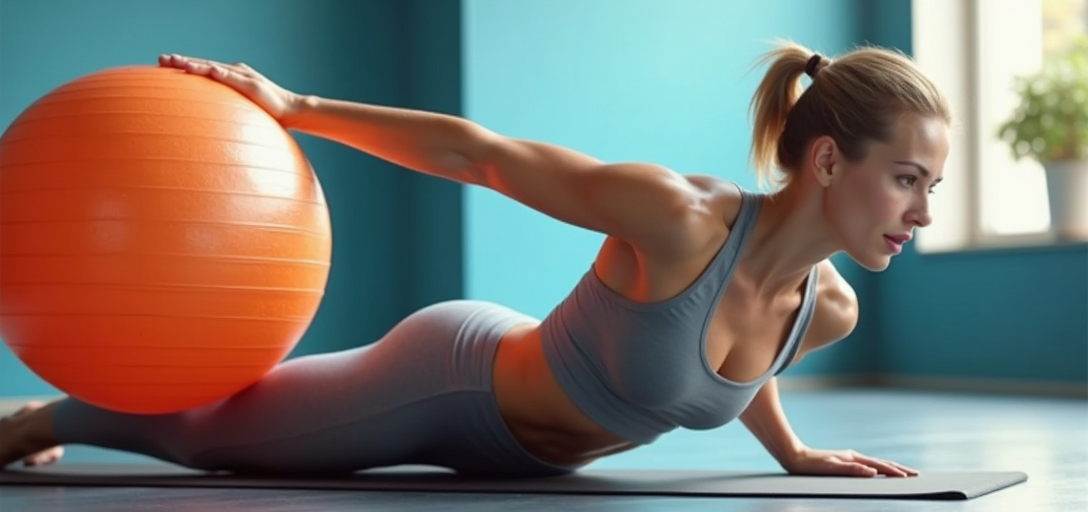
The Benefits of Using Fitness Balls for Strength and Balance Exercises
Fitness balls, often called stability balls or exercise balls, are more than just trendy gym equipment. They provide a versatile tool for enhancing strength and balance, offering numerous benefits for individuals of all fitness levels. In this article, we'll delve into how these simple yet effective tools can transform your workout routine and overall fitness goals.
What Are Fitness Balls?
Fitness balls are large, inflatable balls that are commonly used in exercise regimes to improve balance, strength, and core stability. Available in various sizes, they can be used in a wide range of exercises to add an element of instability, which helps recruit more muscles to maintain balance and control.
Why Use Fitness Balls?
- Improved Core Strength: Balancing on a fitness ball activates the core muscles, promoting a stronger core.
- Enhanced Balance: The instability of the ball requires constant adjustment, thus improving balance over time.
- Versatility: Can be used for a variety of exercises, from yoga to intense strength training routines.
- Joint-Friendly: Provides a gentle workout that is easier on the joints compared to other weight-lifting equipment.
How to Choose the Right Fitness Ball
Choosing the correct fitness ball size is crucial for both safety and effectiveness. The size you need depends on your height and the type of exercises you wish to perform. Typically, a ball size of 55cm is recommended for users up to 5'5", 65cm for 5'6" to 6'2", and 75cm for those over 6'2". It's always a good idea to ensure the ball is firm and fully inflated to maintain stability during exercises.
Popular Fitness Ball Exercises
1. Stability Ball Crunches
Target your abs effectively with this popular exercise. Keep your lower back firmly on the ball while performing slow, controlled crunches.
2. Wall Squats
Place the ball between your lower back and a wall, and squat down. This exercise targets the legs and glutes while providing support to the back.
3. Pike Roll-Out
Begin in a plank position with the tops of your feet resting on the ball. Engage your core and use your abs to roll the ball towards your hands, then back out.
Real-world Benefits and User Experiences
Jane, a 34-year-old from Texas, shares, "Using a fitness ball has completely changed my home workouts. I've seen improvements in my posture and balance just within a few weeks."
According to a 2026 study conducted by the American Council on Exercise, individuals who incorporated stability balls in their exercise regime experienced 17% more activation in their core muscles compared to those who didn't use them (American Council on Exercise, 2026).
How to Integrate Fitness Balls into Your Workout Routine
Whether you're a seasoned athlete or just beginning your fitness journey, here are some tips on integrating fitness balls into your workouts:
- Start Small: Begin with simple exercises like sitting or bouncing lightly to get used to the ball's stability.
- Focus on Form: Proper form is more crucial than the number of reps. It's better to do fewer well-executed exercises than numerous poorly executed ones.
- Combine with Other Equipment: Use alongside dumbbells or resistance bands for a comprehensive full-body workout.
Conclusion: The Fitness Ball Advantage
Incorporating fitness balls into your routine offers both challenge and support, enhancing strength and balance effectively. As more studies, like the one conducted by Johns Hopkins University in 2026, confirm the benefits of unstable surfaces in fitness routines (Johns Hopkins University, 2026), it is clear why these balls continue to be a staple in both gyms and home workouts across the US.