Essential Documents for Patient Assistance Program Applications
Patient Assistance Programs (PAPs) can be a lifeline for those seeking financial relief on medical expenses. To apply successfully, it's crucial to know what documents are needed for Patient Assistance Programs. This guide outlines the essential paperwork, helping you navigate the process smoothly.
Understanding Patient Assistance Programs
Patient Assistance Programs (PAPs) are crucial for individuals who cannot afford their medications. These programs, often sponsored by pharmaceutical companies, help patients access the medications they need at a reduced cost or even for free. However, understanding how to apply and what documentation is needed can be challenging. In this guide, we will explore the essential documents required for enrolling in a patient assistance program and provide some real-world insights.
What Documents Are Needed for Patient Assistance Programs?
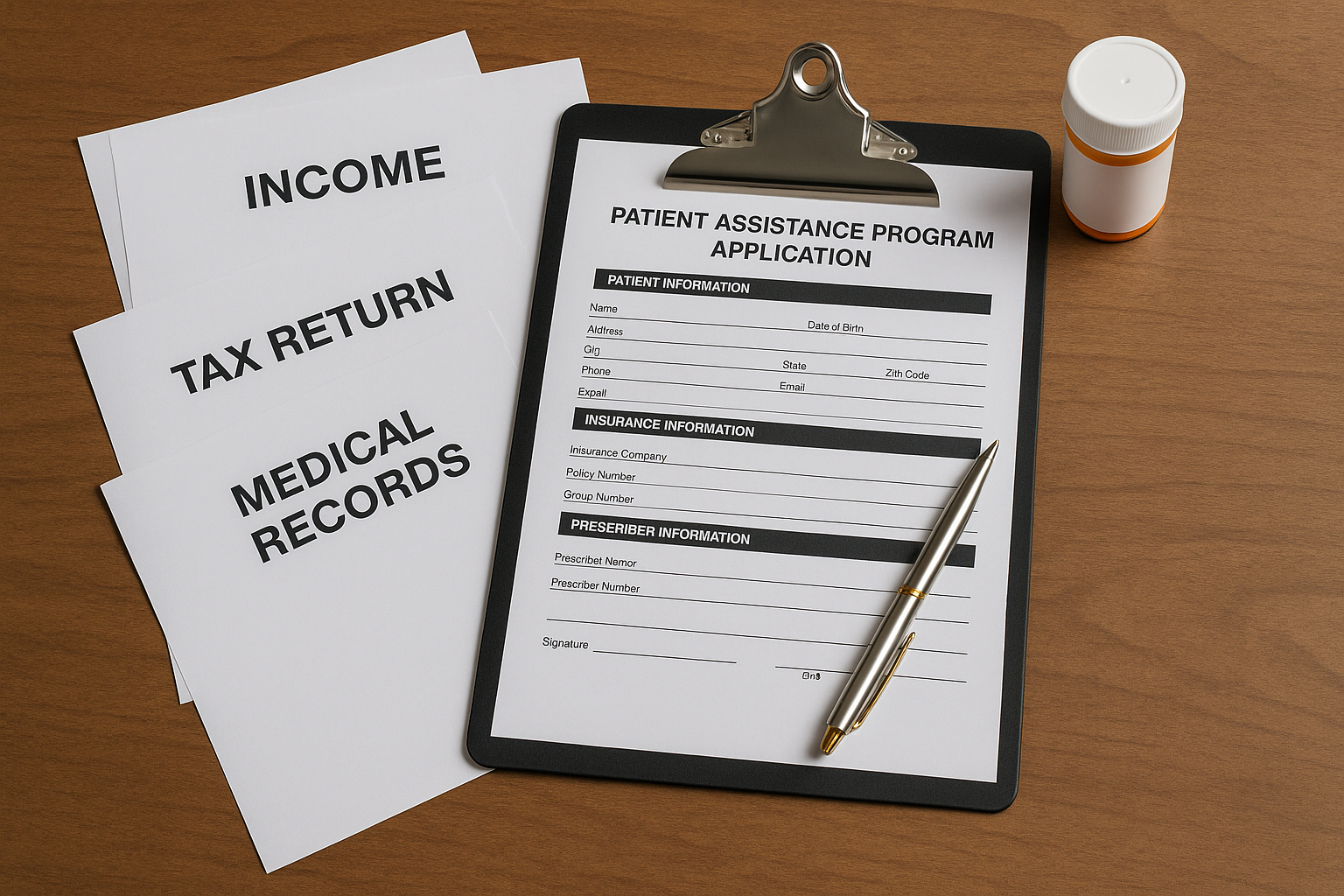
When applying for a patient assistance program, the required documents can vary slightly depending on the specific program or provider. However, most programs typically request the following:
- Proof of Income: This includes pay stubs, tax returns, or benefit statements that reflect your financial situation, ensuring your income level meets the eligibility criteria.
- Insurance Information: If applicable, you must provide details of your current insurance coverage or lack thereof to prove that such coverage doesn’t meet your needs.
- Doctor's Prescription: A valid prescription from your healthcare provider is necessary to show that you require the specific medication.
- Proof of U.S. Residency or Citizenship: Many programs require documentation such as a driver’s license or social security card to confirm your eligibility.
- Program Application Form: Each program will have its specific application form which must be completed and submitted.
Proof of Income
Providing accurate proof of income is vital. Most PAPs have set income thresholds. For example, some programs might only be available to individuals or families earning below 200% of the federal poverty level. Typically, documents accepted as proof include:
- Recent pay stubs (last 1-3 months)
- Most recent tax returns
- Benefit verification letters (for Social Security or other assistance programs)
Using online resources, such as the federal poverty level calculator available on HHS.gov, can help determine your eligibility based on income.
Insurance Information
You must demonstrate that you either do not have insurance or that your insurance doesn’t cover the medication. This can include:
- Insurance card copies
- An explanation of benefits (EOB) statements
- A letter from your insurance company stating that the medication is not covered
These documents substantiate your claim for the necessity of assistance due to lack of sufficient insurance coverage.
Doctor's Prescription
This part of the application process involves a current prescription from your treating doctor. It serves as proof that the medication is medically necessary. Moreover, some programs might require a statement or signature from your healthcare provider to further verify this need.
Proof of Residency or Citizenship
Proof of citizenship or residency is another critical piece of documentation. This could include:
- A valid state-issued ID or driver’s license
- Social Security card
- Birth certificate or passport
This helps the program confirm that you are a U.S. resident or citizen, a common eligibility requirement for these programs.
Understanding the Application Process
Once you've gathered the necessary documents, the application process typically involves the following steps:
- Contacting the Program: Start by reaching out to the specific PAP to understand their eligibility requirements and application process. These details are often available on their websites or through customer service hotlines.
- Completing the Application: Fill out the program’s application form completely, ensuring all requested information is provided. This form may be submitted online or via mail, depending on the program.
- Submitting Documentation: Attach all required documentation with the completed application. Ensure all copies are clear and legible.
- Follow-Up: After submission, follow up with the program to confirm your application’s receipt and learn about the next steps. Some programs may provide an application reference number for tracking purposes.
Real-World Examples and Resources
Programs like NeedyMeds and RxAssist offer extensive directories of PAPs, helping patients find appropriate assistance based on their needs. These platforms also provide valuable information about the application processes and additional resources for those seeking financial aid.
Conclusion
Navigating the world of patient assistance programs might seem daunting, but with the right documentation and understanding of the process, you can successfully access the help you need. Gathering the correct documents—proof of income, insurance information, a doctor’s prescription, and proof of residency or citizenship—will prepare you for most PAP applications.
By following the outlined application steps and leveraging resources like NeedyMeds and RxAssist, you can streamline the process of obtaining the necessary medications affordably. Remember to check each program’s specific requirements, as they can differ slightly, and don't hesitate to reach out for support throughout your application journey.