Honda CR-V Vs Toyota RAV4: A Cost of Ownership Comparison
Explore the Honda CRV vs Toyota RAV4 to discover which might be cheaper to own. Both popular SUVs have unique features and costs to consider. While the Honda CRV offers a reputation for reliability, the Toyota RAV4 brings innovation and style.
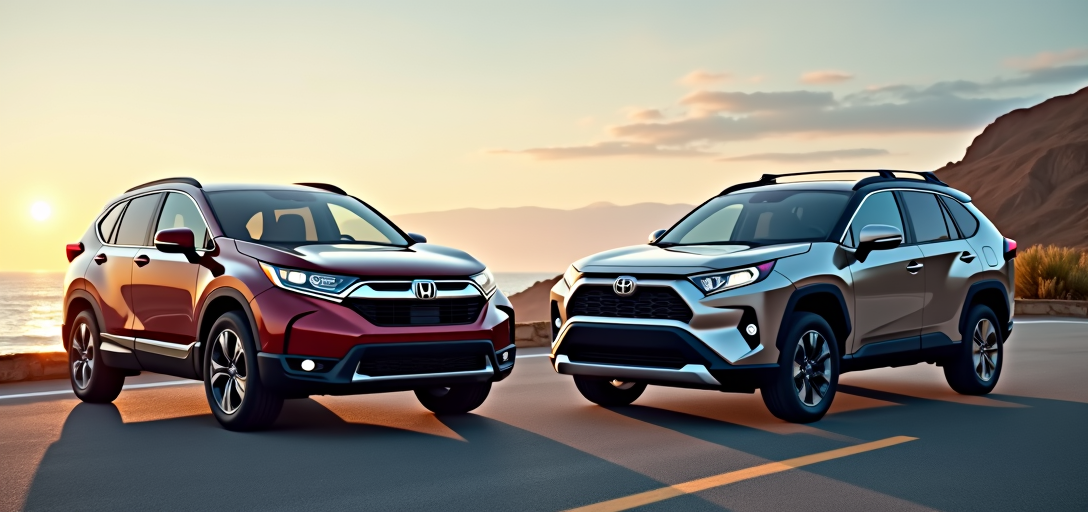
Understanding Ownership Costs: Honda CR-V vs. Toyota RAV4
When it comes to selecting a vehicle that balances reliability, value, and cost of ownership, many American drivers find themselves deciding between two popular small SUVs: the Honda CR-V and the Toyota RAV4. As two mainstays in the crossover market, both promise efficiency and practicality, but the question remains—"Which is cheaper to own?" In this comprehensive comparison, we'll explore the essential factors that contribute to ownership costs, from initial price and fuel economy to maintenance and resale value.
Initial Purchase Price
One of the first considerations for any vehicle purchase is the initial price. As of 2026, the base model of the Honda CR-V starts at around $28,000, while the Toyota RAV4 begins at approximately $29,500. While these prices reflect the manufacturer's suggested retail price (MSRP) for the base versions, the final price you pay may vary based on dealer incentives, location, and additional options.
- Honda CR-V: $28,000 (Base Model MSRP)
- Toyota RAV4: $29,500 (Base Model MSRP)
Fuel Economy
Fuel efficiency is a critical factor in determining the long-term cost of owning an SUV. The 2026 Honda CR-V offers an impressive 31 miles per gallon (mpg) combined, while the 2026 Toyota RAV4 isn't far behind with a combined 30 mpg, according to the Environmental Protection Agency (EPA). While the difference may seem slight, over years of ownership, even marginal disparities can add up to significant savings at the pump.
- Honda CR-V: 31 mpg combined (EPA rating)
- Toyota RAV4: 30 mpg combined (EPA rating)
Maintenance and Repairs
Both Honda and Toyota are renowned for manufacturing durable vehicles, but there are distinctions in maintenance costs. According to recent data from Consumer Reports, Toyota vehicles tend to have slightly lower maintenance costs over a 10-year period. On average, maintaining a Toyota RAV4 will cost around $4,400, whereas a Honda CR-V may cost closer to $4,600 over the same time frame. Both SUVs offer reliability, but slight variations can impact ownership costs.
Insurance Costs
Insurance is another substantial component of vehicle ownership. The type of vehicle, safety features, and even location can affect insurance premiums. In general, both the Honda CR-V and Toyota RAV4 are equipped with advanced safety features that can help reduce insurance costs. In 2026, the average annual cost for insuring a Honda CR-V stands at roughly $1,350, whereas insuring a Toyota RAV4 costs slightly more at around $1,400 annually, influenced somewhat by the RAV4's marginally higher market value and repair costs.
Resale Value
Resale value is often overlooked, yet it's an essential aspect of the true cost of owning a vehicle. Toyota generally holds a slight edge in resale value thanks to its formidable reputation for longevity and durability. According to Kelley Blue Book, after five years, a Toyota RAV4 retains about 55% of its original value, compared to the Honda CR-V, which retains about 52%. This can have a significant impact when trading in or selling the vehicle.
Final Considerations
Choosing between the Honda CR-V and the Toyota RAV4 ultimately hinges upon personal preferences and priorities. While the Honda CR-V edges out with a slightly better fuel economy, the Toyota RAV4 possesses stronger resale value and marginally lower repair costs. Understanding these nuances will better equip you to make a well-informed decision based on what matters most to your lifestyle and financial strategy.
Moreover, always remember that broader market factors, seasonal promotions, and individual dealer incentives can also greatly impact overall vehicle costs. Consult varied sources, explore potential financing options, and perhaps most importantly, test drive both models to see which one aligns better with your daily driving needs. Making a decision that balances budget with satisfaction is key for a happy driving experience.