Top Credit Card Options for Building Credit with a Score of 500–580
Looking to find credit cards that approve you with a 500580 credit score? Discover the options available for building or rebuilding your credit. Several card issuers offer opportunities for those in this score range.
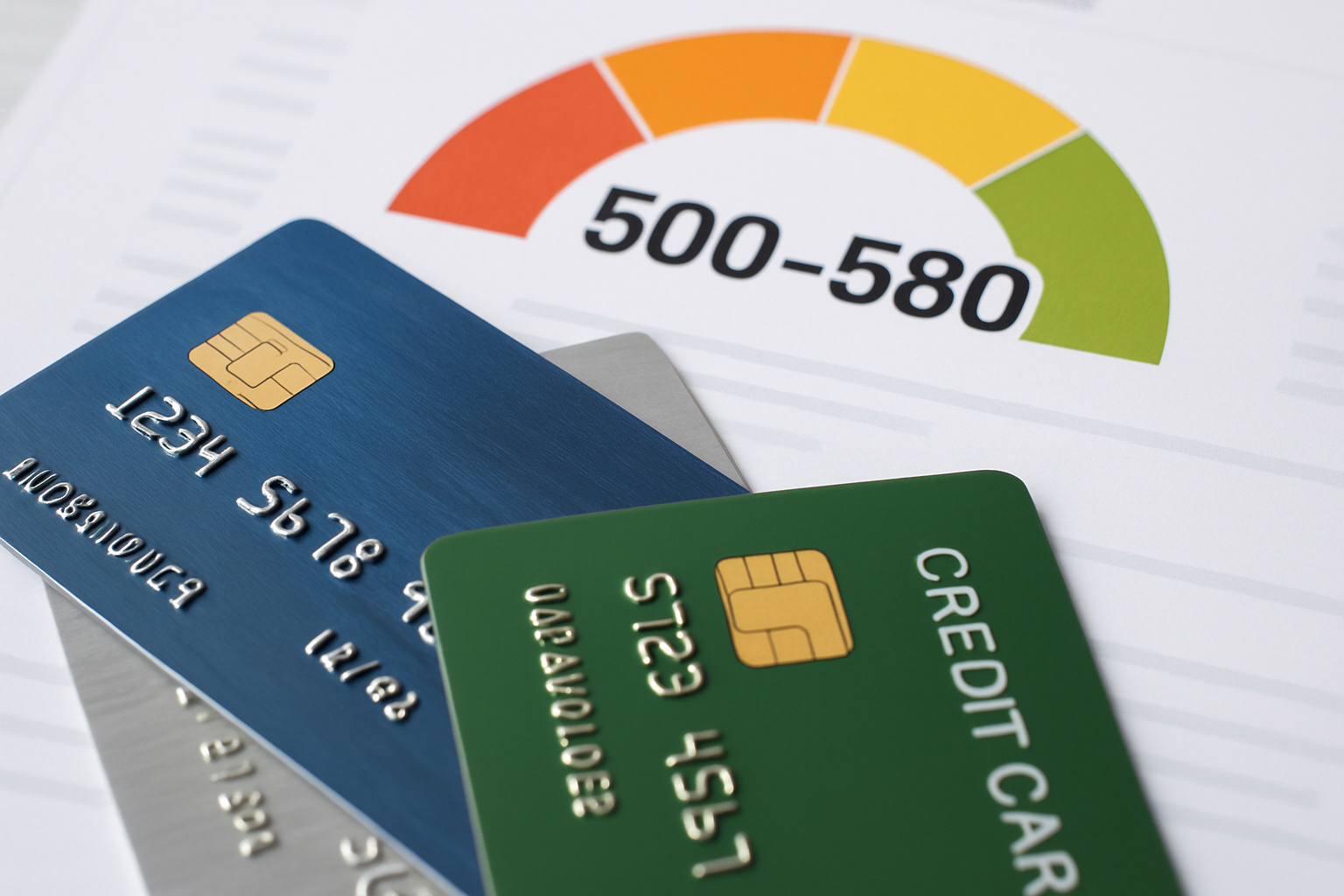
Understanding Credit Scores: The Basics
Your credit score is a numerical representation of your creditworthiness. It's what lenders use to evaluate the risk of lending you money. Typically, these scores range from 300 to 850, and they are influenced by several factors including your payment history, the amounts you owe, the length of your credit history, and the types of credit you've used. Among these, payment history and amounts owed account for approximately 65% of your FICO score, which is most commonly used by lenders.
If your credit score falls between 500 and 580, you're considered to be in the "poor" range. This can limit your access to certain types of credit, but it doesn't mean you don't have options. A variety of credit cards are available specifically for people with scores in this range. Understanding how these work can help you make informed decisions about improving your credit score over time.
Credit Cards for Scores between 500–580: What Are They?
Credit cards that approve applicants with a 500–580 credit score are often designed to help rebuild or establish credit. These cards typically have some common features:
- Higher Interest Rates: Because the risk is higher for lenders, these cards often come with higher APRs, which means if you carry a balance, you'll pay more in interest charges.
- Secured vs. Unsecured Options: Some are secured cards requiring a deposit that acts as your credit limit, while others are unsecured but may have higher fees.
- Reports to Credit Bureaus: Most of these credit cards report to major credit bureaus, which helps build your credit history when you make on-time payments.
Using these cards responsibly can lead to gradual credit score improvements, opening the door to better financial opportunities.
Types of Credit Cards for Low Scores
Secured Credit Cards
Secured credit cards require you to provide a deposit that acts as your credit line. For example, if you deposit $200, your credit limit is $200. These are often more accessible for individuals with lower scores because they pose less risk to the lender. By using a secured card properly and paying your balance in full each month, you can build a positive credit report, eventually moving to an unsecured card.
Unsecured Credit Cards
Unsecured credit cards do not require a deposit but might carry higher interest rates and fees. Some examples of unsecured options include cards from credit unions or specialty lenders focusing on individuals with poor credit histories. While these cards may have limitations and higher costs, they can still be beneficial if managed carefully.
Maximizing Benefits of Credit Cards for 500–580 Scores
Once you're approved for a credit card, the goal should be to use it as a stepping stone for better financial health. Here are some ways to maximize the benefits:
Timely Payments
Always make timely payments on your credit cards. Payment history constitutes 35% of your credit score, so it's important to pay at least the minimum amount by the due date. Setting up automatic payments or reminders can help avoid missing deadlines.
Maintain Low Credit Utilization
Credit utilization refers to the amount of available credit you're using. It's advised to keep this ratio below 30%. For example, if you have a credit limit of $300, try to keep your balance below $90. Low utilization positively affects your credit score and portrays you as a responsible borrower.
Regularly Check Your Credit Report
Monitoring your credit report can alert you to errors or signs of identity theft. By federal law, you can access a free credit report annually from each of the three major credit bureaus: Equifax, Experian, and TransUnion. Reviewing these can help you stay informed and correct inaccuracies promptly.
Common Myths About Credit Cards for Low Scores
There are many myths around credit cards for those with lower scores. Let’s debunk some of the common ones:
- Myth 1: You can’t get credit with a low score. Fact: There are several credit cards tailored for low credit scores, as previously discussed.
- Myth 2: Having many credit cards improves your score. Fact: It's more about how you use the credit rather than the number of cards.
- Myth 3: Closing accounts improves scores. Fact: Closing accounts can reduce your available credit and increase your utilization ratio, potentially lowering your score.
Conclusion: Building a Better Financial Future
While having a credit score between 500 and 580 does present challenges, it also offers a pathway to rebuild and improve your financial standing. Understanding and utilizing credit cards designed for this score range can be instrumental in your journey. By maintaining responsible credit habits, you can gradually enhance your credit profile.
For further reading, consider exploring resources such as the Consumer Financial Protection Bureau and MyFICO's credit education center which provide trustworthy information on managing credit.