Top Lightweight and Folding Mobility Scooters for Stress-Free Travel
Exploring the ideal choice for your travels? Finding the perfect lightweight, folding mobility scooters for travel requires careful consideration. We delve into top models and features to help narrow down your options.
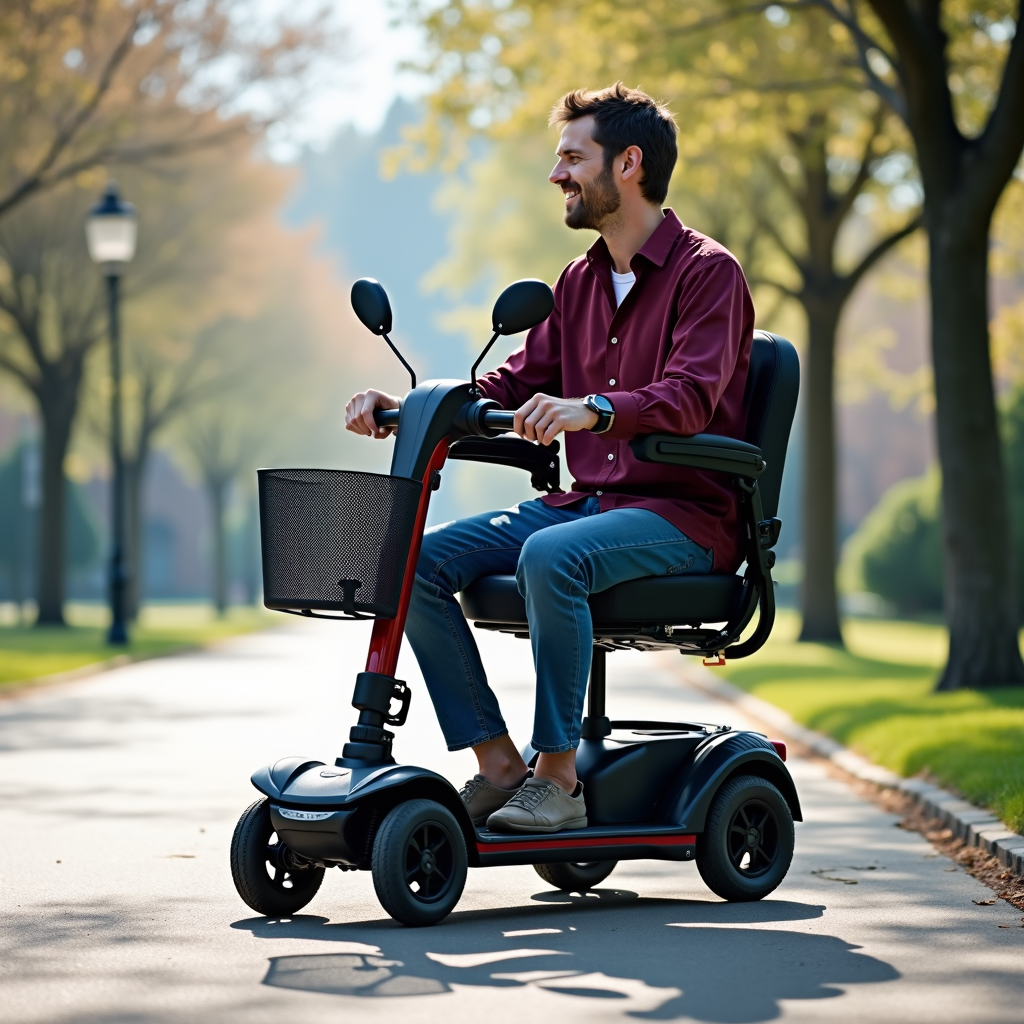
Understanding the Modern Need: Why Travel Requires Specialized Mobility Solutions
If you are actively considering a mobility aid for travel, you are likely already familiar with the standard, full-sized scooters. While these machines are excellent for continuous, reliable use within a contained home or facility, they often pose significant logistical hurdles when the setting changes—especially when you are moving through airports, train stations, or over extended geographical distances. This difficulty of transport is what has created a specialized, booming market for lightweight, folding mobility scooters designed explicitly for the nomadic life.
Choosing a travel scooter is not simply selecting a smaller version of a traditional model; it involves a complex trade-off between power, portability, comfort, and weight. The ideal machine must fold easily, be manageable by one person (or two, when necessary), and still provide enough power to handle varied outdoor terrains. Our goal here is to help you cut through the overwhelming options and understand the technical specifications that truly matter for a smooth, stress-free journey.
Defining "Lightweight" in the Scooter World
The term "lightweight" is subjective, but when discussing mobility scooters, it generally refers to the total weight of the unit when fully assembled and folded. For a successful traveler, "lightweight" means significantly easier than 100 pounds. While highly advanced models can approach 60–75 pounds, even this weight requires planning for stairs and public transit boarding. Always calculate the weight not just of the scooter, but also factoring in its components: the batteries, the accessories, and any potential added user weight. A truly effective travel unit should allow you to manage it over thresholds and curbs with relative ease.
Evaluating Mobility Scooters: Key Features for Travelers
Selecting a machine that works both well and reliably on a long vacation is different from selecting a machine for daily use at home. Travel introduces variables—elevators being out of service, cobblestone paths, unexpected inclines—that must be accounted for in the scooter's engineering. When comparing models, you should focus on four main pillars of functionality: folding mechanism, battery life, motor power, and suspension.
Weight and Portability: The Fold Factor
The folding mechanism is arguably the most crucial feature for a traveler. It needs to be intuitive, robust, and fast. Many high-end travel scooters utilize a quick-release, multi-stage fold that minimizes wasted space. Look for models that fold into a manageable profile, ideally small enough to fit into the trunk of a standard car or overhead compartment (though this depends heavily on airline rules, which we detail later).
- Multi-Pivot Design: Scooters with multiple points of articulation (e.g., folding the seat *and* the handle into the frame) are generally superior to single-pivot designs.
- Dimensions Check: Before purchasing, check the packaged dimensions. Can it fit through a standard restroom stall? Can it fit into the legroom space of an airplane seat?
- Integrated Carrying Handles: A scooter with robust, easily accessible handles makes the single-person lifting aspect much safer and less strenuous.
Power and Range: Battery Life in Transit
Range anxiety is a genuine concern for any traveler. You need a scooter that can sustain its required power output over several miles without requiring a charge in the middle of a national park. Battery capacity is measured in Watt-hours (Wh) or the scooter's claimed distance (miles/kilometers). However, the manufacturer's stated range is always an *optimal* use-case scenario. Real-world range is diminished by:
- Inclines: Going uphill dramatically reduces battery life.
- Load: Carrying extra gear or traveling with a companion increases draw.
- Terrain: Riding over gravel or uneven asphalt requires more motor effort than paved sidewalks.
When reviewing specifications, look for a modular battery system. If the unit uses easily swappable, removable batteries, you can run one unit on one charge and swap it out for a fully charged auxiliary unit, effectively doubling your available range without needing a dedicated charging station.
Maneuverability and Terrain Handling
The ideal travel scooter must handle varied terrains—from polished marble in a museum to uneven asphalt in a city park. This requires more than just decent wheels.
- Suspension Systems: High-quality suspension is non-negotiable for comfort and stability. It absorbs shock from potholes and bumps, reducing vibration fatigue on both the user and the equipment. Look for independently sprung wheel systems.
- Tire Type: Pneumatic (air-filled) tires offer the best shock absorption and are ideal for uneven natural terrain. Solid tires are better for maximum low-maintenance use on smooth pavement only.
- Motor Power (Torque): Motor strength, measured by torque (Newton-meters, Nm), dictates the scooter's ability to maintain speed and climb inclines. For travel, prioritize torque over sheer maximum speed.
Preparing for the Journey: Travel Logistics and Rules
The biggest barrier to travel using mobility scooters is often not the device itself, but the regulatory complexity. You must treat the scooter not as a simple piece of luggage, but as a specialized piece of medical equipment that requires careful planning.
Air Travel Regulations: The Airline Headache
Airlines treat mobility aids differently, and these rules change constantly. The general consensus among accessibility advocates is that *battery capacity* is the most heavily regulated component. Most major airlines require that lithium-ion batteries for wheelchairs and scooters must be clearly documented and often must not exceed a certain Wh limit (typically 100 Wh per battery). Always carry the original manufacturer’s documentation and the battery's Wh rating with you.
Critical Steps for Flights:
- Declare Ahead of Time: Never wait until you reach the airport. Contact the airline’s accessibility services department weeks in advance.
- Understand Policy: Confirm if the scooter must be wheeled through the airport (which requires staff assistance) or if it can be brought through as a primary mobility aid.
- Battery Protocol: Always keep the batteries and charger components in your carry-on baggage, never checked luggage.
Current industry trends (data reflecting research compiled in 2026) indicate a massive push towards standardized documentation of specialized medical mobility equipment to streamline airport processes, which is a positive development for travelers. [Source 1: Global Accessibility Standards Group, 2026 Mobility Guidelines].
Battery Management and Charging Strategies
The most effective strategy for multi-day travel is redundancy. Do not rely solely on the scooter's internal charging port. Invest in a portable, high-capacity power bank or a secondary, interchangeable battery unit. This allows you to maintain mobility even if a hotel's electrical system has issues or if you encounter a multi-day outdoor event with limited charging access.
Scooter vs. Electric Wheelchair: Understanding the Differences
This question is perhaps the most confusing for first-time buyers. While the function (moving a person) is the same, the design and operational feel are vastly different. Understanding this difference is key to determining the best fit for your specific level of mobility.
Electric Wheelchair (Power Wheelchair)
These are designed for maximum power and maneuverability within tight spaces, often prioritizing the user's ability to traverse obstacles or maintain a seated, rigid posture. They are typically more stable and provide a highly contained support structure. Their core function is intensive, all-day use in environments like nursing facilities or confined urban spaces. They can often feel more robust and less "nimble" for casual wandering.
Lightweight, Folding Scooter
These are generally designed with a higher emphasis on balance, folding capability, and moderate power. They are optimized for the transition between environments—moving from a vehicle to a sidewalk, or through a hotel lobby. Because they are designed to be folded and portable, they prioritize manageable weight and size, often sacrificing some of the sheer power found in a large power wheelchair. For the traveler who needs freedom of movement across varied public paths, the folding scooter often provides the best balance of support and portability.
Making Your Final Selection: A Weighted Checklist
To wrap up this extensive guide, use this checklist approach to guide your final purchase decision. Remember that the 'best' model is the one that perfectly matches your lifestyle and the specific demands of your travel itinerary.
- Primary Environment: Is the majority of your travel on smooth, paved surfaces (urban city travel) or on mixed terrains (national parks, uneven walkways)? (Favors: Smooth surfaces vs. Pneumatic tires/Suspension)
- Weight Tolerance: Who is doing the lifting? (Favors: Lighter units, maximizing under 75 lbs).
- Maximum Distance from Charger: Are you expecting multi-day trips with limited charging access? (Favors: Interchangeable battery system).
- Secondary Functionality: Do you need to carry luggage, or just yourself? (Favors: Scooters with a reinforced cargo section).
- Budget Flexibility: Are you willing to pay a premium for a sophisticated suspension and smaller fold size? (Favors: High-end specialized travel models).
Choosing the right mobility scooter for travel is an investment in your independence and peace of mind. By understanding the subtle differences between various components—from torque output to battery-hour capacity—you can move beyond marketing claims and select a reliable, lightweight, folding mobility scooter that truly enables you to explore the world without limitation. For comprehensive, up-to-date model comparisons, always consult specialized medical mobility retailers who can physically test the models and provide current usage data. [Source 2: Mobility & Rehabilitation Experts Association (MREA), 2026 Market Report].
For additional guidance on international travel regulations specific to your chosen destination, consult established governmental or medical travel resources. [Source 3: CDC/ADA Travel Mobility Guidelines].