Toyota RAV4 vs Honda CR-V: Evaluating Value and Features for 2026
Explore how two popular SUVs stack up with our indepth comparison of the Toyota RAV4 and Honda CRV. In this article, we delve into what might make the Toyota RAV4 or the Honda CRV a better choice for your needs in 2026.
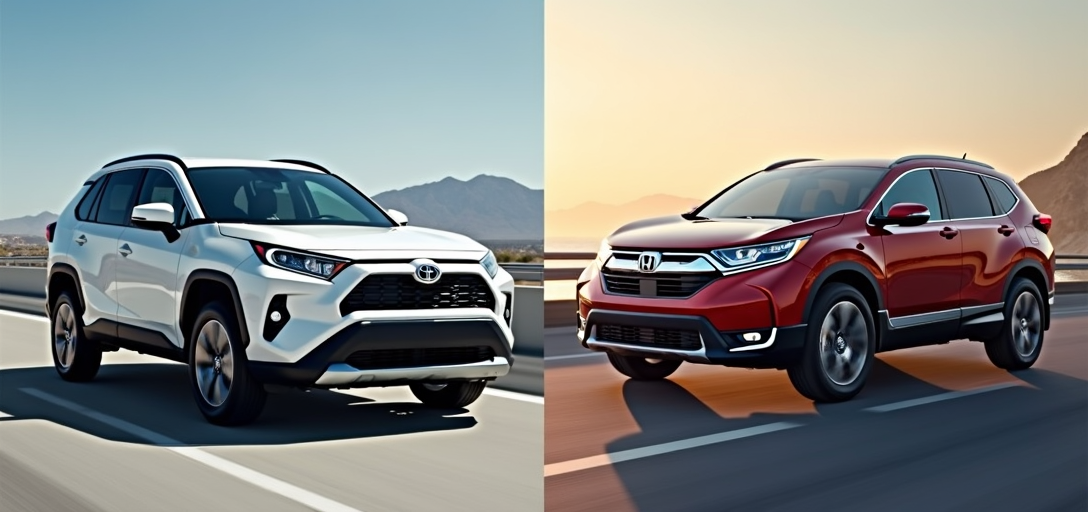
Toyota RAV4 Vs Honda CR-V: A Detailed Comparison for 2026
In the competitive world of compact SUVs, both the Toyota RAV4 and Honda CR-V have stood out as top contenders for years. As consumers weigh their options for 2026, the decision between these two vehicles often comes down to determining which offers better value. This comprehensive guide will help you understand the key differences, benefits, and considerations that should inform your choice.
Price and Variants
When considering value, price is typically a significant factor. In 2026, the base model of the Toyota RAV4 starts at approximately $28,000, while the Honda CR-V begins around $27,500. Both vehicles offer a range of trims, allowing consumers to select options that suit their budget and needs. The RAV4 has options like the LE, XLE, XLE Premium, Adventure, and Limited, each with unique features and upgrades.
Fuel Efficiency
Fuel efficiency remains a critical component of value for most buyers. The 2026 Toyota RAV4 offers a competitive fuel economy, with the hybrid model delivering an impressive 41 mpg in the city and 38 mpg on the highway according to the EPA. The Honda CR-V, not to be outdone, offers a slightly lower but comparable performance, achieving 39 mpg in the city and 35 mpg on the highway in its hybrid variant.
Performance and Driving Experience
For those who prioritize driving dynamics, understanding the performance capabilities of each vehicle is essential. The 2026 Toyota RAV4 offers a 2.5-liter inline-4 engine producing 203 horsepower, providing a solid balance of power and efficiency. On the other hand, the Honda CR-V features a 1.5-liter turbocharged inline-4, generating 190 horsepower. While the RAV4 may have the power edge, the CR-V often receives praise for its smooth, refined driving experience, especially in urban settings.
Interior Quality and Space
Both vehicles are lauded for their well-designed interiors. The 2026 Toyota RAV4 provides a slightly more rugged feel, which complements its Adventure trim. It offers ample passenger space, with up to 69.8 cubic feet of cargo space when rear seats are folded.
Conversely, the Honda CR-V continues to impress with its spacious cabin, offering an airy feel and a best-in-class cargo volume of up to 75.8 cubic feet. Both vehicles include modern technology integrations like touchscreen infotainment systems, Apple CarPlay, and Android Auto compatibility.
Safety Features
Safety is a top priority for families and individuals alike, and both the RAV4 and CR-V come well-equipped in this regard. The Toyota RAV4 2026 model includes standard Toyota Safety Sense (TSS), offering features like pre-collision systems, lane departure alerts, and adaptive cruise control. Meanwhile, the Honda CR-V offers Honda Sensing, including similar features and scoring top marks in safety ratings from the NHTSA (National Highway Traffic Safety Administration).
Reliability and Resale Value
The Toyota RAV4 has long been celebrated for its reliability, consistently earning high marks in various J.D. Power Vehicle Dependability Studies. This strong reputation can contribute to better resale values. Honda CR-V, however, isn't far behind, with its strong build quality and customer satisfaction ratings contributing to competitive resale values.
Technological Advancements
Both automakers have embraced technology, but with different focuses. Toyota offers features like connected services that allow remote access to certain vehicle functions via a smartphone app. Honda, in its 2026 CR-V, introduces a new customizable digital driver display and enhanced voice control features for its infotainment system, bringing a modern touch to the driver experience.
Environmental Considerations
In 2026, eco-conscious consumers are increasingly considering the environmental footprint of their vehicles. The hybrid variants of both the RAV4 and CR-V offer a more environmentally friendly option. Toyota continues to lead with its well-established hybrid technology, providing a reliable choice for reducing emissions without compromising performance.
Honda's efforts in advancing hybrid technology are also noteworthy, contributing to a lower carbon footprint. According to the EPA, choosing either of these hybrids can significantly reduce your environmental impact compared to traditional gasoline engines.
Conclusion: Which Offers Better Value?
Determining which vehicle offers better value depends entirely on individual preferences and priorities. For those seeking rugged styling and slightly better power, the Toyota RAV4 might be the better option. Its hybrid efficiency and renowned reliability add layers of appeal.
On the other hand, if comfort, interior space, and a smoother urban driving experience are more important, the Honda CR-V stands out. Its modern technology enhancements also provide a compelling draw for tech-savvy consumers.
Ultimately, potential buyers should consider test-driving both models to evaluate firsthand which vehicle aligns better with their needs and lifestyle. By doing so, consumers can ensure they make a well-informed decision, maximizing their SUV's value in 2026.