Understanding the Startup Costs of Commercial Hydroponic Vertical Farming
Starting a commercial hydroponic vertical farming business involves understanding various startup costs. From equipment and lighting to employee training and permits, learn about the financial aspects of launching into hydroponic farming.
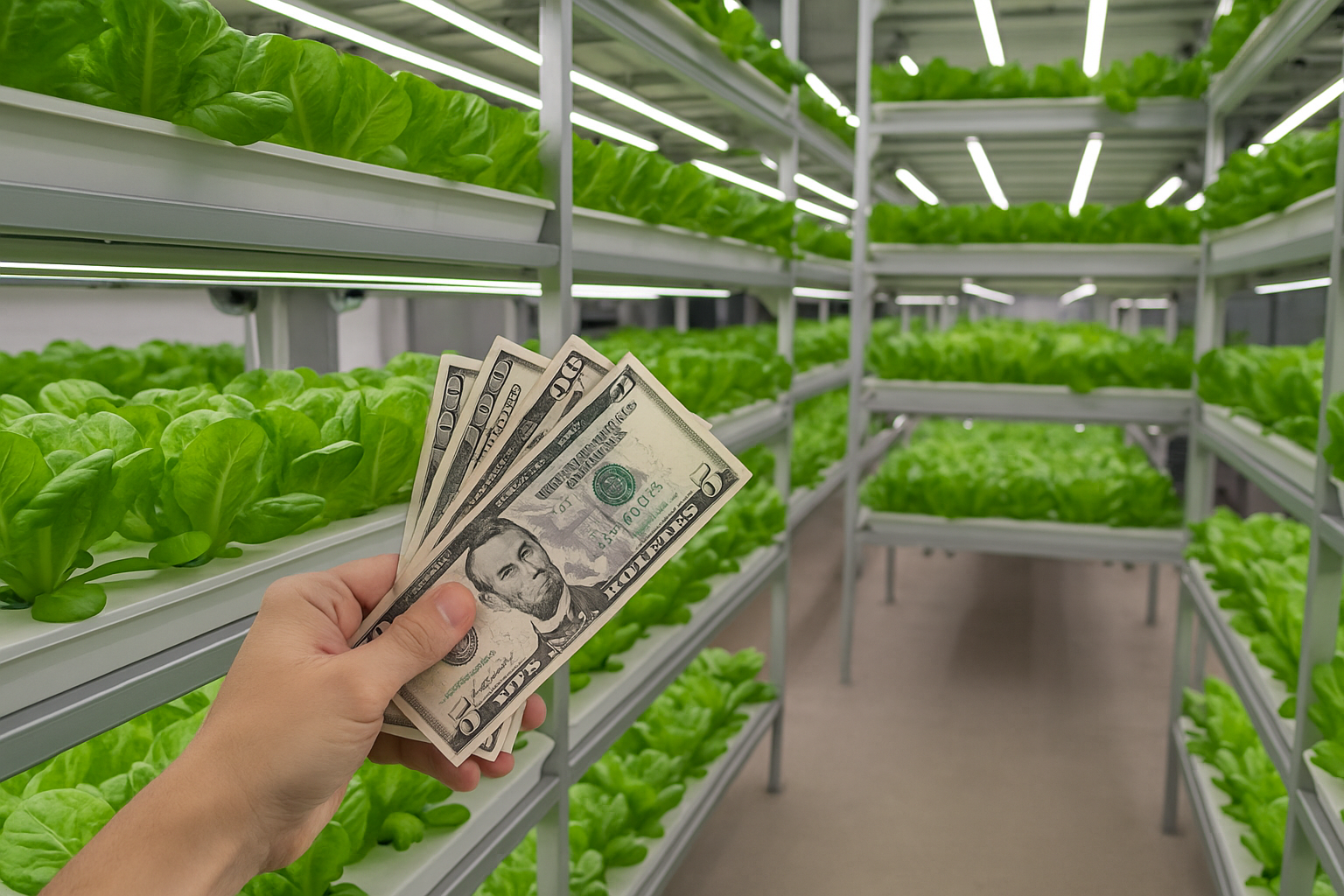
The Basics of Commercial Hydroponic Vertical Farming
Before delving into the startup costs associated with commercial hydroponic vertical farming, it's important to understand what this farming technique entails. Hydroponics is a method of growing plants without soil, using nutrient-rich water instead. Vertical farming takes this a step further by stacking multiple layers of crops vertically, often indoors, to maximize space, particularly in urban areas.
This modern farming technique promises higher yields using less water and land, which makes it an attractive venture for many entrepreneurs. Yet, understanding the startup costs involved is crucial to determine if it's a viable business investment. In this article, we'll explore those costs and more.
Understanding the Initial Investment
Infrastructure Costs
The primary expense in setting up a commercial hydroponic vertical farm is the infrastructure. This involves:
- Space Rental or Purchase: While vertical farming reduces the amount of land needed, you still need a space that’s large enough to house your operation. Consider properties that offer vertical space, such as warehouses. The cost varies greatly depending on your location. In urban centers, space can cost upwards of $50 per square foot in 2026. [source]
- Building and Facilities: If you’re purchasing land, you may need to build infrastructure from scratch. This involves construction costs, installation of proper ventilation, and insulation to keep the environment controlled.
- Climate Control Systems: Efficient HVAC systems are essential to regulate temperature and humidity, crucial for plant growth. Expect to invest between $10,000 to $100,000, depending on the size of your operation.
Equipment and Technology
In a hydroponic system, plants are grown in a nutrient solution, so you'll need specialized equipment, including:
- Hydroponic Systems: There are several systems like Nutrient Film Technique (NFT), Deep Water Culture (DWC), and Aeroponics. Each system has its initial setup cost, ranging from $500 to $10,000 per system tier.
- Grow Lights: LED grow lights are commonly used in vertical farms. These lights are energy-efficient and crucial for photosynthesis, estimating costs between $15,000 and $25,000 for a small to medium-sized facility. [source]
- Automation and Sensors: To optimize growth, many farms implement IoT technology. Sensors monitor pH, nutrient levels, and humidity. Costs can start from $2,000 for basic setups but can escalate to over $20,000 for more complex systems.
Operational Costs
The ongoing operational costs include:
- Utilities: Water and electricity bills will be substantial due to climate control systems and lighting. Expect monthly costs to be anywhere from $500 to $5,000, depending on scale and local rates.
- Labor: A vertical farm requires skilled labor to manage the technology and plant care, with salaries averaging $35,000 to $50,000 per year per full-time employee.
- Maintenance: Regular maintenance is necessary to ensure systems operate efficiently, costing up to $10,000 annually.
Potential Returns on Investment
Despite the high initial costs, commercial hydroponic vertical farming can be profitable. The reduced use of water and pesticides and the ability to produce crops year-round contribute to increased yield efficiency. Some farmers report yields up to ten times higher than traditional farming in the same area. [source]
Market Demand and Crop Choice
Understanding what crops to grow is crucial. Leafy greens, herbs, and microgreens are popular due to their short growth cycles and high market demand. Diversifying crops and adjusting based on consumer trends can significantly impact profitability.
Government Grants and Subsidies
Check for local government incentives for sustainable farming practices. Grants or subsidies can reduce your initial costs significantly, making it more feasible to start a vertical farm. In 2026, various initiatives aim to promote urban farming, with support covering up to 25% of initial setup costs in some regions.
Conclusion: Is it Worth the Investment?
Commercial hydroponic vertical farming presents an exciting opportunity at the intersection of technology and agriculture. While startup costs are high, particularly for infrastructure and technology, the potential for high yields, sustainable practices, and government support make it a promising venture. As with any business, thorough research and preparation are crucial in navigating this innovative landscape.